Our Top Picks
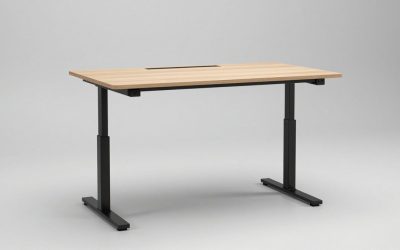
 VIVO Electric Dual Motor Standing Desk Frame2 Stage23 x 39.3 x 28.5 inches48.15 PoundsCheck on Amazon


Dual monitors change the math on standing desk shopping. You’re not just lifting a laptop and a coffee cup anymore, you’re lifting two displays, an arm clamp or crossbar, sometimes a laptop stand off to the side, and whatever cable mess sits behind it. That changes what matters: weight capacity, worktop depth, and how the frame handles load that’s spread wide rather than centered. A desk that’s perfectly fine for a single 27-inch screen can wobble or sag under a pair of 27s on a monitor arm.
Why dual monitors change the requirements
Two monitors on a dual arm typically add 15-25 lbs of static weight, concentrated at one point on the desk (usually center-back) rather than distributed. That’s different from two monitors sitting directly on the desk on their own stands, which spreads the load but eats worktop depth. Either way, you need two things most single-monitor setups don’t stress: a worktop at least 30 inches deep, and a frame rated for 150+ lbs if you’re also running a PC tower, speakers, or a laptop dock.
The other issue is stability at height. Standing height for most people is 42-48 inches off the floor for the desktop surface. At that height, any frame with play in the joints will transmit monitor wobble when you type hard or bump the desk. Single-motor desks are more prone to this than dual-motor ones because the lifting mechanism only drives one leg directly, and the other leg follows through a crossbar linkage that can flex slightly under uneven load, like two monitors offset to one side.
Worktop size: the part people skip
A 48-inch wide by 24-inch deep top is the default size for a lot of budget desks, and it’s too shallow for dual monitors on arms. The arm clamp needs 2-3 inches of desk depth just for the mounting base, and then the monitors themselves tilt back toward you, which eats into keyboard and wrist space. Go with 30 inches deep minimum, 48-60 inches wide. If you’re running two 27-inch or larger monitors side by side flat on stands rather than arms, go wider, 60 inches, or accept that you’ll be angling them inward.
Depth matters more than people expect because monitor arms mount at the back edge and the clamp mechanism itself takes up real estate. On a 24-inch deep desk, a monitor arm clamp can leave you with less than 20 inches of usable depth in front of the screens, which is tight for a keyboard, mouse, and notebook.
Single-motor vs dual-motor: does it actually matter here
For single monitor setups, single-motor desks are often fine and save $150-250. For dual monitor setups, especially with a crossbar or dual arm, I’d default to dual-motor. The reasons are load capacity and lift evenness. Single-motor desks typically cap out around 150-175 lbs; dual-motor desks commonly rate 200-310 lbs. With two 27-inch monitors (roughly 12-16 lbs each), an arm (5-10 lbs), a PC tower (15-20 lbs), and peripherals, you can realistically hit 100+ lbs before you’ve added a single book. That’s not over capacity for either type, but it’s enough that you want margin, not a desk running at 90% of its rated max every day.
Lift evenness is the bigger practical issue. Single-motor frames drive one leg and transfer motion to the other through a mechanical link. Under asymmetric load, like two monitors mounted slightly off-center, that link can introduce a faint tilt or shimmy during transit. It’s rarely dramatic, but if you’ve got a half-full coffee cup next to your keyboard, you’ll notice it. Dual-motor frames drive both legs independently and stay more level under uneven weight.
| Factor | Single-motor | Dual-motor |
|---|---|---|
| Typical weight capacity | 150-175 lbs | 200-310 lbs |
| Price range | $200-350 | $400-700 |
| Lift evenness under uneven load | Can shimmy slightly | Stays level |
| Good fit for dual monitors on arms | Workable up to ~24-25″ monitors | Better margin, especially 27″+ or 3 screens |
| Good fit for monitors on separate stands | Usually fine | Overkill unless desk is also holding a tower |
If your monitors sit on their own stands rather than an arm, and you’re not running heavy peripherals, a single-motor frame is genuinely fine and the dual-motor upgrade is money you don’t need to spend. Save it for cases where you’ve got an arm clamp, 27-inch or larger screens, or a PC tower also living on the desktop.
Monitor arms vs. individual stands
A dual monitor arm clears desk space and makes height/angle adjustment easier, but it concentrates weight at one clamp point and that clamp needs to bite into a worktop that can take the clamping pressure without cracking (laminate is fine, thin particleboard edges aren’t always). Individual stands spread the load and are simpler, but eat more desk depth and don’t adjust as easily. If you’re buying new, it’s worth browsing a dual monitor arm desk mount at the same time as the desk, since clamp compatibility and desk thickness need to match.
What I’d actually buy
For most dual-monitor setups with 24-27 inch screens on an arm, a dual-motor dual-motor standing desk with 200+ lb capacity and a 30×60 top is the safe default. It costs more than a single-motor budget desk, but the stability margin is worth it once you’re running two displays and the usual desk clutter. If you’re on a tighter budget and your monitors sit on simple stands rather than an arm, a decent single-motor standing desk at the 48-54 inch width will do the job without the extra cost.
The failure mode to watch for either way isn’t the motor, it’s the top. Cheap laminate tops can bow slightly over a year or two under sustained weight near the center, especially on wider desks with thin internal bracing. If you’re buying budget, check the stated max load against your actual gear weight and leave at least 20% headroom rather than buying right at the limit.