Our Top Picks
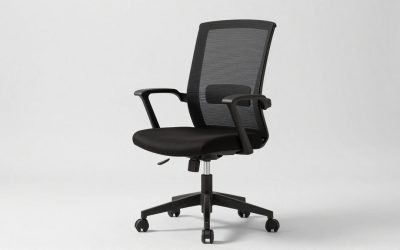
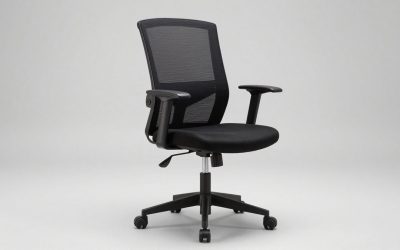
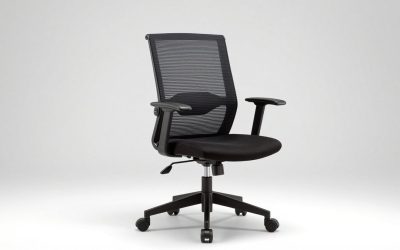
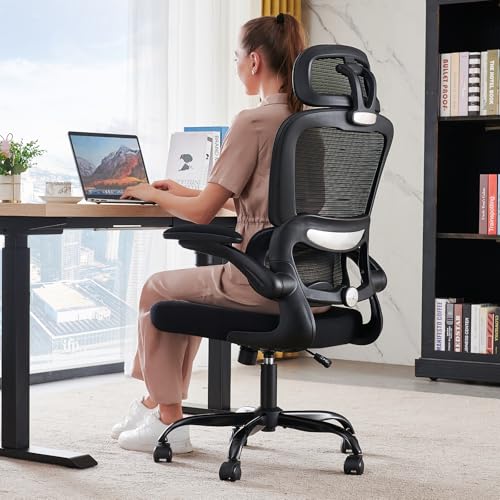 TRALT Office Chair Ergonomic Desk Chair with LumbarPack of 127.6 x 27.6 x 49.2 inches28 poundsCheck on Amazon


Lower back pain at a desk job usually comes from one of two places: a chair that doesn’t support the natural curve of your spine, or sitting still in a decent chair for too long. You can’t fix the second problem by buying anything. But if your current chair is flat-backed, bottoms out after a year, or has lumbar support that sits in the wrong spot for your torso length, replacing it is a legitimate move. Here’s what actually matters and what’s marketing noise.
What’s actually causing the pain
Most “bad chair” lower back pain is lumbar support sitting too low or too high. The lumbar curve of your spine is roughly 2-4 inches above your beltline when seated. If a chair’s built-in lumbar bump hits your mid-back or doesn’t reach your back at all, it’s doing nothing, and your lower back rounds out over the course of a few hours. That rounding is what causes the ache that shows up around hour three and gets worse by hour six.
The second common cause is seat depth. If the seat pan is too long for your thighs, you either slide forward (losing lumbar contact entirely) or sit with your back away from the backrest. Seat depth adjustment matters more than people think, and it’s missing on a lot of chairs under $200.
What to actually look for
Skip the spec-sheet buzzwords and check these four things:
Adjustable lumbar height, not just lumbar presence. A fixed foam bump molded into the backrest is better than nothing, but it’s a compromise if you’re outside average torso length (roughly 5’4″ to 5’10”). Look for a lumbar pad you can slide up or down independently.
Seat depth adjustment. This is usually a slider under the front of the seat that lets the pan move 2-3 inches. If you’re under 5’5″ or over 6’1″, this isn’t optional.
Recline tension you can lock. A chair that lets you lean back and lock at, say, 110-120 degrees for a few minutes every hour takes real load off the lumbar discs. This is more useful for back pain than most people expect, and it’s cheap to implement, so its absence on a $300+ chair is a red flag.
Weight-matched gas lift and tilt tension. If you’re under 140 lbs, a chair’s base tension spec might make it feel like a brick. If you’re over 250 lbs, check the weight rating explicitly, not just “ergonomic” in the title. Chairs under $250 often have 250 lb ratings; most of the $700+ mesh chairs go to 300-350 lbs.
Where the money actually goes
Below $150, you’re mostly buying basic tilt and a foam lumbar bump that’s fixed in place. That’s fine if your torso falls in the average range and you’re not sitting more than 6 hours a day. Between $150 and $400, you start getting adjustable lumbar depth and seat sliders, which is the range where most people with real back complaints should be shopping. Above $400, you’re paying for mesh breathability, better long-term foam density (so the seat doesn’t compress and tilt your pelvis back after 18 months), and sometimes a 10-12 year warranty instead of a 3-year one. The ergonomic gain from $400 to $1,000 is much smaller than the gain from $100 to $300.
| Price range | Lumbar adjustment | Seat depth adjustment | Typical weight rating | Best for |
|---|---|---|---|---|
| Under $150 | Fixed, non-adjustable | Rare | 250 lbs | Average torso, under 6 hrs/day sitting |
| $150-$400 | Height-adjustable pad | Common (2-3″ range) | 275-300 lbs | Most people with recurring lower back pain |
| $400+ | Height + depth adjustable | Standard | 300-350 lbs | 8+ hrs/day, long-term durability priority |
If you’re trying to figure out where to start, browsing ergonomic office chairs with adjustable lumbar support in the $150-$300 range will cover the majority of back pain cases without overspending.
Mesh vs. foam backrests
Mesh backs flex and self-contour slightly to your spine, and they don’t retain heat, which matters if you run warm. The trade-off is that mesh gives slightly less firm, directional support than a shaped foam back, so if your pain is specifically about needing a hard lumbar point to push into, foam with an adjustable lumbar pad often works better. There’s no universally correct answer here; it’s worth testing both if you can, which is one advantage of buying from a retailer with easy returns rather than a specialty ergonomics showroom.
What a chair won’t fix
If your pain started suddenly, radiates down a leg, or includes numbness or tingling, that’s not a chair problem, and no amount of lumbar adjustment will fix a disc issue or nerve impingement. See a doctor or physical therapist before spending $400 on furniture. Chairs help with posture-driven, cumulative strain. They don’t treat injuries.
Also worth saying plainly: an $800 chair used badly (slouched, lumbar support disengaged, seat too low) will hurt your back faster than a $150 chair used well. The adjustments only help if you actually set them for your body and re-check them every few months, since gas cylinders and tension knobs drift.
Where a footrest actually helps
If your feet don’t rest flat on the floor with your knees at roughly 90 degrees, that imbalance travels straight up into your lower back, even with perfect lumbar support. Short users on standard-height chairs run into this constantly. A simple footrest closes that gap for under $40, and it’s worth checking before you spend ten times that on a chair upgrade. Searching adjustable office footrests turns up tilting and height-adjustable options that work with almost any desk setup.
For anyone whose current chair is close but the lumbar bump just isn’t in the right spot, a standalone lumbar support cushion is the cheapest fix worth trying before replacing the whole chair. It won’t match a properly engineered adjustable lumbar system, but it solves the positioning problem for $20-$30, and it travels with you if you switch chairs or work from more than one desk.