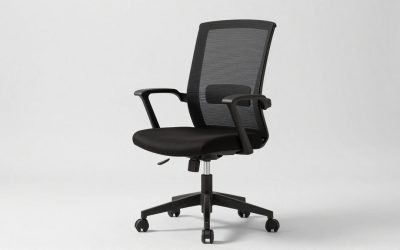
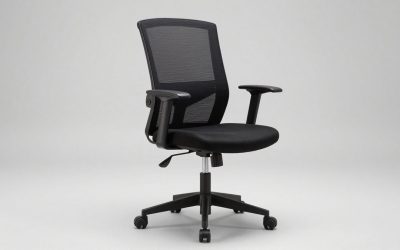
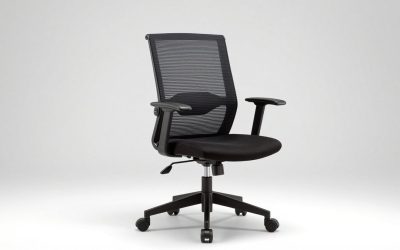
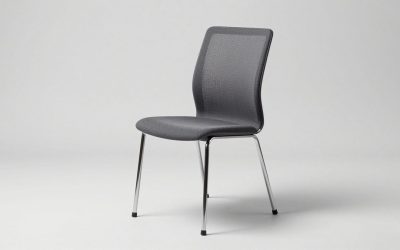
Our Top Picks
 Everlasting Comfort Doctor Recommended Memory Foam Seat CushionLarge17.5 x 14 x 2.75 inches1.5 poundsCheck on Amazon


What “ergonomic” actually means for an 8-hour desk day
Most back pain from desk work isn’t caused by a bad chair. It’s caused by one posture held too long. A $150 chair that you adjust correctly and get out of every 45 minutes will treat your spine better than a $1,200 chair you set once and sit in rigidly all day. That said, the chair sets the ceiling on how good your posture can be, and cheap chairs fail in predictable ways: the lumbar support is in the wrong place for your torso length, the seat pan is too deep so you can’t use the backrest without your knees jamming the edge, or the gas lift sags within a year.
If you’re buying for genuine 7-8 hour days, five days a week, the chair is worth real money. If you’re on a laptop for two hours a day between meetings elsewhere, you can skip most of this article and just get something with decent lumbar support and call it done.
Fit beats features
Before brand, before mesh-vs-foam, before price, the chair has to fit your body. Three measurements matter more than any spec sheet:
Seat depth. With your back against the backrest, there should be 2-4 fingers of space between the seat edge and the back of your knees. Too deep and you either sit forward (losing lumbar contact) or get pressure behind the knees that numbs your legs. Most chairs under $200 have fixed seat depth, which is fine if you’re between 5’4″ and 5’10”. Outside that range, seat depth adjustment stops being a nice-to-have.
Lumbar height. The lumbar curve should land at your belt line, not your mid-back. This varies by torso length, not height, which is why two people who are both 5’9″ can need different lumbar positions. Adjustable lumbar (height and sometimes depth) is the single feature I’d pay extra for before armrests, headrests, or fancy mesh.
Armrest height. Elbows should rest at roughly 90 degrees with shoulders relaxed, not hiked up. Armrests that don’t adjust, or that are fixed too high, are a common cause of shoulder and neck tension that people blame on “bad posture” when it’s actually just bad armrest height.
What you get at each price tier
Chair pricing roughly tracks adjustability and durability of the mechanisms, not comfort on day one. A cheap chair can feel fine in the showroom and still fail you at month eight when the tilt tension knob strips or the foam compresses permanently.
| Price range | What you typically get | Common failure point |
|---|---|---|
| $100-200 | Fixed or single-direction lumbar, basic recline, mesh or foam back, armrests fixed or 1D | Gas lift sag after 1-2 years; lumbar bulge in wrong spot for tall/short users |
| $250-450 | Adjustable lumbar (height, sometimes depth), seat depth slide, 4D armrests, better tilt tension/lock | Mesh seat can sag or get “hammocky” after 3-4 years under heavy daily use |
| $500-900 | Full adjustability, better warranties (10-12 years), more consistent build quality, replaceable parts | Rare; mostly cosmetic wear, occasional caster or armrest pad replacement |
| $900+ | Design pedigree, materials, sometimes marginal ergonomic gain over the $500-900 tier | Diminishing returns past this point for most body types |
The jump from $100 to $300 is where you actually feel a difference in daily use. The jump from $500 to $1,000 is mostly about longevity and build consistency, not day-one comfort. If budget is tight, I’d rather see someone spend $250 on a chair with adjustable lumbar than $600 on a chair that looks premium but has fixed lumbar support in the wrong spot for their torso.
Mesh vs. foam, and why it’s not actually about temperature
Mesh backs get marketed on breathability, which is real but minor for most people in air-conditioned offices. The bigger difference is pressure distribution. Mesh flexes under load and spreads weight more evenly across your back and seat, which matters if you run hot or if you sit for long unbroken stretches. Foam, especially higher-density molded foam, feels more supportive initially but can develop pressure points at the sit bones after 3-4 hours if the foam is too firm or too thin.
Neither is objectively better. People with lower back sensitivity often prefer firmer foam with a pronounced lumbar bulge. People who shift position a lot and want the chair to move with them tend to prefer mesh. If you’ve never tried either for a full day, that’s the real test, not 10 minutes in a showroom.
A practical way to shop
If you’re starting from zero, search ergonomic office chairs with adjustable lumbar support and filter by seat depth adjustment if you’re outside average height range. Read the return policy before you buy, not after. A chair that feels fine for 20 minutes can reveal problems at hour six, and most of the ergonomic chair complaints online are from people who didn’t return a bad fit within the window.
If you already have a chair you mostly like but the lumbar support is wrong for you, a standalone lumbar support cushion is a legitimate fix and costs a fraction of a new chair. This is underrated advice: most “my chair hurts my back” complaints are a lumbar position problem, not a need-a-new-chair problem.
If your main issue is numb legs or hip pressure rather than back pain, look at seat depth and cushion density before anything else, and consider a seat cushion as a cheap test before replacing the whole chair.
Mistakes that cost people money
Buying based on looks rather than measuring seat depth against your own leg length is the most common one. Second is ignoring weight capacity ratings; a chair rated for 250 lbs that’s holding 240 lbs will wear out its gas lift and tilt mechanism much faster than one with headroom. Third is assuming a higher price always means better fit. A $900 chair with fixed lumbar height is worse for a short torso than a $300 chair with adjustable lumbar, full stop.
The honest baseline: if you sit well, move every 45-60 minutes, and have a chair with correct lumbar placement for your torso, you’ve covered 90% of what ergonomics can do for desk-related back pain. Everything past that is refinement, not necessity.