Our Top Picks
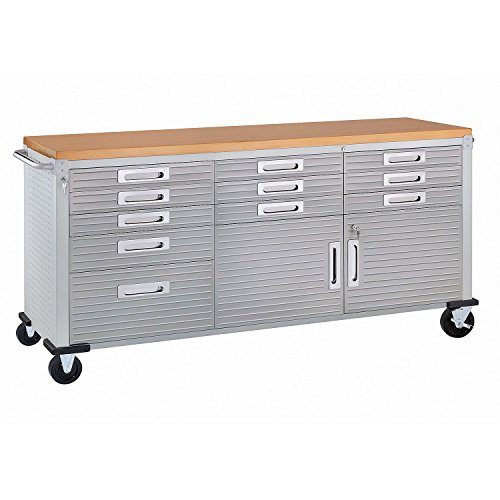 Seville Classics UltraHD Heavy Duty Rolling Cabinet Workbench11-Drawer77 x 20 x 37.5 inches265 PoundsCheck on Amazon
 Seville Classics UltraGraphite Wood Top Workbench on Wheels48"24 x 48 x 37 Inches83.6 PoundsCheck on Amazon
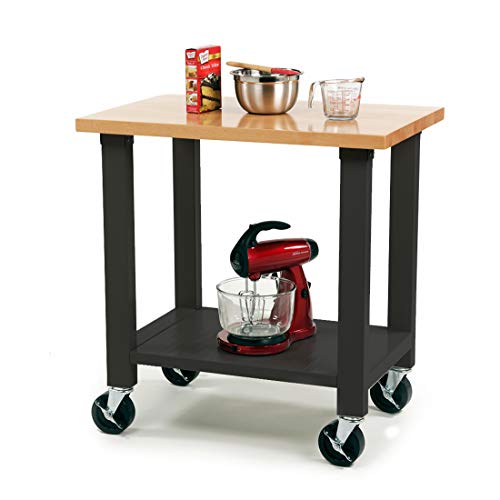 Seville Classics UltraHD Heavy-Duty Rolling Workstation36" W x 24" D x 37.5" H24 x 36 x 38 inchesCheck on Amazon
A workstation on wheels with drawers is a compact desk or cart on locking casters with one to three built-in drawers, and it works best when you need a desk that moves between rooms, tucks into a closet, or rolls up to a bed or sofa. The right one depends less on looks than on three numbers: work-surface height, total loaded weight, and caster size. Get those right and a rolling workstation is a genuinely useful piece of furniture; get them wrong and it wobbles, drifts, or ends up too low to type on.
The four types you will run into
“Workstation on wheels” covers several quite different designs. Knowing which one you are looking at saves a lot of returns.
Seville Classics UltraHD Heavy Duty Rolling Cabinet Workbench Table w/Solid Wood Top, Workstation for Garage, Warehouse, Office, Workshop, 77" W x 20" D x 37.5" H, Granite, 11-Drawer
Chosen because it specifies Workstation for Garage and Warehouse.
View on AmazonSeville Classics UltraGraphite Wood Top Workbench on Wheels with Sliding Organizer Drawer Table, 48", Graphite
Chosen because it specifies 48" and Graphite.
View on AmazonSeville Classics UltraHD Heavy-Duty Rolling Workstation, for Garage, Warehouse, Office, Classroom, Graphite, 36" W x 24" D x 37.5" H
Chosen because it specifies for Garage and Warehouse.
View on Amazon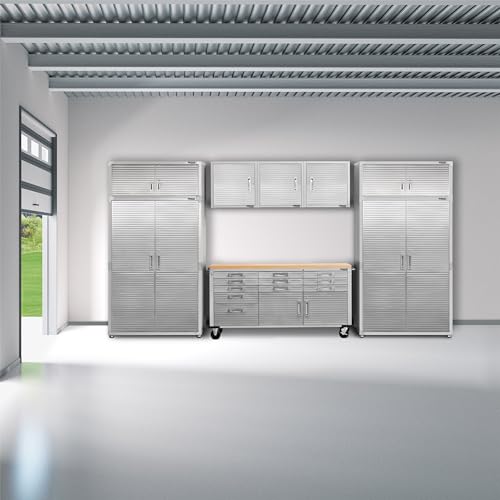
Seville Classics UltraHD® 8-Piece Storage Cabinet with Rolling Workbench
Picked as a relevant option in this category.
View on Amazon- Rolling computer cart: a narrow steel or laminate cart, usually 24–32 in wide, with a pull-out keyboard shelf and one shallow drawer. Built for a laptop or small monitor.
- Mobile desk with drawer stack: a full-size desk, 40–48 in wide, with casters under each leg and a two- or three-drawer pedestal on one side. The closest thing to a normal desk.
- Overbed or C-shaped table with drawer: a cantilevered top on a U or C base that slides under a bed or sofa. Drawers are small, often a single tray.
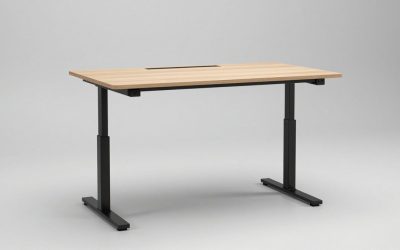
- Height-adjustable rolling workstation: a pneumatic or crank column on a five-caster base, sometimes with a small locking drawer. Common in classrooms, clinics and shared offices.
Key measurements before you buy
Most frustration with rolling desks comes from dimensions that look fine in a photo. These are the figures worth writing down.
| Measurement | Comfortable target | Why it matters |
|---|---|---|
| Typing surface height | 25–30 in (depends on your seated elbow height) | Casters add 2–4 in; many carts end up 31–32 in, too tall for shorter users |
| Knee clearance under drawer | At least 24 in tall, 20 in wide | A drawer box hanging under the top can hit your thighs |
| Desk depth | 20–24 in for a monitor, 16–20 in for a laptop | Shallow carts force the screen too close |
| Caster diameter | 2 in minimum, 3 in for carpet | Small wheels catch on rug edges and thresholds |
| Locking casters | At least 2 of 4 locking | Prevents drift when you lean on the desk |
| Rated load | Your gear plus 30–50 lb margin | A monitor, laptop, printer and full drawers easily reach 50–70 lb |
A simple height check: sit in your usual chair, let your arms hang, bend your elbows to about 90 degrees, and measure from the floor to the underside of your forearm. The keyboard surface should sit at or slightly below that number. If the rolling desk is taller, a keyboard tray or a lower-profile caster set is the fix.
Construction trade-offs
| Build | Typical weight | Strength | Weak point |
|---|---|---|---|
| Steel frame + laminate top | 30–50 lb | Stiff, handles 100+ lb | Drawer runners are often the cheapest part |
| All particleboard with caster plates | 40–70 lb | Adequate on hard floors | Caster screws pull out of particleboard over time |
| Plywood or solid wood | 50–90 lb | Holds screws well, repairs easily | Heavier to push and usually pricier |
| Height-adjustable column base | 35–60 lb | Good for shared use | Top-heavy at full height; tip risk if pushed by the edge |
The caster attachment is the most important detail. Threaded stem casters going into a metal leg or a T-nut last for years. Plate casters screwed directly into particleboard loosen, and once a hole strips there is little holding the wheel. If the product photos show screws going straight into a laminated panel, plan to reinforce with a plywood pad or expect wobble within a year of regular rolling.
Drawers: what to expect at each price level
Rolling desks commonly sell from about $80 to $400, with clinic-grade height-adjustable workstations running higher. The drawers are where the price difference shows.
- Under about $150: fabric bins or drawers on plastic roller runners. Fine for chargers and notebooks; expect some sag with more than 5–8 lb inside.
- About $150–$300: metal roller or ball-bearing slides, sometimes full extension. A single drawer usually rated around 10–20 lb.
- Above $300: ball-bearing full-extension slides, often a locking drawer and a steel case. Useful if the workstation is shared or holds files.
One overlooked detail: drawer contents move the center of gravity. A full drawer on one side of a narrow cart makes it want to tip that way when you push it from the opposite side. Keep heavy items low, and push from the middle of the frame.
Which style suits your situation
| Your situation | Best fit | Notes |
|---|---|---|
| Small apartment, desk must hide in a closet | Rolling cart, 24–32 in wide | Measure the closet door opening and depth, not just the floor |
| Working from bed or sofa part of the day | C-shaped or overbed table with drawer | Base must slide under the furniture; most need 4–6 in floor clearance |
| Full-time home office that occasionally moves | Mobile desk with drawer pedestal | Choose locking casters on all four corners |
| Shared by people of different heights | Height-adjustable rolling workstation | Look for a range of at least 28–40 in |
| Carpeted room | Any type with 3 in casters | Small casters dig into carpet and make pushing tiring |
| Kids’ homework station | Steel-frame mobile desk | Lock casters; a rolling desk under a child leaning on it drifts |
Floors, casters and stability
Caster material should match the floor. Hard nylon wheels roll easily on carpet but can scratch or be noisy on hardwood and tile. Soft polyurethane or rubber-tread wheels are kinder to hard floors. If you have both, choose soft-tread wheels and add a chair mat on carpet zones.
Stability depends on footprint. As a rule of thumb, a rolling desk feels steady when its wheelbase is at least two-thirds as deep as the desktop is tall. A 30 in tall cart with a 16 in deep base will rock when you type firmly; the same cart with a 20 in base will feel much calmer. Cross-bracing or a back panel also stops racking side to side.
Assembly and moving realities
- Box weight: mobile desks with a drawer pedestal usually ship in a 45–80 lb box; carts are typically 20–40 lb.
- Assembly time: 30–60 minutes for a cart, 1.5–3 hours for a desk with drawers. Drawer slides are the fiddly part; install them square or the drawer will bind.
- Doorways: a 30 in interior door fits most rolling desks assembled. Wider desks often need to go through on edge, so lock the casters and tilt carefully.
- Thresholds: lift the leading edge slightly rather than shoving it over a bump; impacts are what loosen caster stems.
What wears first
In rough order: caster locks lose grip, drawer runners start sticking, caster screws loosen, and laminate chips at the front edge where wrists rest. Retighten caster stems every few months if you move the desk often, wax wooden drawer runners or wipe metal slides, and add edge banding or a desk pad if the front edge starts to wear. Replacement casters are inexpensive and a common upgrade for better rolling on carpet or quieter movement on hardwood.
Bottom line
Choose the type by where the desk will roll and how long you sit at it. For occasional laptop work, a steel cart with a single drawer is enough. For a real home office that needs to move, pick a mobile desk with threaded casters, ball-bearing drawer slides and a work surface you can bring to your elbow height. Measure your seated elbow height and your doorways first; those two numbers rule out most poor fits.