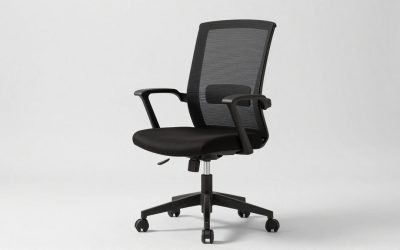
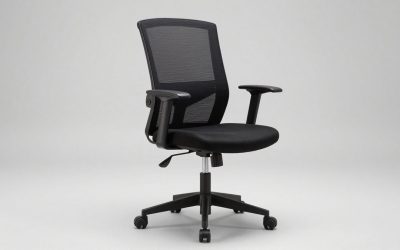
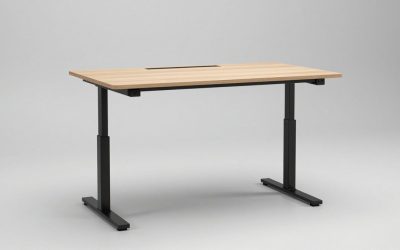
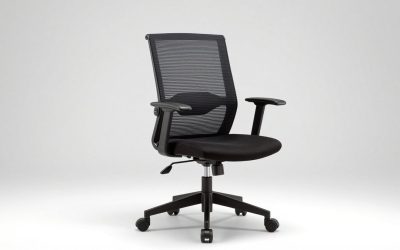
Our Top Picks


A flat top desk with drawers is the default office desk shape, and for most people that’s the right call. No grommet holes, no monitor-arm channel, no cable tray built into the frame. Just a solid rectangle with storage underneath. The trade-off is you have to solve cable management yourself, and the drawers eat into legroom in ways that aren’t obvious until you’re sitting there with a tower case jammed against your knee.
Who this desk shape actually suits
Flat tops with drawers make sense if you want somewhere to put a keyboard tray, a notebook, a charging brick, or spare cables without them living on the desktop. They’re worse than a plain slab desk if you’re running a full tower PC on the floor, because a center drawer or a bank of three side drawers often narrows the usable footwell to 16-18 inches, which is tight once you add a tower, a UPS, or a footrest. Measure your floor gear before you buy, not after.
They’re also usually heavier and more awkward to move than a slab top, since the drawer carcass is attached to the frame rather than just resting on legs. If you rearrange your room often, factor that in.
Drawer configurations and what they’re actually good for
| Configuration | Typical capacity | Best for | Downside |
|---|---|---|---|
| Single shallow center drawer | Pens, cables, a notepad | Keeping the desktop clear without losing legroom | Too shallow for anything bulky; sags if overloaded |
| 2-3 drawer side pedestal | Files, chargers, small electronics | People who need real storage and don’t run a floor PC | Narrows footwell by several inches |
| Mobile pedestal (separate rolling unit) | Same as above, relocatable | Shared desks, renters, anyone who wants flexibility | Takes up floor space, can roll if your floor isn’t level |
| Lockable drawer | Documents, a passport, a backup drive | Home offices with shared living space | Cheap locks are trivial to defeat; don’t rely on it for anything valuable |
If you’re not sure which you need, a mobile pedestal is the safer default. It gives you the storage without permanently committing the desk’s footwell, and you can slide it out of the way on days you need the legroom.
Materials, and what actually breaks
Most drawers in this price range are particleboard or MDF with a laminate skin, running on plastic or basic steel glides. That’s fine for normal use. What fails first is almost always the glide, not the wood: cheap drawers start sticking or dropping at the front after six months to a year of daily opening and closing, especially if they’re loaded past a few pounds. Full-extension ball-bearing glides cost more but survive years of daily use without binding. If a listing doesn’t mention the glide type, assume it’s the cheap plastic kind and budget accordingly.
The other common failure is the drawer bottom. Thin hardboard bottoms can bow or tear out at the staples if you store anything heavier than office supplies, like a small UPS battery or a stack of textbooks. If you plan to store anything with real weight, check the weight rating or go up a tier.
Cable management on a flat top
Without a built-in grommet, you’ve got three realistic options: run cables off the back edge and let them hang, drill your own grommet hole, or clip everything to the underside of the desk. Drilling is permanent but gives the cleanest result, and a standard 2-inch hole saw handles most grommets. If you don’t want to commit to drilling, an under-desk cable tray does almost as much work and is removable. Either way, a basic under-desk cable tray keeps power strips and excess cord off the floor, which matters more than people expect once you’ve got a monitor, a dock, and a lamp all fighting for the same outlet.
If the desk has a drawer directly under the desktop, route your cables around it rather than through it. Drawers that get even light cable pressure from above tend to stick on the glide track, which is a cheap-glide failure mode you can avoid just by planning the run before you mount anything.
What to actually buy
For a basic home office setup, a laminate flat top with one or two drawers in the 24-30 inch depth range covers most needs and usually runs well under what a comparable desk with a cable channel or monitor arm cutout costs. If you want more storage without redesigning your whole setup, pairing a plain flat top with a rolling file cabinet is often cheaper and more flexible than paying extra for a built-in multi-drawer pedestal, and you’re not stuck with the storage layout if your needs change.
Skip the lock feature unless you specifically need it; it adds cost and most desk locks are easily bypassed, so don’t treat it as real security. If you’re buying mainly for the drawers rather than the desktop, compare drawer glide quality and weight rating before comparing finish or color, since that’s what determines whether the desk still works the same way in year three.
Finally, if your main complaint with your current desk is clutter rather than lack of storage, a desktop organizer tray solves that for a fraction of the cost of upgrading the whole desk. Not every storage problem needs a new desk; sometimes it needs better use of the one you have.