Computer stand tables range from $20 folding trays to $600 motorized sit-stand desks, and the price mostly tracks three things: how much weight the frame can hold, whether it moves, and how much desktop space you get. If you’re trying to figure out what you actually need to spend, here’s what the different price bands get you and where the money stops buying anything useful.
Under $50: laptop stands and small media carts
This range covers basic laptop stands, TV/monitor carts on wheels, and small particleboard tables meant for a single monitor or a printer. Construction is thin MDF or laminated particleboard with cam-lock fasteners, and the weight rating is usually 30-50 lbs total. These are fine for a laptop, a small monitor, or a printer stand in a corner. They are not fine for a full desktop setup with a tower, two monitors, and a mechanical keyboard — the top will bow within a few months and the leg joints loosen if you move it around.
Failure mode at this price: wobble develops at the leg-to-top connection because the fasteners are into particleboard, not a solid frame. Tightening helps for a while, then the screw holes strip out. If you’re buying in this range, buy it expecting a 1-2 year lifespan, not furniture you’ll keep for a decade.
$50-$150: fixed-height desks and basic computer tables
This is the real “computer desk” range — fixed-height tables around 40-55 inches wide, usually with a particleboard or MDF top (sometimes with a laminate or veneer wrap) on a steel frame. Weight capacity typically runs 100-200 lbs, which is enough for a tower PC, dual monitors, and a decent amount of desk gear. Steel-frame construction at this price is a meaningful upgrade over the under-$50 category because the frame, not the tabletop joinery, is doing the structural work.
What you’re not getting here: height adjustment, cable routing features, or a top thick enough to resist long-term sag under heavy monitor arms. If you’re mounting a monitor arm, check the stated max load on the clamp separately from the desk’s weight rating — a $90 desk with a 150 lb rating can still fail at the clamp point if the top is thin MDF, because the arm concentrates force on a small area rather than distributing it. Browsing a computer desk under $150 search, you’ll see this is where most “gaming desk” branded tables also sit, often with cable grommets and headphone hooks as the main differentiators from plain office desks.
$150-$350: manual and basic electric standing desks
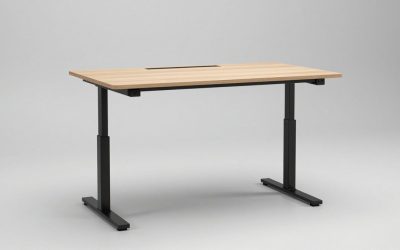
Below $250 you’ll mostly find crank-adjustable or pneumatic standing desks. Above that, single-motor electric sit-stand frames start showing up. The jump in price here buys you a steel frame rated 150-250 lbs, a thicker worktop (usually 1 inch vs. 0.7 inch at the cheaper tier), and in the electric models, a controller with memory height presets.
Single-motor desks at the low end of this range tend to have one weak point: they wobble at full height, especially above 45 inches, because one motor is driving both legs through a crossbar rather than two independent motors. If you’re tall or you plan to use the desk standing most of the day, that wobble matters — it’s noticeable when typing. If you’ll use standing mode occasionally, it’s a non-issue.
$350 and up: dual-motor standing desks and solid-wood tables
This range splits into two different products that happen to cost the same. One is dual-motor electric standing desks, which fix the wobble problem above and typically carry 220-300 lb ratings with stable lift up to 48 inches. The other is solid-wood or bamboo-top desks sold as premium fixed-height furniture, where the price is paying for material and finish rather than mechanism.
For a desk that’s going to carry a tower, 2-3 monitors on arms, and see daily height changes, dual-motor electric is the category worth paying for. For a desk that will sit at one height permanently with a laptop and maybe one monitor, a $400 solid-wood table is paying for aesthetics, not function — a $120 steel-frame table will hold the same load just as reliably.
Price-to-feature comparison
| Price range | Typical weight capacity | Height adjustment | Good for |
|---|---|---|---|
| Under $50 | 30-50 lbs | None | Laptop, single small monitor |
| $50-$150 | 100-200 lbs | None (fixed) | Full desktop PC setup, dual monitors |
| $150-$350 | 150-250 lbs | Crank or single-motor electric | Occasional standing use |
| $350+ | 220-300 lbs | Dual-motor electric | Daily standing use, heavy monitor arms |
Where not to overspend
Two things people pay extra for without getting real benefit: tempered glass tops, and standing desks rated above 300 lbs for a setup that weighs under 80 lbs total. Glass tops look clean but transmit vibration from mechanical keyboards and amplify any wobble in the frame — a laminate or wood top is quieter and more forgiving. And unless you’re running multiple monitor arms plus a full ATX tower plus accessories, a 300+ lb rating is headroom you’ll never use; that money is better spent on a dual-motor mechanism or a larger worktop.
If you’re also planning cable management as part of the setup, factor that into the desk choice itself — a tray or grommet holes built into a standing desk with cable management saves you from retrofitting a separate cable tray later, which is a $15-25 add-on either way but easier to mount before the desk is loaded with gear.
The honest rule: match the price to how often the desk moves and how much it carries. A static setup doesn’t need a motor. A heavy multi-monitor rig doesn’t need to be expensive wood, it needs a rated steel frame. Spending more only pays off when it’s solving a specific load or motion problem you actually have.