
Key takeaways
- Warranty Description: 2 Year Manufacturer
- Tension Supported: 1000 pounds
- Handle Type: Fixed Handle
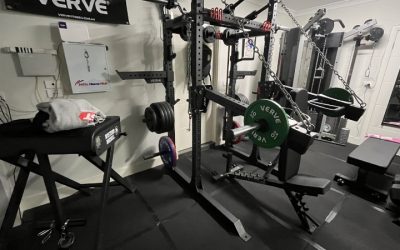
The tape measure is the honest broker in any garage gym conversation. Before the barbell, before the plates, before the rubber flooring, you need to know whether a rack will actually clear your ceiling joists and still leave room to walk past the water heater. A standard power rack eats roughly a 4-by-4-foot patch of floor and wants 84 to 90 inches of vertical space once you account for pull-up bar clearance and your own knuckles. In a basement with 88-inch ceilings or a single-car garage that still has to hold a car, those inches decide everything.
That constraint is why the CAP Barbell power rack family keeps showing up in tight-space builds. It is not the heaviest steel on the market and nobody is confusing it with a competition rig, but it hits a specific target: bolt-together construction, a compact footprint, and an attachment ecosystem that lets you add dip bars, landmines, or plate storage as your training changes instead of buying a second rack. For lifters working with 200 to 315 pounds on the bar and a room that doubles as storage, that trade is usually the right one.
Our top picks

 ULTRA FUEGO Power Cage
- Warranty Description: 2 Year Manufacturer
- Tension Supported: 1000 pounds
- Handle Type: Fixed Handle
 DP01 Power Cage
- Warranty Description: 2 year
- Tension Supported: 2000 pounds
- Grip Size: Standard


As an Amazon Associate we earn from qualifying purchases at no extra cost to you.
Quick Comparison
| Configuration | Typical Footprint | Best Suited To | Watch Out For |
|---|---|---|---|
| Full power rack (four upright) | ~48″ × 48″ | Solo lifters who squat and bench heavy without a spotter | Needs 84″+ ceiling clearance; hardest to relocate once loaded |
| Squat stand / half rack | ~48″ × 30″ | Garages where the car still parks inside | No rear safety catch, so bail technique matters |
| Short-upright rack (under-80″ builds) | ~48″ × 48″ | Low basements where a pull-up bar won’t fit anyway | Overhead pressing inside the rack may be limited |
| Rack plus plate-storage attachment | Adds 6″–10″ per side | Rooms with no wall space for a separate plate tree | Widens the walk-around path; measure doorways first |
| Rack plus dip / landmine attachment | Adds ~12″ of rear depth | Lifters replacing multiple machines with one station | Attachment fit is model-specific, not universal |
How to Choose
- Measure vertically before horizontally. Stand where the rack will go, reach up with a fist closed, and mark the ceiling. If you cannot get your knuckles above the future pull-up bar height, you are buying a rack with a decorative bar. Subtract for joists, garage door tracks, and light fixtures that swing.
- Count the hole spacing in the bench zone. Racks with 2-inch uniform spacing are fine for squats but frustrating for bench press, where an inch of J-cup height changes your unrack path. Look for tighter spacing in the lower third, or plan to shim with a thicker pad.
- Decide whether the rack must move. Bolt-together racks are stable when torqued down but miserable to shuffle weekly. If the car comes in every night, a squat stand on furniture sliders or a wall-fold design beats a full cage no matter how good the price is.
- Check the attachment catalog before you buy the base. Dip handles, safety straps, and landmine sleeves are sized to a specific upright profile and hole diameter. Buying a rack and hoping a generic accessory fits is how people end up drilling their own steel.
- Match the weight rating to your five-year ceiling, not today’s. A rating that comfortably covers a 250-pound squat feels generous until you are three years into linear progression. Add margin for the dynamic load of racking a bar hard, which is well above the static number on the plates.
Top Picks Reviewed
CAP Barbell Power Racks and Attachments
The appeal here is modularity at a price that leaves budget for a bar and plates, which is the part beginners consistently underestimate. The uprights are perforated for adjustable J-hooks and safeties, and CAP sells matched attachments so the rack grows into a dip station, a landmine anchor, or a plate-storage post without a second purchase decision. Assembly is a bolt-together affair with a socket wrench and roughly an hour of patience; the practical tip is to leave every bolt finger-tight until the frame is square, then torque from the base up. Skipping that order is the single most common reason people report wobble.
In use, it behaves like what it is: a solid mid-tier rack that rewards a level floor. On concrete it sits quiet. On a wood subfloor or over foam tiles, expect some flex feedback when you rack a heavy set, which a pair of rubber horse-stall mats or a plywood platform largely solves. The steel gauge and 2-inch tubing are lighter than commercial rigs, so it is not the pick for someone chasing a 500-pound squat, but for the 135-to-315 range that describes most home lifters, it does the job and costs a fraction of a bolted-down competition cage. Verify the specific model’s upright height and weight capacity against your room and your goals before ordering, since the lineup spans several sizes and the compact versions differ meaningfully from the tall ones.
Frequently Asked Questions
Do I need to bolt a power rack to the floor?
For most home lifters, no. A four-upright rack with plates loaded on the storage posts is stable under normal squatting and benching. Bolting becomes worth considering if you do kipping pull-ups, use band tension anchored to the base, or if the rack sits on a surface where it can creep. If you rent, weight-loading the base is the reversible alternative.
Can I bench press safely inside a rack without a spotter?
Yes, provided you use safeties set at the right height and test them empty first. Lie on the bench, set the pins or straps just below your chest at the bottom of your press, and confirm the bar rests on them while you can still slide out from underneath. Do this before your first heavy session, not during it.
What ceiling height do I need for pull-ups?
Add roughly 16 to 20 inches to your standing reach for a full hang with no head contact. Most people need 90 inches or more of clear height for comfortable pull-ups inside a rack. Below that, plan on using a doorway bar or rings hung from a joist, and treat the rack’s pull-up bar as a place to hang bands.
Is a squat stand enough, or do I need the full cage?
If you train alone and push to failure on squats or bench, the cage earns its footprint through the rear safeties that catch a failed rep. Squat stands with adjustable spotter arms are a reasonable middle ground and save about 18 inches of depth. Bare stands with no catch mechanism should be paired with a disciplined bailing habit and a clear floor behind you.
Final Thoughts
A tight space does not require compromise so much as sequencing. Measure the vertical clearance first, choose between a cage and a stand based on whether you train alone, then let the attachment ecosystem cover the exercises you would otherwise buy machines for. The CAP Barbell rack line fits that logic well: modest steel, honest pricing, and enough accessory support to keep a small room useful for years. Confirm the exact model dimensions against your own ceiling and floor before checkout, put down proper mats, and spend what you save on a bar worth keeping.
Write Your Review
No reviews yet. Be the first to share your experience!