
A dropped 45-pound plate hits the floor with about the same force as a bowling ball falling off a countertop, and it doesn’t care whether that floor is a garage slab, a basement, or the laminate in a spare bedroom. That single fact drives almost every flooring decision in a home gym. Concrete won’t crack from one dumbbell, but it will chip, dust, and telegraph impact straight into your knees on lunges. Wood subfloors flex and squeak. Tile shatters. Whatever you put down has to absorb energy, stay put under a shifting rack, and survive being wiped with a rag that smells faintly of chalk.
The good news: gym flooring is one of the rare upgrades where the cheap option is often genuinely the right one. Recycled rubber stall mats run a fraction of what “fitness-branded” tiles cost and outlast most of them. The trade-off is weight — a 4×6 sheet of 3/4-inch rubber runs close to 100 pounds and takes two people and a utility knife’s worth of patience. Foam tiles flip that equation: light, cheap, and installable in twenty minutes, but they dent under a rack foot and split when a barbell lands on a seam. Below is a comparison of what actually holds up, sorted by what you’re lifting and how much floor you’re willing to fight.
Our top picks



As an Amazon Associate we earn from qualifying purchases at no extra cost to you.
Quick Comparison
| Option | Typical Thickness | Rough Cost per Sq Ft | Install Effort | Best Use |
|---|---|---|---|---|
| Rubber horse stall mats | 3/4 in | $1.50 – $2.50 | Hard (weight, trimming) | Racks, deadlifts, heavy dumbbells |
| Interlocking rubber tiles | 3/8 – 1 in | $3 – $6 | Easy to moderate | Odd-shaped rooms, upstairs gyms |
| Rolled rubber | 1/4 – 1/2 in | $2 – $4 | Moderate (long, heavy rolls) | Large open spaces, seamless look |
| EVA foam tiles | 1/2 – 3/4 in | $0.80 – $1.75 | Very easy | Bodyweight, yoga, kettlebell flow |
| Gym turf | 3/8 – 1/2 in pile | $2.50 – $5 | Moderate | Sled pushes, sprints, sled lanes |
| Vinyl plank over underlayment | 5 – 8 mm | $2 – $4 | Moderate | Cardio machines, multi-use rooms |
How to Choose
- Start with your heaviest impact, not your average workout. If you’ll ever drop a loaded bar, plan for 3/4-inch rubber under that zone, even if the rest of the room is foam. Design for the worst-case rep.
- Check what’s underneath. Slab-on-grade wicks moisture, so anything sealed to the floor traps it. Use loose-lay mats or tiles on concrete and skip the adhesive unless you’ve done a calcium chloride or plastic-sheet moisture test.
- Measure the door, not just the room. Rolled rubber comes in 4-foot widths and 25-foot lengths weighing 200-plus pounds. If your basement access is a 36-inch door and a turn, tiles or mats are the only realistic answer.
- Budget for smell and time, not just dollars. Recycled rubber off-gasses noticeably for one to three weeks. Plan to air the space out, or choose a virgin-rubber or vinyl-topped product if the gym shares air with a bedroom.
- Think about the second layer. A cheap base plus a small platform beats wall-to-wall premium flooring. Two stall mats over 3/4-inch plywood create a deadlift platform for well under a hundred dollars.
Top Picks Reviewed
3/4-Inch Recycled Rubber Stall Mats
The default answer for anyone who owns a barbell. Sold at farm supply and tractor stores in 4×6 sheets, these are dense enough that a dropped plate makes a dull thud instead of a crack. Cut them with a fresh utility blade against a straightedge — score deep, bend, repeat. Buy one extra sheet for trim pieces, and let them lie flat under weight for a week to relax the curl from shipping.
Interlocking Rubber Tiles (8 mm to 1 Inch)
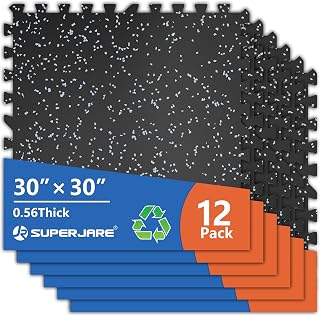
Puzzle-edge rubber tiles cost roughly twice what stall mats do, but each piece weighs 15 to 25 pounds instead of 95. That matters if you’re carrying flooring down stairs alone or building around a furnace, sump pit, or angled wall. The interlock keeps them from creeping under a rack. Look for tiles with a defined durometer rating and a straight-edge border kit so the perimeter doesn’t look chewed.
Rolled Rubber (1/4 to 1/2 Inch)
The closest thing to a commercial gym finish. One continuous surface means no seams for chalk and dust to collect in, and it vacuums like a hard floor. Half-inch handles dumbbells and machine bases well; it is not a deadlift surface on its own. Unroll it and let it sit two days before trimming, because rubber relaxes and grows slightly.
High-Density EVA Foam Tiles
Cheap, quiet, forgiving on knees and spines, and light enough to reconfigure in minutes. The honest limits: rack feet leave permanent dimples, treadmill legs sink, and a barbell edge will gouge them. Treat foam as a comfort layer for bodyweight training, mobility work, and light dumbbells, and use the thickest density you can find rather than the thickest sheet.
Gym Turf Rolls
Turf turns a driveway-adjacent garage bay into a functional lane for sled work, prowler pushes, and crawls, with enough grip that sneakers won’t slide. Non-infill turf with a rubber backing is the practical residential choice — nothing to spill, nothing to vacuum out. Ten to twelve feet of width along one wall usually earns its keep more than a full-room install.
Luxury Vinyl Plank over Foam Underlayment
For a room that has to look like part of the house between sessions. Click-lock LVP with a 2 mm pad handles a bike, rower, or treadmill and cleans up in seconds. Put a rubber mat under any machine with hard feet or a heavy flywheel, and never plan on dropping weight — vinyl dents and the wear layer will scar.
Frequently Asked Questions
How thick does gym flooring need to be for deadlifts?
Three-quarter-inch rubber over concrete is the practical minimum, and even then most lifters add a plywood-and-rubber platform to spread the load. On a wood-framed upper floor, use a platform regardless — the concern there is joist deflection and noise transfer, not just surface protection.
Will rubber mats damage or stain my concrete?
Loose-laid rubber rarely damages a slab, but it can trap moisture and leave dark discoloration where the sealer reacts to it. Sweep the slab clean, let it dry fully, and lift a mat corner every few months in a damp basement to check underneath.
Do I need to glue anything down?
Usually no. Weight and friction hold rubber in place, and a loose-lay install stays replaceable. Reserve adhesive or double-sided seam tape for thin rolled rubber in high-traffic lanes where edges want to curl.
How do I stop the new-rubber smell?
Ventilate hard for the first two weeks, run a fan pointed at the floor, and scrub once with a mild degreaser and warm water to remove surface residue. The odor fades substantially within a month; a fully sealed room with no airflow will hold it far longer.
Final Thoughts
The most durable home gym floors are rarely the most expensive ones. Rubber stall mats over a clean slab, with a plywood platform where the bar comes down, handle nearly everything a serious garage setup asks of them for a couple hundred dollars. Spend the extra money only where it buys something specific: interlocking tiles when you can’t carry 95-pound sheets, rolled rubber when you want a seamless surface, turf when you’re pushing a sled, vinyl when the room doubles as living space. Measure twice, account for the doorway, and give whatever you buy a week to flatten out and air off before you load a bar over it.




Write Your Review
No reviews yet. Be the first to share your experience!