
Key takeaways
- Warranty Description: 2 Year Manufacturer
- Tension Supported: 1000 pounds
- Handle Type: Fixed Handle
The rack decision usually gets made backwards. People pick a model first, then discover their garage ceiling sits at 7’4″ and the 90-inch uprights they ordered won’t clear the door track. Start with three measurements instead: floor-to-joist height, the depth you can surrender without losing the car, and the swing radius of a barbell when you unrack it. That last one catches everyone — a 7-foot bar needs roughly 30 inches of clearance on each side before you’re scraping drywall or a water heater.
Once you have those numbers, the cage-versus-half-rack question mostly answers itself. A full four-post cage gives you enclosed safety, pull-up real estate, and a mounting surface for every attachment ever machined — at the cost of about 12 to 16 additional inches of depth. A half rack pushes the footprint forward and lets you lift from the open side, which is why they dominate in basements with support columns and garages where the rack shares a wall with shelving. Neither is objectively better. One fits your room and one doesn’t.
Our top picks
 ULTRA FUEGO Power Cage
- Warranty Description: 2 Year Manufacturer
- Tension Supported: 1000 pounds
- Handle Type: Fixed Handle

 DP01 Power Cage
- Warranty Description: 2 year
- Tension Supported: 2000 pounds
- Grip Size: Standard


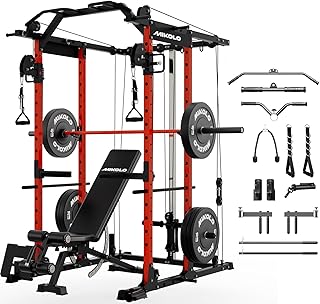

As an Amazon Associate we earn from qualifying purchases at no extra cost to you.
As an Amazon Associate we earn from qualifying purchases.

Quick Comparison
| Rack | Type | Tubing / Hardware | Footprint (approx.) | Best For |
|---|---|---|---|---|
| Rogue RML-3W Fold Back | Wall-mounted folding | 3×3, 5/8″ pin | 21.5″ deep open, 4″ folded | Shared garages, tightest spaces |
| REP PR-1100 | Full cage | 2×3, 5/8″ pin | 48″ x 47″ | First rack on a budget |
| Titan T-3 Series (Short) | Full cage, 71″ tall | 2×3, 5/8″ pin | 48″ x 43″ | Low ceilings, basements |
| REP PR-4000 | Full cage, modular | 3×3, 1″ pin | 48″ x 53″ | Heavy lifters wanting upgrade paths |
| Force USA MyRack | Modular half/full | 2.4×2.4, 1″ pin | Configurable | All-in-one functional trainers |
| Rogue RML-390BT | Full cage, 90″ tall | 3×3, 1″ pin | 53″ x 49″ | Permanent home gym centerpiece |
How to Choose
- Measure vertical clearance twice. An 80-inch rack under a 90-inch ceiling still needs assembly room to tilt uprights upright. If you’re below 7’6″, look specifically at short or wall-mounted models rather than trimming a tall one.
- Match tubing to your lifts, not your ego. 11-gauge 2×3 steel handles a 400-pound squat without drama. Step to 3×3 with 1-inch hardware when you’re loading heavy, dropping bars into spotter arms, or planning a rack-mounted pulley system.
- Check hole spacing where it matters. One-inch or two-inch spacing through the bench-press zone lets you dial in the exact bar height. Uniform 2-inch spacing everywhere else is fine and cheaper.
- Decide about bolting down now. Cages with deep bases and a loaded weight-plate storage system stay put unbolted. Half racks and short-footprint models genuinely want anchors or a rear ballast bar.
- Audit the attachment ecosystem. The rack you buy determines every future purchase: lat towers, landmines, dip bars, safety straps. A slightly pricier frame with a broad accessory catalog often costs less over three years than a cheap one you outgrow.
Top Picks Reviewed
Rogue RML-3W Fold Back Wall Mount Rack
The problem-solver. It bolts to studs or a plywood-backed wall, swings out to 21.5 or 41.5 inches depending on the version, and folds flat when you need the parking space back. Deployment takes about eight seconds once you stop being precious about it. The tradeoff is honest: no rear uprights means no enclosed cage feel, and you must have solid framing to anchor into. If your gym is a car’s daytime home, this is the answer.
REP PR-1100
The best on-ramp available. You get a genuine four-post cage, a multi-grip pull-up bar, and included dip attachment for less than most people spend on a barbell and plate set. The 2×3 uprights and 1,000-pound rating are more than adequate for years of progression. Numbered laser-cut holes make bench setup repeatable. It’s not a lifetime rack, but it’s an entirely legitimate first one.
Titan T-3 Series Power Rack (Short)
Built for the 7-foot basement ceiling. At 71 inches, it clears joists that swallow standard racks, and Titan sells the deep 36-inch version if you want to bench inside the cage. Fit and finish trail the premium brands — expect to ream a hole or two during assembly — but the value ratio is hard to argue with. Pull-ups require ducking your knees; plan on rings or a doorway bar instead.
REP PR-4000
The sweet spot for serious lifters who don’t want to re-buy later. Full 3×3 uprights, 1-inch hardware, 1-inch hole spacing through the pressing range, and an attachment catalog that covers lat/low-row towers, leg rollers, and multi-grip bars. Configurable depth and height at checkout means you can spec it to your exact ceiling. Assembly runs two to three hours; the hardware actually lines up.
Force USA MyRack Modular Power Rack
For anyone converting a single footprint into a whole gym. The MyRack accepts a functional trainer with dual weight stacks, a Smith machine carriage, chin-up stations, and storage — all bolting onto one modular frame. You buy modules as budget allows. It’s the densest capability per square foot on this list, though the 2.4-inch tubing and pulley housings make it visually bulkier than a bare cage.
Rogue RML-390BT
The buy-it-once option. Ninety inches tall, 3×3 Monster Lite uprights, laser-cut numbering, and a fat-and-skinny pull-up bar standard. Because Monster Lite is an established hole pattern, third-party and Rogue attachments will fit it indefinitely. It’s overbuilt for a 315-pound squat and that’s precisely the appeal — nothing flexes, nothing rattles, and resale value stays absurdly high.
Frequently Asked Questions
Do I have to bolt my rack to the floor?
Most full cages with a 47-inch or deeper base don’t require it, especially once plates hang on the rear posts. Bolt down if you have a shallow footprint, a half rack, a tall 90-inch frame, or you plan to do kipping pull-ups and heavy rack pulls. Concrete wedge anchors cost a few dollars and take twenty minutes.
Are safety straps better than steel spotter arms?
Straps absorb the impact of a dumped bar and are gentler on both the barbell and the rack. Steel pipes handle higher static loads and don’t stretch. Practically, straps for squats inside a cage and steel arms for benching outside one is a solid split.
Can I bench press inside a 24-inch-deep rack?
Tightly, and not comfortably. A 24-inch cage forces the bench partway out, which puts the J-cups behind your shoulders in an awkward spot. Choose 30 inches or deeper if benching inside the cage matters to you.
Is 3×3 tubing actually worth the upgrade?
It matters for two reasons beyond raw strength: rigidity under dynamic loading, and access to the broader attachment ecosystems built around 3×3 patterns. If you’ll never exceed moderate weight and don’t want a lat tower, 2×3 saves real money.
Final Thoughts
The best rack is the one that fits the room you actually have and still works after your lifts double. In tight or shared spaces, a folding wall-mount beats a cage you’d have to disassemble every weekend. If you have a dedicated corner and a ceiling above 8 feet, spend once on 3×3 steel and stop thinking about racks entirely. Anywhere in between, a mid-tier full cage with a live attachment catalog gives you the most room to grow without a second purchase.
8 Best Gym Mats for Home: Rubber vs Foam Picks for Any Floor
Best gym mat for home choices come down to material density and...
8 Best Rowers for Home Gym: Air, Magnetic and Water Compared
Best rowers for home gym shortlists usually collapse once someone measures the...

8 Best Weight Home Gyms: 6 All-in-One Machines for Small Rooms
Best weight home gym decisions come down to two numbers before brand...
8 Best Home Gym Equipment for Beginners: The Starter Setup
Best home gym equipment for beginners is not a machine – it...
Best Treadmills for Home Gym: 5 Picks by Deck and Motor
Best treadmills for home gym decisions come down to two specifications and...
8 Best Home Gym Compact Setups: 6 Space-Saving Picks Ranked
Best home gym compact claims usually quote a stored footprint and stay...

Best Adjustable Bench for Home Gym: 5 Picks Ranked by Use
Best adjustable bench for home gym decisions turn on three numbers most...
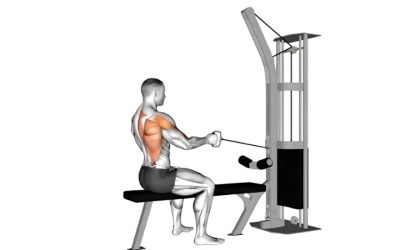
Best Cable Machine for Home Gym: 5 Picks and Pulley Ratios
Best cable machine for home gym shortlists collapse quickly once you convert...
8 Best Cable Machines for Home Gym: 5 Types and Their Limits
Best cable machines for home gym use are not one product category...
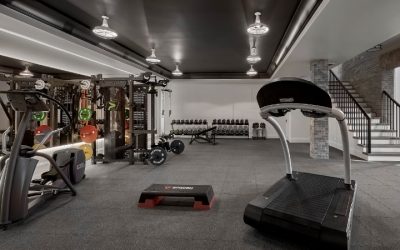
8 Best Home Gym Setups: Floors, Ceilings, Noise and Layout
Best home gym setup guides talk about equipment and skip the room,...
Write Your Review
No reviews yet. Be the first to share your experience!