
Key takeaways
- Item Dimensions L x W x H: 6.5"L x 12"W x 6.5"H
- Maximum Weight Recommendation: 226 Kilograms
- Material: Stainless Steel Plastic Rubber
An ab wheel is the cheapest piece of equipment that can genuinely humble a strong person, and that is exactly why most of them end up under a bed. The movement asks your abs to resist extension while your shoulders hold an overhead position, and the failure mode is not a gentle stall — it is your hips sagging and your lower back taking the load. So the real buying question is not which wheel rolls smoothest. It is which wheel gives you a way to shorten the range, control the return, and build from a six-inch rollout to a full one without wrecking your back in week two.
That is where the category splits. Plain wheels are just a hub, an axle, and grips; they are honest, durable, and completely unforgiving. Rebound wheels add an internal spring that pushes back on the way out, effectively assisting the hardest part of the return. Some add elbow supports so you can train the same pattern from forearms when your shoulders are not ready. Below, each option is judged on how it handles a beginner who cannot yet do a clean rollout — and where the extra hardware becomes a crutch.
Our top picks
 Abiarst Ab Roller Wheel
- Item Dimensions L x W x H: 6.5"L x 12"W x 6.5"H
- Maximum Weight Recommendation: 226 Kilograms
- Material: Stainless Steel Plastic Rubber
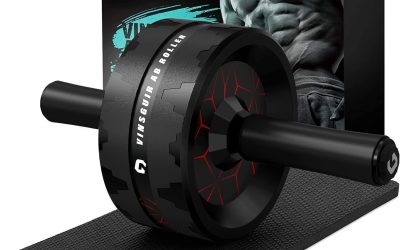
 VINSGUIR Ab Roller Wheel
- Item Dimensions L x W x H: 6.5"L x 12"W x 6.5"H
- Maximum Weight Recommendation: 440 Pounds
- Material: Plastic, Rubber, Stainless Steel
 VINSGUIR Ab Roller Wheel
- Item Dimensions L x W x H: 7"L x 11"W x 7"H
- Maximum Weight Recommendation: 300 Pounds
- Material: Alloy Steel
| Product | Key specs | |
|---|---|---|
| Abiarst Ab Roller Wheel | Item Dimensions L x W x H: 6.5"L x 12"W x 6.5"H Maximum Weight Recommendation: 226 Kilograms Material: Stainless Steel Plastic Rubber | Check price |
| VINSGUIR Ab Roller Wheel | Item Dimensions L x W x H: 6.5"L x 12"W x 6.5"H Maximum Weight Recommendation: 440 Pounds Material: Plastic, Rubber, Stainless Steel | Check price |
| VINSGUIR Ab Roller Wheel | Item Dimensions L x W x H: 7"L x 11"W x 7"H Maximum Weight Recommendation: 300 Pounds Material: Alloy Steel | Check price |
 2026 Upgraded Ab Roller Wheel with Knee 2026 Upgraded Ab Roller Wheel with Knee | Check price | |
 2026 Upgraded Ab Roller Wheel with Knee 2026 Upgraded Ab Roller Wheel with Knee | Item Dimensions L x W x H: 9.84"L x 4.13"W x 18.11"H Maximum Weight Recommendation: 400 Pounds | Check price |
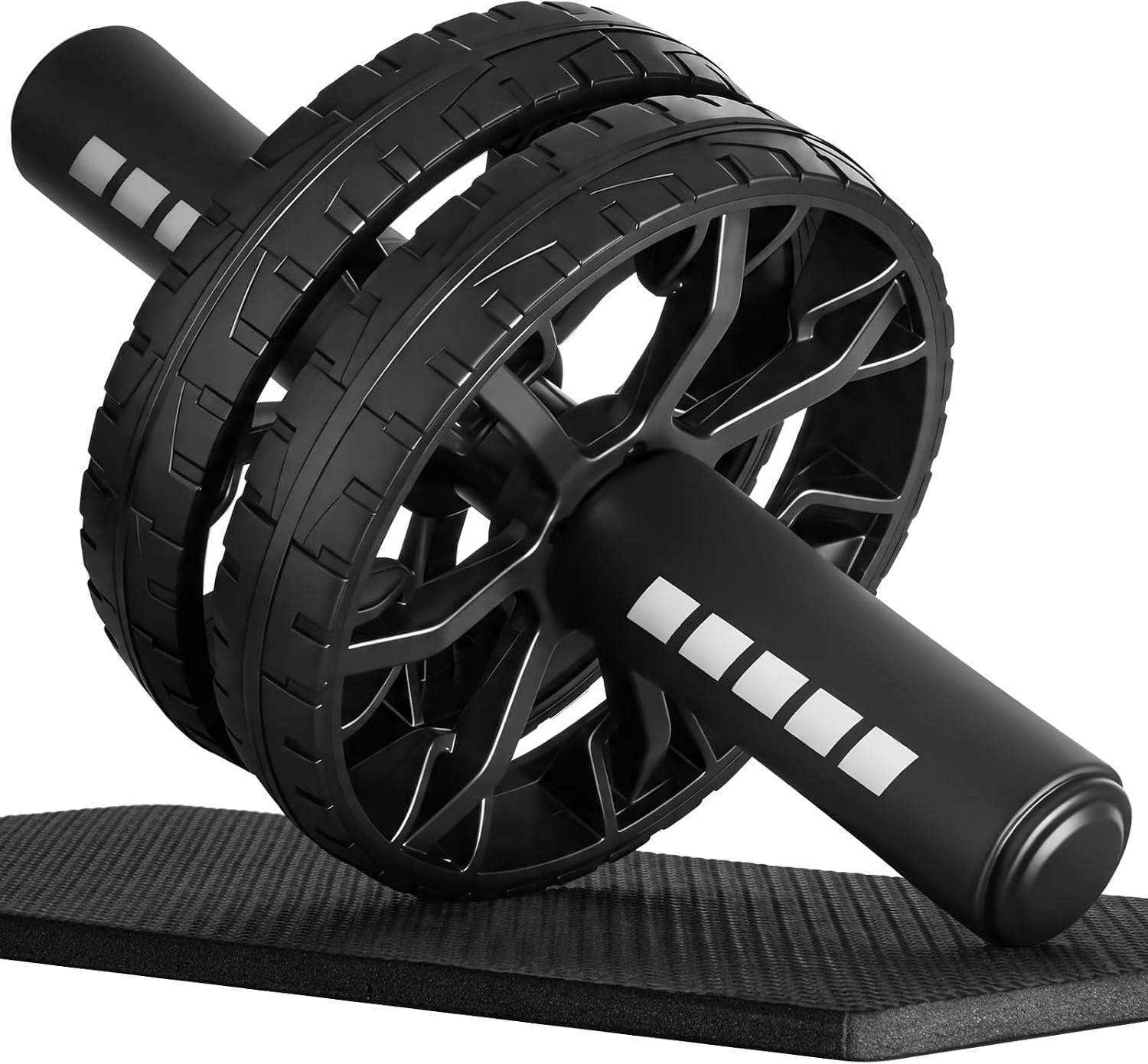 Upgraded Ab Roller Wheel Upgraded Ab Roller Wheel | Tension Supported: Abdominal Core Workout Equipment Item Dimensions L x W x H: 11.8"L x 2.76"W x 6.1"H Maximum Weight Recommendation: 500 Pounds | Check price |
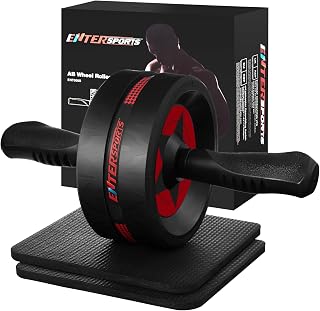 Ab Roller Wheel for Abs Workout Ab Roller Wheel for Abs Workout | Check price | |
 Ab Roller Wheel Ab Roller Wheel | Amps up Your Ab Workout: With its uniquely… Sturdy & Durable: The ab roller for abs… Perfect for Home Gyms: Beyond core strengthening, the… | Check price |
As an Amazon Associate we earn from qualifying purchases at no extra cost to you.
Quick Comparison
| Product | Best For | Standout Feature | Watch Out For |
|---|---|---|---|
| Abiarst Ab Roller Wheel | Straightforward core training | Simple hub with no mechanism to fail | Zero assistance on the return |
| VINSGUIR Ab Roller with Knee Pad | Hard floors and bare knees | Bundled knee pad sized for the kneeling start | Pad slides on tile unless it is on a mat |
| VINSGUIR Ab Roller Wheel (Home Gym Set) | Everyday abdominal work | Wide tread that tracks straight | Grips are firm rather than cushioned |
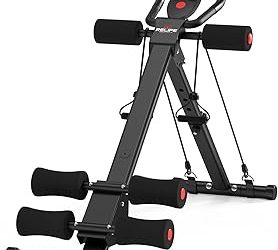
| Upgraded Rebound Wheel with Timer and Elbow Support | Absolute beginners | Spring rebound assists the return phase | Rebound can mask a sagging hip position |
| Rebound Wheel with Knee Mat and Timer | Structured, timed sessions | Built-in timer for interval-style sets | More parts to store than a bare wheel |
| Upgraded Ab Roller with Knee Pad | Full-body carryover work | Stable stance for kneeling and push-up variants | Assembly must be checked before heavy use |
How to Choose
- Return assistance: If you cannot currently pull yourself back from a half rollout, a spring-loaded rebound wheel buys you a training effect you would otherwise skip entirely.
- Wheel width: Wide or dual wheels resist side-to-side wobble, which protects the shoulders. Narrow single wheels demand more stability and punish sloppy form.
- Knee interface: A dedicated pad or mat is not a luxury on tile or laminate. Kneecap pain ends rollout programs faster than abdominal fatigue does.
- Grip diameter and material: Foam grips that compress unevenly twist under load. Firmer grips feel less plush but keep your wrists in line with the axle.
- Elbow support option: Forearm-style handles let you keep training the anti-extension pattern on days when your shoulders are cranky from pressing work.
Top Picks Reviewed
Easiest Entry Point: Rebound Wheel with Timer and Elbow Support
The internal spring is the whole argument here. On the way out it stores energy; on the way back it returns a portion of it, which turns an exercise most beginners cannot complete into one they can perform for reps. The elbow support extends that further by letting you train from the forearms, and the timer nudges you toward timed sets instead of counting to failure.
The limitation is real: the rebound will happily drag you home even when your hips have already dropped and your lower back is doing the work. Film one set from the side. If your ribs and pelvis are not staying stacked, shorten the range rather than trusting the spring.
Best Plain Wheel: Abiarst Ab Roller Wheel
No spring, no timer, no electronics — a hub, an axle and two grips. That simplicity is a durability argument, because the only things that can fail are the bearing and the tread, and both are easy to inspect. For anyone who already owns a controlled half-rollout, this is all the equipment the movement needs.
What you give up is any margin for error. There is no assistance, so the first session tends to end in soreness through the lats and lower abs rather than a productive number of reps. Start with rollouts into a wall to cap the range.
Best Floor Comfort: VINSGUIR Ab Roller with Knee Pad
The bundled pad matters more than it sounds. Rollouts are performed from a kneeling base, and on hard flooring the kneecap becomes the limiting factor within two sets. Having a pad sized to the movement means your first month is governed by core fatigue instead of joint discomfort.
On slick tile the pad can creep forward as you extend, which subtly lengthens the range mid-set. Placing it on a textured exercise mat, or against a wall edge, keeps it planted.
Best for Broader Training: Upgraded Ab Roller with Knee Pad
Marketed toward full-body strength rather than abs alone, this style is stable enough to use for kneeling rollouts, oblique rollouts at an angle, and slow eccentric-only work where you lower out and reset with your hands. That variety is what keeps a wheel in rotation past month two.
Because these arrive partially assembled, the axle collar deserves a check before your first heavy set. Give the wheel a firm side-to-side wiggle; any play there should be tightened, not trained through.
Frequently Asked Questions
How far should a beginner roll out?
As far as you can go while keeping your ribs pulled down and your lower back from arching — often only twelve to eighteen inches at first. Set a rolled towel or a wall as a hard stop, then move it out an inch every week or two.
Is a rebound wheel worth it if I am already strong?
Less so. Trained lifters usually want the resistance profile of a plain wheel because the spring removes load exactly where the exercise is hardest. Rebound earns its keep during the first few months, or when returning after a layoff.
Why do my shoulders hurt more than my abs?
Usually a range-of-motion issue. If your overhead position is limited, the end of a rollout forces the shoulder past what it can control. Shorten the range, keep the wheel path narrow, and add lat and thoracic mobility work before chasing distance.
Can I use one on carpet?
Yes, though thick pile adds noticeable drag and can make the wheel veer. Medium or low-pile carpet is fine; on plush carpet a firm mat under the wheel path gives a more consistent roll.
Final Thoughts
Match the wheel to the rollout you can actually perform today, not the one you imagine. If a controlled return is out of reach, a rebound model with elbow support gets you training now; if you already own the movement, the plain Abiarst or VINSGUIR wheels give you a cleaner resistance curve and fewer parts to worry about. Either way, budget for knee padding and treat range of motion — not rep count — as the number you are trying to increase.
Write Your Review
No reviews yet. Be the first to share your experience!