
Key takeaways
- Age Range Description: Adult
- Mount Type: Doorway Mount
- Item Dimensions W x H: 37"W x 20.2"H
Before you read a single review, go get a tape measure. Three numbers decide whether a doorway pull up bar works in your home or ends up back in its box: the inside width of the door opening, the depth of the casing that the bar’s leverage brackets hook over, and the clear height from the top of the frame to the ceiling. Most doorway openings in North American homes measure 30 to 36 inches wide, but the trim around them varies wildly — a builder-grade colonial casing might give you a full inch of usable lip, while flat modern trim mounted flush to the drywall gives you almost nothing for a leverage bar to press against. That trim lip is the whole mechanism. No lip, no bar.
The second measurement people skip is headroom above the frame. A leverage-style bar rests its upper pads 8 to 16 inches above the doorway, which means you need that much uninterrupted flat wall — no crown molding, no light switch, no transom window. And if your ceiling sits only a few inches above the door header, a tall multi-grip bar physically cannot tilt into position. Below you’ll find picks organized by mounting method rather than by brand hype, because the mounting method is what determines whether the thing holds you or peels your paint off in sheets.
Our top picks
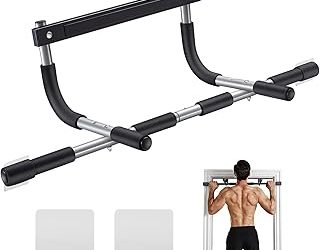
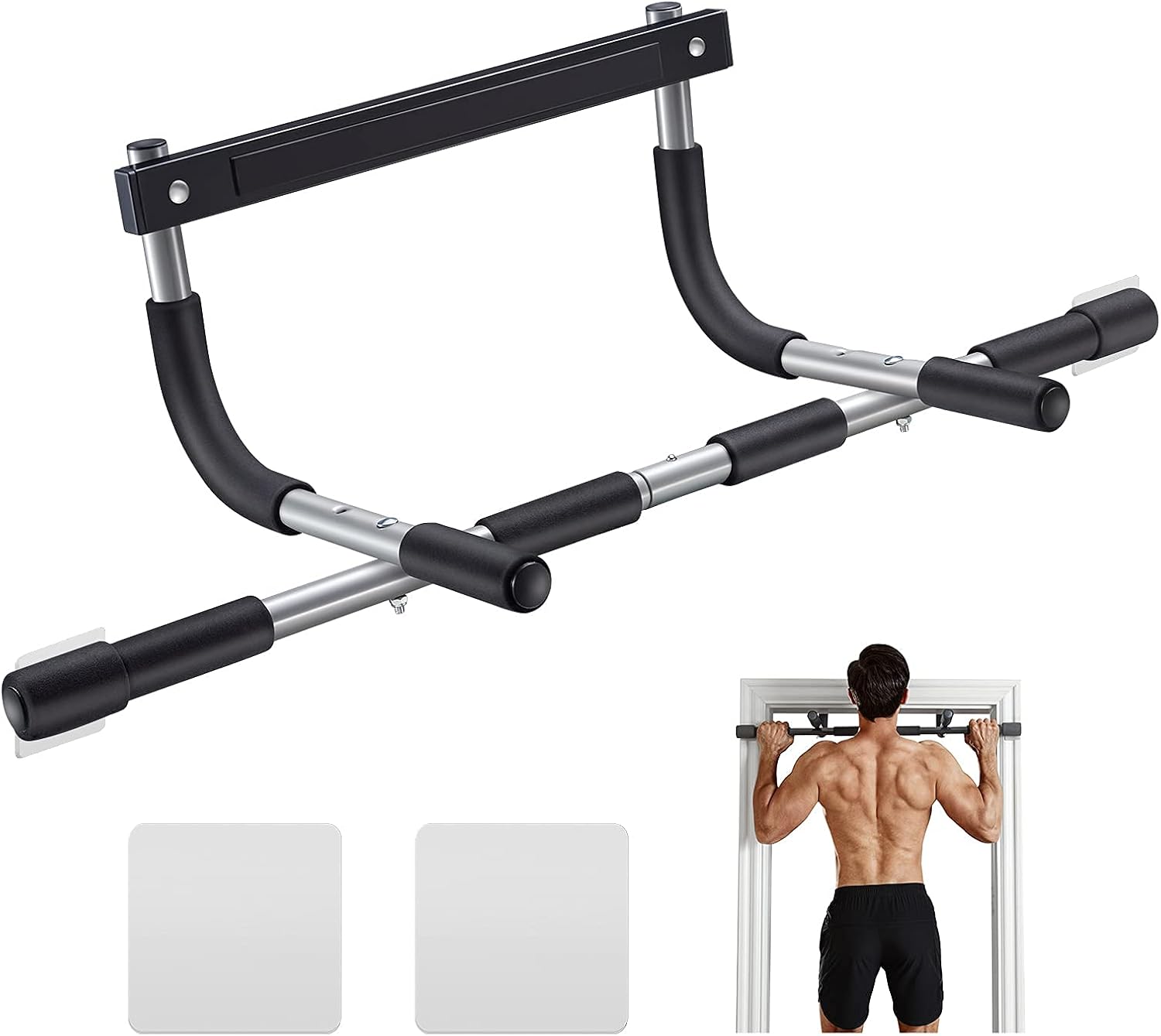 Ally Peaks Pull Up Bar for Doorway
- Age Range Description: Adult
- Mount Type: Doorway Mount
- Item Dimensions W x H: 37"W x 20.2"H
Thickened 1.7mm steel construction supports up to 440 pounds
Silicone door protectors avoid marking the frame
Backed by a 180-day return window
Fits only doorways between 24 and 32 inches wide
Requires removal to use the doorway for anything else


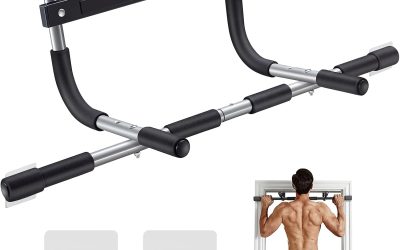
 Sportneer Pull Up Bar for Doorway
- Age Range Description: Adult
- Mount Type: Doorway Mount
- Item Dimensions W x H: 37.01"W x 6.69"H
No-drilling design leaves door frames without marks
Dual gear lock on both ends resists loosening over time
Spirit levels help ensure a level, correct install
Fits only doorways between 29.5 and 37 inches wide
Not rated for ceramic tile or similarly fragile surfaces
 KAKICLAY 2026 Upgrade Multi-Grip Pull Up Bar
- Age Range Description: Adult
- Mount Type: Doorway Mount
- Item Dimensions W x H: 10.5"W x 2"H
Angled ergonomic grips aim to protect wrists during pulls
Includes suspension straps for added exercise variety
Foldable design stores away in seconds after use
Narrower doors may need the shortened hook spacing
Fit range tops out at a 36.22-inch door width


As an Amazon Associate we earn from qualifying purchases at no extra cost to you.
Quick Comparison
| Pick | Mount Type | Door Width Range | Trim Lip Needed | Typical Capacity | Best For |
|---|---|---|---|---|---|
| Multi-Grip Leverage Bar | No-screw leverage | 24–36 in | ~0.75 in or more | 250–300 lb | Renters wanting neutral + wide grips |
| Slim-Profile Leverage Bar | No-screw leverage | 26–32 in | ~0.5 in | 220–250 lb | Flat modern trim, tight headroom |
| Telescoping Pressure-Fit Bar | Friction inside frame | 26–40 in adjustable | None | 200–250 lb | Trim-free openings, light training |
| Bolt-Through Frame Bar | Screwed into studs | Fixed bracket spacing | None | 400 lb+ | Homeowners doing weighted work |
| Doorway Rack Extension Bar | Leverage + offset arms | 28–36 in | ~1 in | 300 lb | Clearing the door swing for kipping |
How to Choose
- Measure the trim lip with a ruler, not your thumb. Leverage bars convert your hanging weight into downward pressure on the upper wall pads and rearward pressure on the casing. Under half an inch of lip and the bar can walk sideways under load.
- Add 40 pounds of margin to the stated capacity. A dead hang is static; a kip, a drop, or a weighted vest spikes the load well past bodyweight. If you weigh 190, shop the 300-pound tier, not the 220.
- Check the bar’s standoff distance. The gap between the bar and the wall determines whether your knuckles smash into the door frame at the top of the rep. Two inches is cramped; three and a half feels natural for most shoulders.
- Look at the pad material and surface area. Foam-covered steel plates spread the load across the wall. Bare metal brackets and small rubber feet leave dents in drywall, and those dents come out of your security deposit.
- Decide if you need the doorway back. Some leverage bars lift off in five seconds; others require unhooking a pinned crossmember. If the doorway is your kitchen entrance, prioritize a one-motion removal.
Top Picks Reviewed
Multi-Grip Leverage Bar
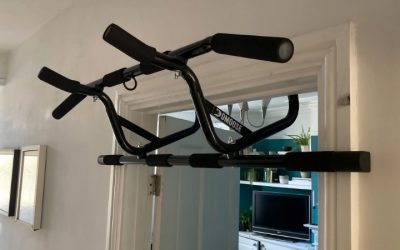
This is the shape most people picture: a wide steel frame with a straight center section, angled neutral handles, and outer wide-grip hooks. The extra hand positions matter more than they sound like they do, because narrow neutral grips let you train pulling volume without hammering the same elbow tendon angle every session. It needs real trim to bite into and roughly 14 inches of clear wall above the header. Expect it to be heavy and slightly awkward to lift into place the first few times, then trivial once you learn the tilt-and-set motion.
Slim-Profile Leverage Bar
Built for the apartment with flat 1×4 casing and a ceiling that barely clears the door. The upper pads sit lower and wider, spreading load over more wall area, and the bar tube stays closer to the frame. The tradeoff is a shorter standoff, so tall lifters will feel their forehead near the trim at lockout. Capacity is usually a step down from the full-size units, which makes it a poor match for weighted pull-ups but a fine one for volume bodyweight work.
Telescoping Pressure-Fit Bar
An expanding tube that jams itself between the two sides of the opening. It leaves no marks and installs in under a minute, which is why it’s the default choice for dorms and short-term rentals. Treat it with respect: it relies entirely on friction and on the frame being solidly built. Test it with a slow, controlled hang before you ever swing on it, retighten monthly, and skip it entirely if your jamb feels flexible or the fit isn’t dead square.
Bolt-Through Frame Bar
Two mounting plates lagged into the studs beside or above the opening, with a fixed bar between them. It’s the only category where 400-pound ratings are honest, and it’s the only one that won’t shift a millimeter during explosive work. You’ll drill holes and you’ll need a stud finder, but you also gain full range of motion, unlimited hand positions on a bare bar, and a solid anchor for rings or a suspension trainer.
Doorway Rack Extension Bar
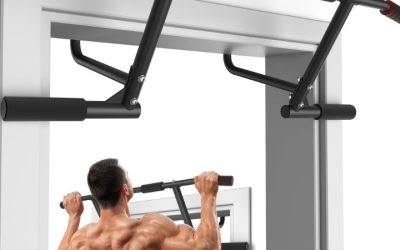
A leverage bar with the pull-up tube pushed forward on offset arms, buying four to six inches of clearance from the wall. This is the answer if you want to kip, do leg raises without scraping the door, or hang knee tucks. The offset increases the rotational force on the trim, so it demands the deepest casing of any option here and the most careful pad placement.
Frequently Asked Questions
Will a doorway pull up bar damage my wall?
Properly placed, it compresses rather than pierces — but paint can still burnish or dent where the pads sit. Wide foam pads help. So does a thin square of rubber shelf liner under each contact point, and checking placement after your first few sessions before dents set in.
My trim is only a quarter inch deep. What now?
Skip leverage bars entirely; there’s nothing for them to grab. Either use a telescoping pressure-fit bar in a square, sturdy opening, or bolt a fixed bar into the studs. Trying to force a leverage design onto shallow trim is how casing gets cracked.
Can two people use the same bar at different heights?
On leverage and pressure-fit models, the height is set by the door frame, so no. If height flexibility matters — a shorter user who wants their feet off the floor, a taller one who wants a full hang — the bolt-mounted option is the only one you can place where you want it.
How do I know if the bar is seated correctly?
Grip it and pull straight down with about half your weight while your feet stay on the ground. Nothing should click, rock, or slide. Then hang fully, listening for creaks from the trim. Repeat that check any time you remove and reinstall it.
Final Thoughts
The best doorway pull up bar is the one that matches your specific opening, and you cannot know that from a product page alone. Write down your door width, trim depth, and headroom, then match those three numbers to a mounting style: deep trim and clearance point to a multi-grip leverage bar, shallow flat trim points to a slim-profile model or a bolt-through mount, and a bare square opening in a rental points to a pressure-fit tube. Get the fit right and a bar that costs less than two months of gym access will quietly outlast most of the equipment you’ll ever buy.



Write Your Review
No reviews yet. Be the first to share your experience!