
Key takeaways
- Age Range Description: Adult
- Mount Type: Doorway Mount
- Item Dimensions W x H: 37"W x 20.2"H
The average American moves roughly every five years, which is a fact worth considering before bolting anything into a wall. A pull-up bar bought today will likely outlive your current address, and how well it survives that transition varies enormously. A doorway bar goes in a box and works in the next place, assuming the door widths cooperate. A joist mount stays behind as four patched holes. A power tower needs to be disassembled, transported, and rebuilt, which people discover is a two-hour job at exactly the wrong moment.
Framed that way, the cheapest bar is not always the best long-term purchase and the most permanent one is not always the most durable investment. What matters is whether the design survives being moved, whether replacement parts exist in five years, and whether it will still fit the doorways of a home you have not seen yet. Six options compared on the ten-year view rather than the first-workout view.
Our top picks
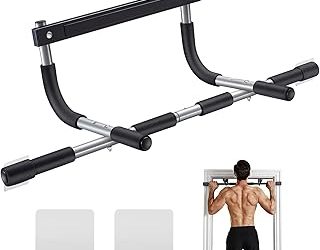
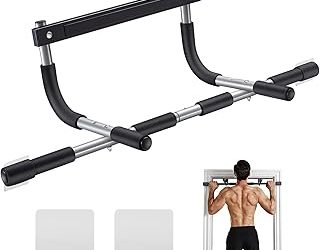
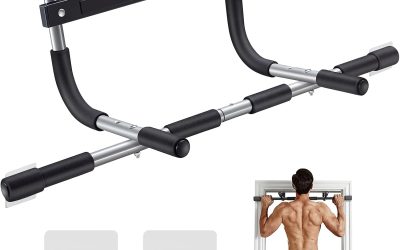
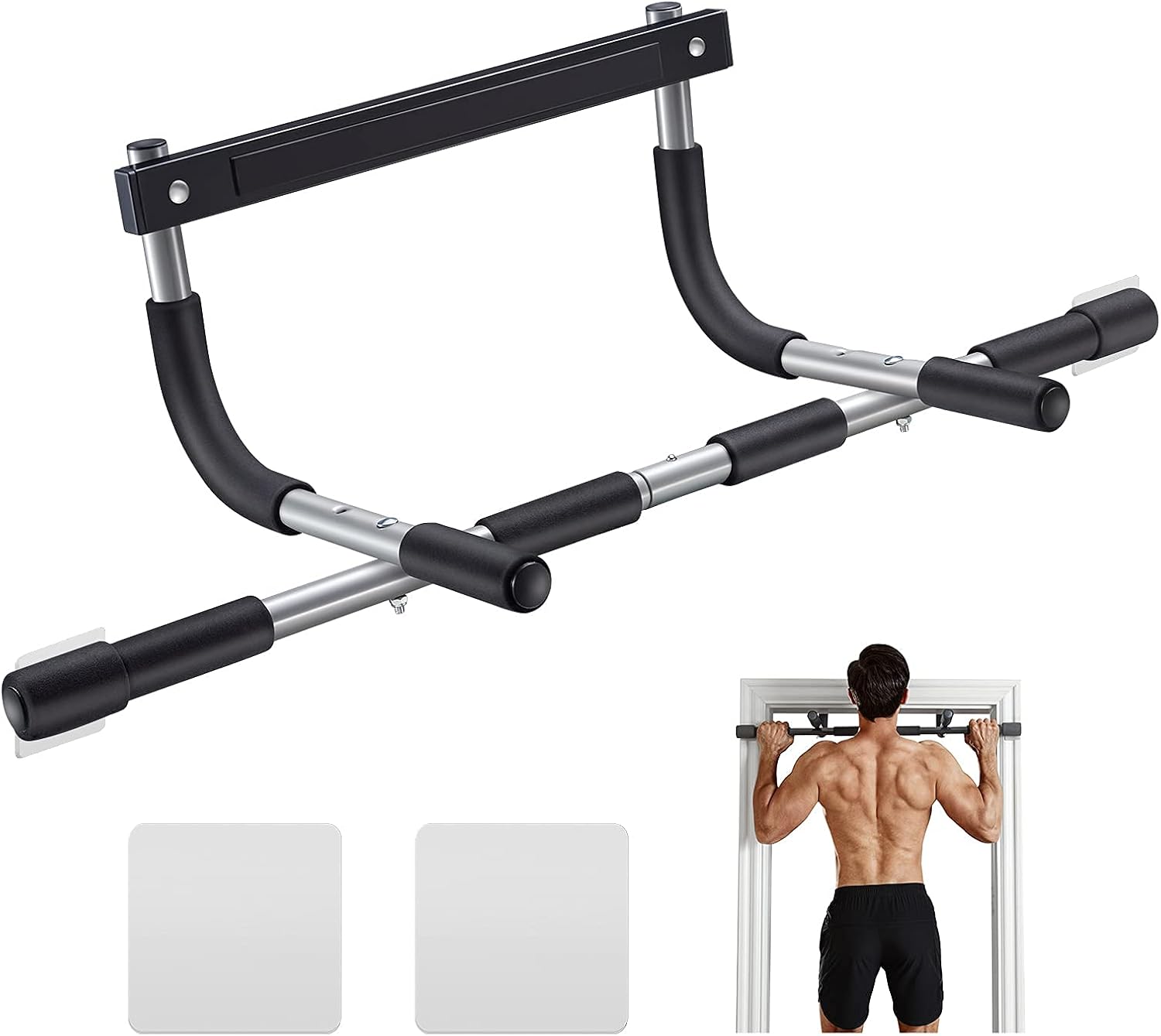 Ally Peaks Pull Up Bar for Doorway
- Age Range Description: Adult
- Mount Type: Doorway Mount
- Item Dimensions W x H: 37"W x 20.2"H
Thickened 1.7mm steel construction supports up to 440 pounds
Silicone door protectors avoid marking the frame
Backed by a 180-day return window
Fits only doorways between 24 and 32 inches wide
Requires removal to use the doorway for anything else
 Sportneer Pull Up Bar for Doorway
- Age Range Description: Adult
- Mount Type: Doorway Mount
- Item Dimensions W x H: 37.01"W x 6.69"H
No-drilling design leaves door frames without marks
Dual gear lock on both ends resists loosening over time
Spirit levels help ensure a level, correct install
Fits only doorways between 29.5 and 37 inches wide
Not rated for ceramic tile or similarly fragile surfaces
| Product | Key specs | |
|---|---|---|
| Ally Peaks Pull Up Bar for Doorway | Age Range Description: Adult Mount Type: Doorway Mount Item Dimensions W x H: 37"W x 20.2"H | Check price |
| Sportneer Pull Up Bar for Doorway | Age Range Description: Adult Mount Type: Doorway Mount Item Dimensions W x H: 37.01"W x 6.69"H | Check price |
 Ally Peaks Pull Up Bar for Doorway Ally Peaks Pull Up Bar for Doorway | Check price | |
 2026 Upgrade Multi-Grip Pull Up Bar with 2026 Upgrade Multi-Grip Pull Up Bar with | Age Range Description: Adult Mount Type: Doorway Mount Item Dimensions W x H: 10.5"W x 2"H | Check price |
 SPORTSROYALS Free Standing Pull Up Bar SPORTSROYALS Free Standing Pull Up Bar | Warranty Description: 2-Year Warranty Maximum Weight Recommendation: 360 Pounds Warranty Type: No Warranty | Check price |
 Joist Mount Pull Up Bar Joist Mount Pull Up Bar | Age Range Description: Adult, Teen Mount Type: Ceiling Mount Item Dimensions W x H: 42.5"W x 12.9"H | Check price |
 Ally Peaks Pull Up Bar for Doorway Ally Peaks Pull Up Bar for Doorway | Check price | |
 Ally Peaks Pull Up Bar for Doorway Ally Peaks Pull Up Bar for Doorway | Check price |
As an Amazon Associate we earn from qualifying purchases at no extra cost to you.
Quick Comparison
| Product | Best For | Standout Feature | Watch Out For |
|---|---|---|---|
| Ally Peaks Multi-Grip Doorway Bar | Moving between homes | Disassembles into a flat, packable set of parts | Next home’s door widths may not suit it |
| Sportneer No-Drill Doorway Bar | Frequent relocations | 29.5-37 in range fits most future doorways | Adjustment hardware is the long-term wear point |
| Ally Peaks 440 lb Doorway Bar | Decade-long ownership | Thickened steel resists fatigue over years | Coating chips lead to rust in storage |
| Upgrade Multi-Grip Bar with Larger Hooks | Homes with varied trim styles | Larger hooks fit a wider range of casings | Oversized hooks fail on unusually thin trim |
| SPORTSROYALS Free Standing Power Tower | Long-term stationary setups | Welded steel frame outlasts most home gyms | Full disassembly required for any move |
| Joist Mount Wall Pull Up Bar | Owners staying put | Simple design with almost nothing to wear out | Stays behind or leaves holes when you move |
How to Choose
- Estimate your horizon: Staying in the same home for a decade justifies drilling. Renting or expecting a move within two years argues strongly for a portable design.
- Check the adjustment range: Standard interior doors run 28 to 36 inches, so a bar spanning 29.5 to 37 inches will fit most future homes. Narrower ranges are a gamble.
- Assess the finish: Powder coating that chips during a move exposes steel to garage humidity. Look for durable finishes and expect to touch up bare spots.
- Count the parts: Fewer components means fewer things to lose in a move. A tower with 40 pieces and specialized hardware is a genuine liability when relocating.
- Think about the removal cost: A wall mount is cheap to install and costs drywall repair, primer, and paint to undo. Include that in your comparison.
Top Picks Reviewed
Best Portability: Ally Peaks Multi-Grip Doorway Bar
It breaks down into a manageable set of steel pieces and reassembles in minutes at the other end. Multi-grip functionality that travels is genuinely uncommon, and it means you keep your training options after a move rather than starting over.
The unknown is the next home. Multi-grip doorway bars have specific frame requirements, and a house with unusually deep casing or a nonstandard opening can render it unusable until you find a different doorway.
Widest Future Compatibility: Sportneer No-Drill Doorway Bar
The 29.5 to 37 inch adjustment range covers essentially every standard interior door you are likely to encounter, which is the single best predictor of whether a bar will still be useful in your next place.
Adjustment mechanisms accumulate wear. After several years and multiple moves, the locking hardware is where problems appear first, usually as a setting that will not stay put.
Best Built to Last: Ally Peaks 440 lb Doorway Bar
Thick-wall steel does not fatigue meaningfully under home-gym cycles. Structurally this bar will be fine long after the household around it has changed twice.
Finish is the vulnerability rather than strength. Chips acquired during a move let moisture reach bare steel, and a bar stored in a damp garage between homes can come out with real surface rust.
Most Adaptable Fit: Upgrade Multi-Grip Bar with Larger Hooks
Larger hooks accommodate a broader range of trim depths, which raises the odds it will work in whatever home you land in next. Fit flexibility is underrated as a longevity feature.
The range has a lower bound. On very thin modern trim the oversized hooks can sit loosely, so a home built with minimal casing may actually suit a standard bar better.
Best Stationary Investment: SPORTSROYALS Free Standing Power Tower
A welded steel frame with multiple stations is the closest thing here to commercial equipment, and it will still be serviceable in a decade. If it is going into a basement that stays a basement, the value proposition is strong.
Moving it is the problem. Full disassembly, careful hardware storage, and a rebuild at the other end turn a simple relocation into a project, and towers frequently get sold rather than moved.
Simplest Long-Term Design: Joist Mount Wall Pull Up Bar
There is almost nothing to fail: a steel bar, mounting plates, and bolts. Nothing adjusts, nothing wears, and nothing loosens once properly torqued. Over ten years this is the lowest-maintenance option on the list.
It does not come with you in any meaningful sense. You can unbolt the bar, but the mounting position, the framing, and the patched holes stay behind, and the next home requires a fresh installation.
Frequently Asked Questions
Will a doorway bar fit in any house?
Most, not all. Standard interior doors fall within common adjustment ranges, but wide openings, archways without casing, and very deep trim can all defeat a doorway design.
How do I store a pull-up bar between homes?
Keep it dry and bag the hardware separately with a note about the model. Damp garage storage and lost bolts are the two things that turn a working bar into scrap.
Do power towers hold their resale value?
Reasonably well if complete and rust-free, though buyers discount heavily for missing hardware. Photographing the assembly before disassembly makes resale considerably easier.
What does it cost to remove a wall-mounted bar?
Materials are minimal: filler, primer, and paint. The real cost is matching the existing wall color, which often means repainting a full wall rather than a patch.
Final Thoughts
Buy for the length of time you expect to stay put. A portable doorway bar with a wide adjustment range is the safest long-term purchase for anyone whose address might change, while a joist mount or a tower rewards people who know where they will be in five years. Both approaches can last a decade; only one of them can move with you easily.



Write Your Review
No reviews yet. Be the first to share your experience!