
Key takeaways
- Age Range Description: Adult
- Mount Type: Doorway Mount
- Item Dimensions W x H: 37"W x 20.2"H
The spending pattern in this category is predictable and wasteful. Someone buys the cheapest doorway bar to test whether they will stick with training, uses it for four months, finds it flexes and slips, then buys a better one. Then, a year later, they buy a power tower because they want dips too. Three purchases, one of which was never used again, when a single well-chosen item would have covered the whole arc.
The counter-argument is real, though: most people genuinely do not know whether they will keep training, and spending heavily on equipment that becomes a coat rack is its own waste. The right answer depends on your honest track record. If you have abandoned two previous fitness purchases, buy the inexpensive option and prove yourself wrong. If you have trained consistently for years and are simply moving it home, skip the intermediate step. Here is what each tier actually gets you.
Our top picks
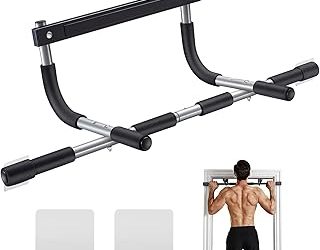
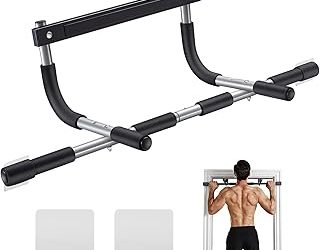
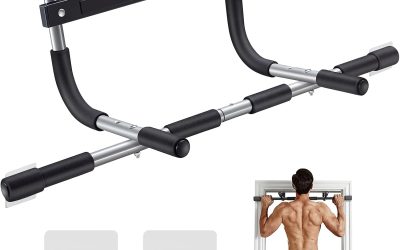
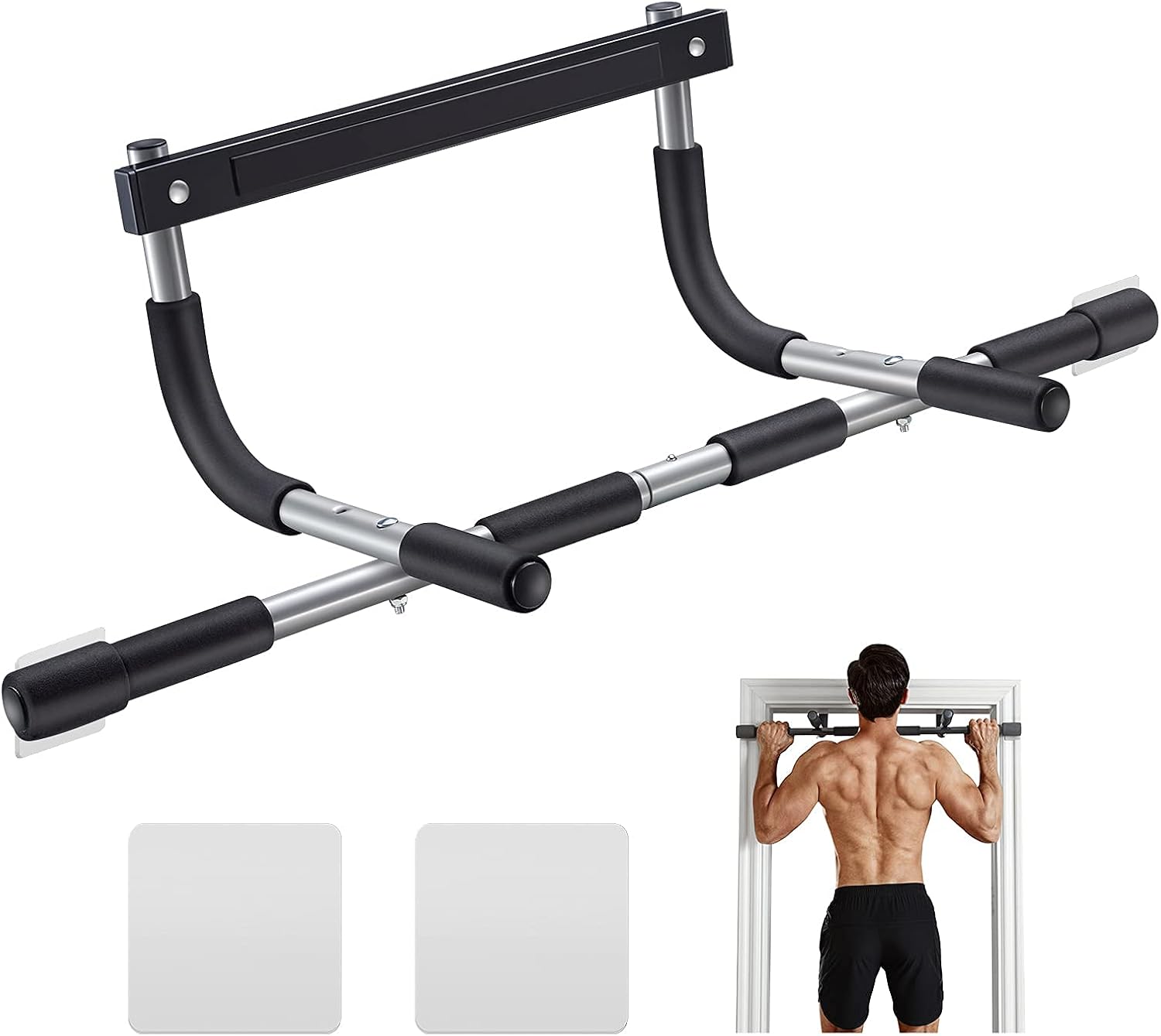 Ally Peaks Pull Up Bar for Doorway
- Age Range Description: Adult
- Mount Type: Doorway Mount
- Item Dimensions W x H: 37"W x 20.2"H
Thickened 1.7mm steel construction supports up to 440 pounds
Silicone door protectors avoid marking the frame
Backed by a 180-day return window
Fits only doorways between 24 and 32 inches wide
Requires removal to use the doorway for anything else
 Sportneer Pull Up Bar for Doorway
- Age Range Description: Adult
- Mount Type: Doorway Mount
- Item Dimensions W x H: 37.01"W x 6.69"H
No-drilling design leaves door frames without marks
Dual gear lock on both ends resists loosening over time
Spirit levels help ensure a level, correct install
Fits only doorways between 29.5 and 37 inches wide
Not rated for ceramic tile or similarly fragile surfaces
| Product | Key specs | |
|---|---|---|
| Ally Peaks Pull Up Bar for Doorway | Age Range Description: Adult Mount Type: Doorway Mount Item Dimensions W x H: 37"W x 20.2"H | Check price |
 Ally Peaks Pull Up Bar for Doorway Ally Peaks Pull Up Bar for Doorway | Check price | |
| Sportneer Pull Up Bar for Doorway | Age Range Description: Adult Mount Type: Doorway Mount Item Dimensions W x H: 37.01"W x 6.69"H | Check price |
 2026 Upgrade Multi-Grip Pull Up Bar with 2026 Upgrade Multi-Grip Pull Up Bar with | Age Range Description: Adult Mount Type: Doorway Mount Item Dimensions W x H: 10.5"W x 2"H | Check price |
 Ally Peaks Pull Up Bar for Doorway Ally Peaks Pull Up Bar for Doorway | Check price | |
 SPORTSROYALS Free Standing Pull Up Bar SPORTSROYALS Free Standing Pull Up Bar | Warranty Description: 2-Year Warranty Maximum Weight Recommendation: 360 Pounds Warranty Type: No Warranty | Check price |
 New Upgrade Pull Up Bar for Doorway New Upgrade Pull Up Bar for Doorway | Check price | |
 Ally Peaks Pull Up Bar for Doorway Ally Peaks Pull Up Bar for Doorway | Check price |
As an Amazon Associate we earn from qualifying purchases at no extra cost to you.
Quick Comparison
| Product | Best For | Standout Feature | Watch Out For |
|---|---|---|---|
| Ally Peaks Multi-Grip Doorway Bar | The one-purchase doorway solution | Grip variety removes the reason to upgrade | Costs more than a basic bar you may not exceed |
| Ally Peaks 440 lb Doorway Bar | Buying once for heavier users | Capacity you will not outgrow | Overspecified for a light, occasional trainee |
| Sportneer No-Drill Doorway Bar | Testing the habit cheaply | Low outlay with a real 440 lb rating | Simple design may feel limiting within a year |
| Upgrade Multi-Grip Bar with Larger Hooks | Avoiding a fit-driven return | Wider trim compatibility reduces the risk of a wasted buy | Premium fit features you may not need |
| Ally Peaks Width-Adjustable Doorway Bar | Households with more than one doorway | Adaptability extends useful life across homes | Adjustment adds cost over a fixed-width bar |
| SPORTSROYALS Free Standing Power Tower | Replacing several future purchases | Pull-ups, dips, and knee raises in one outlay | Highest cost and largest commitment up front |
How to Choose
- Audit your history: Count how many fitness purchases you have abandoned. Two or more argues for the cheapest viable option first, regardless of what you intend this time.
- Price the upgrade path: A basic bar plus a later tower costs more than the tower alone. If a tower is where you will end up, buying twice is pure waste.
- Value fit over features: A returned bar is a total loss of time and often shipping. Paying slightly more for a design that definitely fits your doorway is good economics.
- Count the movements: A doorway bar gives you pulling. A tower adds pushing and core. If your program needs all three, the price gap narrows considerably.
- Consider the space cost: Floor space in a home has real value. A tower that consumes a corner of a small apartment carries a cost that never appears on the receipt.
Top Picks Reviewed
Best Single Purchase: Ally Peaks Multi-Grip Doorway Bar
Grip variety is the feature most people upgrade for, so having it from the start removes the most common trigger for buying twice. For anyone confident they will train but unwilling to give up floor space, this ends the shopping.
It costs more than the entry-level option, and if your commitment turns out to be six weeks of enthusiasm, that difference is money you did not need to spend.
Best Long-Term Value for Heavy Users: Ally Peaks 440 lb Doorway Bar
For someone above 200 pounds, buying a bar you can grow into rather than one you will worry about is straightforward value. Thickened steel means the equipment stops being a consideration.
For a 140-pound occasional trainee it is overspecified. You are paying for structural margin that will never be approached.
Cheapest Sensible Start: Sportneer No-Drill Doorway Bar
If you want to find out whether home pull-ups fit your life before committing real money, this does the job properly rather than badly. A 440 lb rating and a 29.5 to 37 inch span at the low end of the price range is genuinely good value.
The simplicity that keeps it cheap is also what people eventually outgrow. If you train seriously for a year, you will start wanting neutral grips it does not have.
Lowest Return Risk: Upgrade Multi-Grip Bar with Larger Hooks
The most expensive outcome in this category is a bar that does not fit your trim and goes back. Wider compatibility is worth paying a little for, because the alternative is a wasted week and a repeat order.
If your doorway is standard modern construction, you are paying for compatibility you do not need. Measure first and decide honestly.
Longest Useful Life: Ally Peaks Width-Adjustable Doorway Bar
Adjustability is what keeps a bar useful when you move, change rooms, or want to relocate it. Over five years across two homes, that flexibility is worth more than the small premium.
In a single fixed doorway you will set it once and never touch the adjustment again, which makes the extra cost harder to justify.
Best Consolidated Buy: SPORTSROYALS Free Standing Power Tower
One purchase covering pull-ups, dips, knee raises, and push-ups replaces what would otherwise be several pieces of equipment. If your plan includes all of those, the cost per movement is competitive.
It is the largest outlay and the biggest commitment. If your training does not continue, it becomes the most expensive and most conspicuous unused object in the house.
Frequently Asked Questions
Is an expensive pull-up bar worth it?
The meaningful differences are grip options, fit compatibility, and capacity margin. If you need none of those, a well-rated basic bar performs the same exercise.
Should I buy a cheap bar first?
If your history with training equipment is inconsistent, yes. If you already train regularly and are just moving it home, skip the trial purchase.
Does a power tower replace a gym membership?
For upper-body calisthenics, largely. It does nothing for lower body or loaded strength work, so it complements rather than fully replaces a gym.
How much should I expect to spend?
Doorway bars occupy a broad and modest range; power towers cost several times more. The gap is mostly steel volume, welding, and the additional stations.
Final Thoughts
Buy according to your actual track record rather than your intentions. Inconsistent history argues for the cheapest bar that is genuinely safe; a proven habit argues for buying the endpoint immediately and skipping the intermediate purchase. The most expensive path is the one where you buy three times, and almost everyone who does that could have predicted it.


Write Your Review
No reviews yet. Be the first to share your experience!