
The floor is the one piece of home gym equipment that touches everything else. A bar that lands on bare concrete will chip the slab, ring through the house, and eventually loosen its own sleeves. The same bar landing on a properly built stack barely registers upstairs. What separates those two outcomes is not price — it is matching the material to what sits underneath it. A 4-inch concrete slab in a garage and a plywood deck over 16-inch joists in a spare bedroom are opposite problems, and the flooring that solves one usually fails the other.
So this list is organized around two questions: what is your subfloor, and who has to hear you train. Someone deadlifting 400 pounds in a detached garage needs mass and rebound control. Someone doing kettlebell work above a sleeping toddler needs decoupling — a layer that interrupts vibration before it enters the joists. Below are the flooring types home gym owners actually keep after the first year, with the thickness and construction details that matter, plus the mistakes that lead to buying twice.
Our top picks


As an Amazon Associate we earn from qualifying purchases at no extra cost to you.
As an Amazon Associate we earn from qualifying purchases.

Quick Comparison
| Flooring Type | Best Subfloor | Typical Thickness | Noise Control | Strongest Use Case |
|---|---|---|---|---|
| Vulcanized rubber rolls | Concrete slab | 1/4″ – 3/4″ | Good airborne, fair impact | Racks, machines, full-gym coverage |
| Interlocking rubber tiles | Plywood or slab | 8mm – 1″ | Good | Rooms with awkward shapes, DIY installs |
| Dual-density drop mats | Slab or reinforced deck | 1.5″ – 3″ | Excellent impact | Deadlift and Olympic drop zones |
| High-density EVA foam tiles | Any flat surface | 1/2″ – 1″ | Fair | Bodyweight, yoga, light dumbbells |
| Cork-rubber underlayment | Upper-floor plywood | 6mm – 12mm | Excellent structure-borne | Second-story and apartment gyms |
| Turf over rubber base | Slab | Turf + 1/4″ pad | Fair | Sleds, sprints, crawls, mobility |
How to Choose
- Identify the subfloor before the thickness. Concrete tolerates thin, dense rubber because the slab absorbs load. Wood-framed floors flex, so they need a compliant layer plus a spread of weight, not just more rubber piled on top.
- Separate impact noise from airborne noise. Airborne noise is the clang of plates; impact noise is the thud that travels through framing. Thick rubber dulls the clang. Only a decoupling layer — cork, closed-cell foam, or a floating platform — meaningfully reduces the thud.
- Zone the room instead of overbuying. Most gyms need 3/4-inch or thicker material in a 6-by-8-foot lifting zone and something thinner everywhere else. Blanketing 400 square feet in the thickest option wastes money and raises the floor awkwardly at doorways.
- Check off-gassing and binder quality. Recycled rubber uses either polyurethane or latex binders. Cheaper sheets smell strongly for weeks in a closed room; look for low-VOC certification if the gym shares air with living space.
- Confirm point loads, not total weight. A loaded rack concentrates hundreds of pounds onto four small feet. Foam compresses permanently under that pressure. Rubber, plywood spreaders, or dedicated rack pads prevent the divots and the wobble that follows.
Top Picks Reviewed
3/4-Inch Vulcanized Rubber Rolls — Best Overall for Concrete
Rolls beat tiles on a slab for one reason: fewer seams. A continuous 4-foot-wide sheet does not creep apart under a shifting treadmill or trap sweat at the joints. At 3/4 inch, the material handles dropped dumbbells and protects the slab from rack feet without feeling springy under a squat. Expect real weight — a 25-foot roll is a two-person carry — and plan on letting it relax flat for a day before trimming edges with a hook blade.
8mm Interlocking Rubber Tiles — Best for Odd-Shaped Rooms
Basements with support columns and stairwell cutouts make rolls frustrating. Puzzle-edge rubber tiles let you cut one piece instead of ruining a long sheet. The 8mm profile is thin enough to sit under a door swing and dense enough to keep machine feet from marking plywood. The trade-off is seam count: without a perimeter frame or double-sided tape at the walls, heavy lateral movement will eventually open a gap.
Dual-Density Drop Mats — Best for Heavy Deadlifts
These are the thick, stall-mat-style pads with a firm top layer bonded to a softer core. The firm face stops plates from bouncing sideways; the soft core swallows the energy that would otherwise crack a slab or shake a wood deck. Two of them under a bar path is usually enough. They are the single most effective purchase for anyone who drops loaded barbells and wants to stay on good terms with the household.
High-Density EVA Foam Tiles — Best Budget Starter
Foam gets dismissed too quickly. For bodyweight circuits, stretching, and dumbbells under 50 pounds, high-density EVA at 1/2 inch is quiet, warm underfoot, and trivially easy to install alone in an afternoon. Buy the firmer commercial grade rather than the soft children’s puzzle mats, and keep racks off it entirely. Used inside its limits, it lasts years; used under a squat stand, it dents in a week.
Cork-Rubber Underlayment — Best for Upstairs and Shared Walls
This is the layer nobody photographs but everyone with neighbors needs. Installed beneath rubber or a plywood platform, a cork-rubber composite interrupts vibration at the point where it would enter the joists. It does almost nothing on its own as a training surface — it is a component, not a finish. Paired with 3/4-inch rubber above it, the combined stack is what makes second-story training tolerable to the room below.
Turf Rolls Over a Rubber Pad — Best for Sled Work and Movement
A 4-foot turf lane along one wall changes what a small gym can do: sled pushes, bear crawls, low-friction lunges. Turf alone over concrete is harsh, so lay a 1/4-inch rubber pad underneath. Choose a low-pile, non-infill product for indoor use — infilled turf sheds rubber crumbs into every corner of the room and never stops.
Frequently Asked Questions
Can I lift heavy on a second floor at all?
Yes, with constraints. Keep the rack against a load-bearing wall, use a decoupling underlayment beneath a plywood-and-rubber platform, and avoid dropping from overhead. Controlled lowering plus a proper stack is manageable; repeated drops on a wood-framed floor are not, regardless of what you buy.
Do I need to seal my concrete first?
If the slab is below grade or shows past moisture staining, seal it. Rubber traps vapor against concrete, and trapped moisture leads to musty odor and adhesive failure. A moisture test with taped plastic sheeting over a weekend tells you cheaply whether sealing is worth the step.
Should I glue the flooring down?
Usually not in a home gym. Loose-lay rolls held with double-sided tape at seams stay flat under normal use and can be pulled up when you move or reconfigure. Glue makes sense only in high-traffic areas or where rolling equipment repeatedly crosses the same seam.
How much thickness actually reduces the noise?
Past about an inch of rubber, added thickness returns very little. Beyond that point, gains come from changing the assembly — adding an air gap, a floating platform, or a resilient underlayment — rather than adding mass. A 3/4-inch layer over 8mm of cork outperforms 2 inches of rubber alone.
Final Thoughts
Build in zones and buy for the worst-case load in each one. A slab garage wants rubber rolls with thick drop mats where the bar lands. A bedroom over a living space wants an underlayment first, then rubber, then a platform if barbells are involved. And if the training is mostly bodyweight and dumbbells, dense foam is a legitimate answer, not a compromise. Measure the room, name your subfloor, decide who has to hear you, and the right material narrows to one or two options quickly.
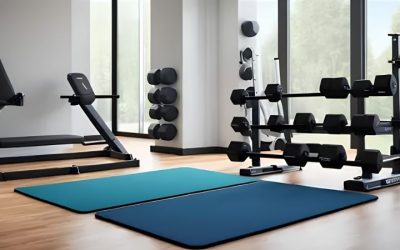
8 Best Gym Mats for Home: Rubber vs Foam Picks for Any Floor
Best gym mat for home choices come down to material density and...
8 Best Rowers for Home Gym: Air, Magnetic and Water Compared
Best rowers for home gym shortlists usually collapse once someone measures the...
8 Best Weight Home Gyms: 6 All-in-One Machines for Small Rooms
Best weight home gym decisions come down to two numbers before brand...
8 Best Home Gym Equipment for Beginners: The Starter Setup
Best home gym equipment for beginners is not a machine – it...

Best Treadmills for Home Gym: 5 Picks by Deck and Motor
Best treadmills for home gym decisions come down to two specifications and...
8 Best Home Gym Compact Setups: 6 Space-Saving Picks Ranked
Best home gym compact claims usually quote a stored footprint and stay...
Best Adjustable Bench for Home Gym: 5 Picks Ranked by Use
Best adjustable bench for home gym decisions turn on three numbers most...
Best Cable Machine for Home Gym: 5 Picks and Pulley Ratios
Best cable machine for home gym shortlists collapse quickly once you convert...
8 Best Cable Machines for Home Gym: 5 Types and Their Limits
Best cable machines for home gym use are not one product category...
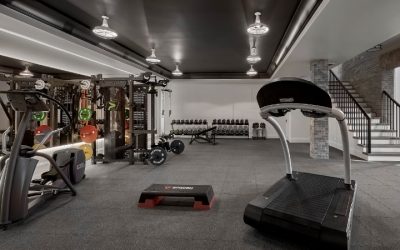
8 Best Home Gym Setups: Floors, Ceilings, Noise and Layout
Best home gym setup guides talk about equipment and skip the room,...
Write Your Review
No reviews yet. Be the first to share your experience!