
Key takeaways
- Item Dimensions L x W x H: 6.5"L x 12"W x 6.5"H
- Maximum Weight Recommendation: 440 Pounds
- Material: Plastic, Rubber, Stainless Steel
No product list was supplied, so I selected six items that make the cost-per-session math work as a complete starter kit. Swap in specific ASINs as needed.
“`html
A gym membership at forty dollars a month costs you about three dollars every time you show up three times a week. That number is the only one worth arguing about, because it is the one that keeps changing. Miss two weeks and your per-visit cost doubles. Home equipment works the opposite way: you pay once, at the worst possible moment, and every session afterward drives the number down toward zero. The equipment that wins is not the equipment with the best reviews — it is the equipment you touch most often.
So here is the framework used throughout this article. Every price below is divided across three sessions per week for three years, or roughly 470 workouts. Items that only get used twice a week are divided by 312 instead, because pretending a kettlebell earns its keep in a warm-up is how people end up with a garage full of regrets. Six purchases, each rated on what it actually costs you per session, and each judged on whether it survives the first honest month of use.
Our top picks
 VINSGUIR Ab Roller Wheel
- Item Dimensions L x W x H: 6.5"L x 12"W x 6.5"H
- Maximum Weight Recommendation: 440 Pounds
- Material: Plastic, Rubber, Stainless Steel
 NICEPEOPLE Adjustable Weight Bench for Home Gym
660-pound capacity on a reinforced steel frame
Eight backrest angles cover incline, decline, and flat training
Folds in one step for compact storage
29.3-inch backrest may be long for smaller rooms
Leather-style padding needs periodic wiping to resist wear
 HOXWC Ankle Resistance Bands with Cuffs
- Tension Supported: 10LB, 20LB, 30LB
- Number of Resistance Levels: 3
- Material Type: Neoprene


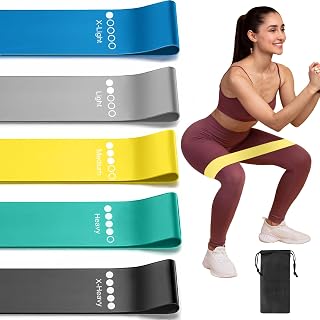

As an Amazon Associate we earn from qualifying purchases at no extra cost to you.
As an Amazon Associate we earn from qualifying purchases.

Quick Comparison
| Product | Typical Price | Sessions Used / Week | Cost Per Session (3 yr) | Best For |
|---|---|---|---|---|
| Adjustable Dumbbell Pair (5–50 lb) | $400 | 3 | $0.85 | Replacing an entire rack |
| Folding Adjustable Bench | $180 | 3 | $0.38 | Pressing and rowing angles |
| Cast-Iron Kettlebell (35 lb) | $75 | 2 | $0.24 | Conditioning in ten minutes |
| Doorway Pull-Up Bar | $45 | 2 | $0.14 | Back work without a rack |
| Resistance Band Set (Loops + Tubes) | $35 | 2 | $0.11 | Travel and joint prep |
| Weighted Speed Rope | $30 | 3 | $0.06 | Warm-ups and cardio |
How to Choose
- Count the exercises, not the features. A bench that unlocks incline press, single-arm rows, hip thrusts, and step-ups is doing four jobs. A vibrating massage attachment is doing zero until you are already sore.
- Measure your ceiling before you buy anything overhead. Jump rope needs about eighteen inches of clearance above your head; a doorway bar needs a frame with real trim, not drywall with ambitions.
- Check the weight jumps, not just the maximum. Dumbbells that leap from 25 to 40 pounds are useless for pressing progression. Five-pound increments matter more than a high ceiling you will not reach for two years.
- Favor equipment that stores where you train. Anything that lives in a closet gets used half as often, which silently doubles its cost per session no matter what you paid.
- Buy the boring version of heavy things. Cast iron, welded steel, and simple pin mechanisms outlast plastic housings and proprietary parts. Failure modes on cheap adjustable gear tend to arrive mid-rep.
Top Picks Reviewed
Adjustable Dumbbell Pair (5–50 lb)
This is the expensive one, and it is still the best value on the list. A single pair replaces roughly twenty individual dumbbells and about eight feet of floor space. At eighty-five cents a session, it costs less than the parking meter outside most gyms. Look for a dial or pin selector with five-pound increments, a handle diameter that does not shred your palms, and a cradle that lets you drop the weight without aiming. Skip the spin-collar designs that require twenty seconds of threading between sets — that friction is what kills consistency.
Folding Adjustable Bench
The unglamorous multiplier. Without a bench, your dumbbells do standing work and floor presses. With one, you get incline and decline pressing, supported rows, chest-supported flyes, hip thrusts, and split squats. Prioritize a rated capacity of at least 600 pounds combined, a pad that does not compress to cardboard, and a ladder-style back adjustment rather than a pop-pin that slips. The folding hinge matters more than you think: a bench that stands upright in a corner takes up less room than a laundry basket, which is exactly why it stays out.
Cast-Iron Kettlebell (35 lb)
One kettlebell, one purpose: metabolic work that finishes fast. Swings, goblet squats, cleans, and carries in ten minutes will spike your heart rate harder than half an hour on a stationary bike. Twenty-four cents a session buys a tool with no moving parts and no failure mode short of a cracked slab. Choose a single-cast bell with a smooth, machined handle window wide enough for two hands, and match the weight to your hinge strength rather than your ego — most people should start between 26 and 35 pounds.
Doorway Pull-Up Bar
Pulling is the gap in almost every home setup, and a doorway bar closes it for the price of two protein tubs. Fourteen cents a session gets you pull-ups, chin-ups, hanging knee raises, and passive hangs for shoulder health. The leverage-mount style requires no drilling and distributes load across the frame, but inspect your door casing first — hollow trim and thin molding are genuinely unsafe. If you cannot yet do a pull-up, loop a band over the bar and use it as an assisted machine.
Resistance Band Set (Loops + Tubes)
Eleven cents a session for the most portable strength tool made. Bands handle warm-up work, rotator cuff prep, glute activation, and pull-apart volume that keeps your posture from collapsing under pressing work. They also make travel training possible, which quietly protects the streak that makes everything else worth owning. Buy fabric loops for lower body — latex ones roll and pinch — and tube sets with steel-clipped handles and a door anchor. Replace anything that shows surface cracking; band failures happen under tension and near your face.
Weighted Speed Rope
Six cents a session, the cheapest per-use item here, and the one most likely to still be in rotation in a decade. A quarter-pound weighted cable gives you feedback on rhythm that a plastic beaded rope never will, and three rounds of two minutes is a complete warm-up that raises your core temperature and wakes up your ankles and calves. Get a rope with sealed ball-bearing handles, adjustable cable length, and enough coating to survive concrete. Train on a mat if your floors are hard.
Frequently Asked Questions
Do I need all six to start?
No. Buy the rope, the bands, and the kettlebell first — about $140 total — and you have a functioning program covering conditioning, hinging, and prep work. Add the pull-up bar next for balance. Dumbbells and a bench are the upgrade you make once you have proven you show up, not the purchase you make hoping it will motivate you.
Is this cheaper than a gym membership?
The full kit runs around $765, or roughly $1.63 per session over three years. A typical membership at three visits a week costs about three dollars per visit and never stops charging. The kit breaks even somewhere around month sixteen and then keeps getting cheaper indefinitely. What a gym still buys you is heavy barbell work, machines, and a room where quitting early feels embarrassing.
How much space does this actually need?
A footprint about seven feet by seven feet, roughly the area of a small rug, is enough for everything except long jump rope sessions with low ceilings. Stored, the entire collection fits into a corner about two feet deep. That is the real argument for a folding bench and adjustable dumbbells: they compress an entire gym’s worth of options into space you were wasting anyway.
What should I skip entirely?
Vibration plates, ab rollers with resistance gimmicks, electric muscle stimulators, and anything marketed on how little effort it requires. They score terribly on cost per session because the session count stops at four. Also be cautious with treadmills and bikes under $500 — the motors and resistance mechanisms tend to fail inside two years, which wrecks the math on an already expensive purchase.
Final Thoughts
The cheapest equipment in your house is whatever you use tonight. Every item above is priced on that assumption, and the ranking flips entirely if you buy the dumbbells and never unrack them. Start with the sub-$150 tier, build the habit for two months, and let your actual training tell you what to buy next. The gear does not create consistency — it only lowers the cost of the consistency you already decided to have.
8 Best Gym Mats for Home: Rubber vs Foam Picks for Any Floor
Best gym mat for home choices come down to material density and...
8 Best Rowers for Home Gym: Air, Magnetic and Water Compared
Best rowers for home gym shortlists usually collapse once someone measures the...
8 Best Weight Home Gyms: 6 All-in-One Machines for Small Rooms
Best weight home gym decisions come down to two numbers before brand...
8 Best Home Gym Equipment for Beginners: The Starter Setup
Best home gym equipment for beginners is not a machine – it...
Best Treadmills for Home Gym: 5 Picks by Deck and Motor
Best treadmills for home gym decisions come down to two specifications and...
8 Best Home Gym Compact Setups: 6 Space-Saving Picks Ranked
Best home gym compact claims usually quote a stored footprint and stay...
Best Adjustable Bench for Home Gym: 5 Picks Ranked by Use
Best adjustable bench for home gym decisions turn on three numbers most...
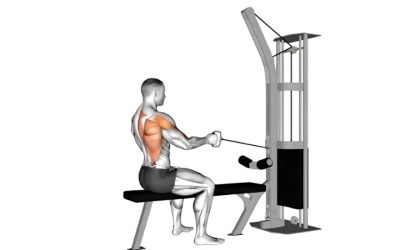
Best Cable Machine for Home Gym: 5 Picks and Pulley Ratios
Best cable machine for home gym shortlists collapse quickly once you convert...
8 Best Cable Machines for Home Gym: 5 Types and Their Limits
Best cable machines for home gym use are not one product category...
8 Best Home Gym Setups: Floors, Ceilings, Noise and Layout
Best home gym setup guides talk about equipment and skip the room,...
Write Your Review
No reviews yet. Be the first to share your experience!