
Key takeaways
- Warranty Description: 2 Year
- Tension Supported: 264 lb
- Strap Type: Cable/Pulley straps
Run the numbers before you run to the gym. A mid-tier membership at $55 a month costs $660 a year, and that figure assumes you never pay an initiation fee, never freeze the account, and never skip a session because the parking lot is full at 6 p.m. For roughly the same money, you can put a pair of adjustable dumbbells, a suspension trainer, a kettlebell, and a set of banded handles into a corner of your garage — about 30 square feet of floor, less than a compact car occupies. That equipment doesn’t expire, doesn’t raise its rates, and doesn’t close at 10 p.m.
The catch is that “budget” gear splits cleanly into two camps: things that get cheaper because they’re simple, and things that get cheaper because the manufacturer cut a corner you’ll discover at rep eight. Cast iron, nylon webbing, and steel tubing age gracefully. Thin welds, plastic collars, and unbranded band latex do not. Everything below sits under about $400, and each pick earns its place by doing one job well rather than promising a full gym in a box. Prices shift, so treat the figures as ballpark, not gospel.
Our top picks
 Mikolo Smith Machine with Weight Stack
- Warranty Description: 2 Year
- Tension Supported: 264 lb
- Strap Type: Cable/Pulley straps
Dual weight stacks let two users train independently
Consolidates ten stations into one power rack footprint
2200-pound frame capacity supports heavy long-term use
128-pound stack per side caps very heavy lifters
Ten-station setup needs a dedicated home gym room
 YOLEO Adjustable Weight Bench for Home Gym
ASTM-certified for an 827-pound capacity limit
84 adjustable positions cover incline, decline, and flat training
Folds down for storage under a bed or sofa
User weight is capped lower at 330 pounds
28-inch backrest may be excessive for smaller spaces
 NICEPEOPLE Adjustable Weight Bench for Home Gym
660-pound capacity on a reinforced steel frame
Eight backrest angles cover incline, decline, and flat training
Folds in one step for compact storage
29.3-inch backrest may be long for smaller rooms
Leather-style padding needs periodic wiping to resist wear
| Product | Key specs | |
|---|---|---|
| Mikolo Smith Machine with Weight Stack | Warranty Description: 2 Year Tension Supported: 264 lb Strap Type: Cable/Pulley straps | Check price |
| YOLEO Adjustable Weight Bench for Home Gym | Check price | |
| NICEPEOPLE Adjustable Weight Bench for Home Gym | Check price | |
 SincMill Home Gym Multifunctional Full Body Workout SincMill Home Gym Multifunctional Full Body Workout | Warranty Description: 10 Years Tension Supported: 148 pounds Handle Type: Pulldown, Strap | Check price |
 PLKOW Dumbbell Rack PLKOW Dumbbell Rack | Number Of Racks: 9 Frame Type: Tiered Material: Alloy Steel | Check price |
 ULTRA FUEGO Power Cage ULTRA FUEGO Power Cage | Warranty Description: 2 Year Manufacturer Tension Supported: 1000 pounds Handle Type: Fixed Handle | Check price |
 MQRW Push Up Board MQRW Push Up Board | Maximum Weight Recommendation: 600 Pounds Warranty Type: Push up board Assembly Instructions Description: No assembly required | Check price |
 Mikolo Home Gym Mikolo Home Gym | Tension Supported: Weight Stack 154lbs (12 Levels) Item Dimensions D x W x H: 75"D x 36.3"W x 80"H Maximum Weight Recommendation: 300 Pounds | Check price |
As an Amazon Associate we earn from qualifying purchases at no extra cost to you.
As an Amazon Associate we earn from qualifying purchases.
Quick Comparison
| Equipment | Best For | Approx. Price | Space Needed | Weakest Link |
|---|---|---|---|---|
| Yes4All Adjustable Dumbbells | Progressive strength on a tight budget | $90–$150 | 2 sq ft | Slow plate changes |
| Amazon Basics Neoprene Dumbbell Set | Circuits, rehab, high-rep work | $35–$70 | 1 sq ft with stand | Low weight ceiling |
| CAP Cast Iron Kettlebell | Swings, carries, conditioning | $30–$80 | Under 1 sq ft | Handle finish varies |
| Bodylastics Resistance Band Set | Travel and pulling movements | $50–$80 | Drawer | Bands eventually fatigue |
| TRX GO Suspension Trainer | Bodyweight rows and core | $100–$130 | Needs an anchor point | Requires ceiling or door |
| Fitness Reality 810XLT Power Cage | Squats, presses, pull-ups | $280–$380 | 4 x 4 ft plus clearance | 800 lb capacity ceiling |
| Sunny Health SF-B901 Indoor Bike | Low-impact cardio | $250–$330 | 3 x 2 ft | No screen or metrics app |
How to Choose
- Buy the movements you actually miss. If you never touched a leg press at the gym, a leg machine at home won’t change that. List the five exercises you do consistently and buy backward from there.
- Check the weight ceiling, not the starting weight. A 40 lb dumbbell pair feels heavy in month one and light in month six. Adjustable handles that top out at 52.5 lb per side buy you years; a fixed 20 lb pair buys you weeks.
- Measure ceiling height before anything with a pull-up bar. Power cages need roughly 7 ft 6 in of clearance for overhead pressing and hanging. Basements with ductwork ruin more rack purchases than budget does.
- Prefer steel and iron over foam and plastic. Coatings chip and neoprene tears, but a cast-iron bell that outlives the box it shipped in is still a cast-iron bell.
- Protect the floor from day one. A $40 set of 3/4-inch interlocking tiles is cheaper than one gouged floorboard and quieter than any apology to a downstairs neighbor.
Top Picks Reviewed
Yes4All Adjustable Dumbbells
Spinlock handles with cast-iron plates are the least glamorous and most durable way to own a scalable dumbbell. A 200 lb bundle typically runs under $200, which works out to roughly a dollar a pound — better than any selectorized system on the market. The trade-off is honest: swapping loads between sets takes 20 to 30 seconds of threading collars. If your programming is straight sets rather than fast supersets, that pause costs you nothing.
Amazon Basics Neoprene Dumbbell Set
These exist for the work that heavy iron does badly: lateral raises, face pulls, rear-delt work, shoulder rehab, and 20-rep finishers. The 2, 3, and 5 lb trio with a small stand lands under $40 and lives permanently beside the desk. Neoprene grips warm quickly and won’t clang. Don’t expect the coating to survive being dropped on concrete repeatedly, and don’t try to build a program around it.
CAP Barbell Cast Iron Kettlebell
One 35 lb bell unlocks swings, goblet squats, cleans, presses, and loaded carries — arguably the highest exercise-per-dollar ratio in home fitness. The single-piece casting has no seams to fail. Handle finish is the variable: some units arrive smooth, others need ten minutes with 120-grit sandpaper to stop chewing your palms. That’s a five-dollar fix on a piece of equipment you’ll still own in twenty years.
Bodylastics Resistance Band Set
What separates this from gas-station band kits is the safety cord threaded inside each tube, so a snap becomes a stretch rather than a whip. The included door anchor and ankle straps mean you can approximate cable rows, pull-aparts, and lat pulldowns without a single pulley. Stackable to about 200 lb of resistance, packable into a carry-on, and the honest answer for anyone whose “home gym” is a hotel room three weeks a month.
TRX GO Suspension Trainer
Horizontal pulling is the hole in most home setups, and a suspension trainer fills it for the price of two dumbbells. Rows, chest presses, single-leg squats, and hamstring curls all come from one 1.5 lb strap. The GO is the stripped-down version — thinner webbing, no foot cradles — but the buckle and anchor system is the same proven design. You need a solid joist, beam, or door frame; verify that before ordering.
Fitness Reality 810XLT Super Max Power Cage
Squatting heavy alone requires a rack with catch bars, and this is the cheapest one worth trusting. Nineteen adjustment levels, a pull-up bar, and an 800 lb stated capacity for well under $400. The uprights are lighter-gauge steel than commercial equipment, so it flexes slightly on racking and benefits from being loaded against a wall. For lifters working in the 135 to 315 lb range, it’s more than sufficient.
Sunny Health & Fitness SF-B901 Indoor Cycling Bike
A 40 lb flywheel with a felt-pad brake, a heavy steel frame, and no subscription attached. Resistance is infinitely variable by a knob rather than stepped by software, which means it handles both easy Zone 2 sessions and standing intervals. There’s no display worth watching, so mount a tablet and run whatever app you like. Brake pads are a $15 consumable every year or two of regular use.
Frequently Asked Questions
What’s the minimum I can spend and still train seriously?
Around $150. One adjustable kettlebell or a 35 lb cast-iron bell, a suspension trainer, and a banded set covers pushing, pulling, hinging, squatting, and carrying. That’s a complete stimulus. Adding equipment past that point buys convenience and higher loads, not better results.
Are adjustable dumbbells worth it over a fixed set?
Financially, yes, by a wide margin. A comparable spread of fixed dumbbells from 10 to 50 lb costs three to four times as much and occupies a rack the size of a nightstand. The only real argument for fixed weights is speed during high-density circuit work.
Can I do this in an apartment without upsetting neighbors?
Mostly. Skip anything that involves dropping weight — no deadlift lockouts released from the top, no kettlebell snatches on a bare floor. Interlocking foam tiles or a stall mat absorb most of the rest. Bands, suspension trainers, and a magnetic-resistance bike are effectively silent.
How do I know when to replace resistance bands?
Inspect the tubing under tension in good light every couple of months. Cloudy patches, surface cracks near the carabiners, or a noticeable drop in tension mean the latex has fatigued. Most sets used three times a week last one to two years. Store them out of sunlight and away from heat vents.
Final Thoughts
The most expensive home gym is the one bought all at once from a single catalog page. Start with two items that cover the movements you’ll actually repeat — for most people that’s an adjustable dumbbell pair and a suspension trainer — and give yourself eight weeks of consistent use before adding anything. If you’re still training at week eight, the rack and the bike are easy calls. If you’re not, no amount of equipment was going to fix that, and you’ll have learned it for under $250 instead of a year of dues.
8 Best Gym Mats for Home: Rubber vs Foam Picks for Any Floor
Best gym mat for home choices come down to material density and...
8 Best Rowers for Home Gym: Air, Magnetic and Water Compared
Best rowers for home gym shortlists usually collapse once someone measures the...
8 Best Weight Home Gyms: 6 All-in-One Machines for Small Rooms
Best weight home gym decisions come down to two numbers before brand...
8 Best Home Gym Equipment for Beginners: The Starter Setup
Best home gym equipment for beginners is not a machine – it...
Best Treadmills for Home Gym: 5 Picks by Deck and Motor
Best treadmills for home gym decisions come down to two specifications and...
8 Best Home Gym Compact Setups: 6 Space-Saving Picks Ranked
Best home gym compact claims usually quote a stored footprint and stay...
Best Adjustable Bench for Home Gym: 5 Picks Ranked by Use
Best adjustable bench for home gym decisions turn on three numbers most...
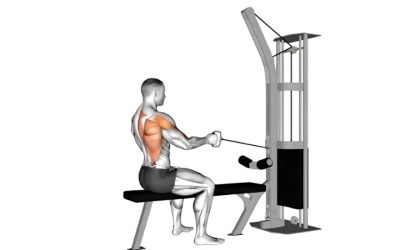
Best Cable Machine for Home Gym: 5 Picks and Pulley Ratios
Best cable machine for home gym shortlists collapse quickly once you convert...
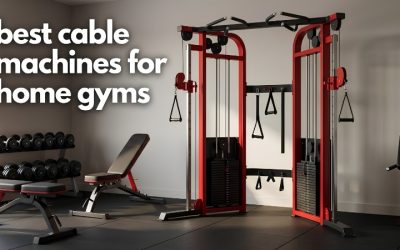
8 Best Cable Machines for Home Gym: 5 Types and Their Limits
Best cable machines for home gym use are not one product category...
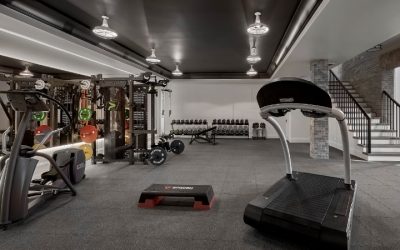
8 Best Home Gym Setups: Floors, Ceilings, Noise and Layout
Best home gym setup guides talk about equipment and skip the room,...
Write Your Review
No reviews yet. Be the first to share your experience!