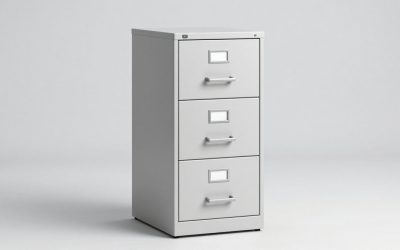
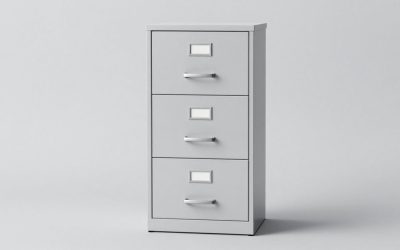
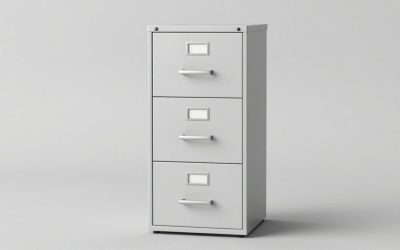
Our Top Picks
 HON 4 Drawer Lateral File Cabinet with Lock4 Drawers21.31 x 214 x 56.06 inches5.9 poundsCheck on Amazon
The best filing cabinets for most homes and offices are 2-drawer vertical cabinets for tight spaces and personal files, and 2-drawer lateral cabinets for shared spaces and high-volume storage, with metal for durability and security and wood or wood-veneer for living areas where appearance matters more than fire resistance.
Filing Cabinet Types Compared Head-to-Head
Choose by how you file and how much floor space you can give up. The four main types solve different problems:

HON 4-Drawer Letter File - Full-Suspension Filing Cabinet with Lock, 52 by 25-Inch Light Gray (510 Series - Model 514PQ)
Chosen because it specifies Full-Suspension Filing Cabinet with Lock and 52 by 25-Inch Light Gray (510 Series.
View on AmazonHON 4 Drawer Lateral File Cabinet with Lock, Metal Filing Cabinets for Offices, Adjustable Hangrails for A4, Legal, Letter Files, 18" Deep, Light Gray
Chosen because it specifies Metal Filing Cabinets for Offices and Adjustable Hangrails for A4.
View on Amazon
HON 4 Drawer Vertical File Cabinet with Lock, Metal Filing Cabinets with 4 Drawers for Hanging Files and Letter Files, 26.5" Deep, Putty
Chosen because it specifies 26.5" Deep and Putty.
View on Amazon
HON MOD Support Pedestal File Cabinet, 3 Storage Drawers, Mahogany
Chosen because it specifies 3 Storage Drawers and Mahogany.
View on AmazonVertical Filing Cabinets
The classic front-to-back file. Usually 2, 3, 4, or 5 drawers stacked vertically. Footprint is small (about 15 inches wide x 25 inches deep), but height grows quickly. Best when you file alphabetically and retrieve one folder at a time. A 4-drawer vertical holds the most per square foot of floor but requires reaching overhead for the top drawer.
Lateral Filing Cabinets
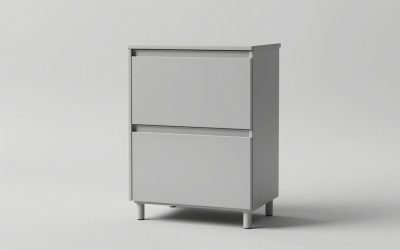
Wide and low, files arranged side-to-side. A 2-drawer lateral is typically 30 to 36 inches wide and 32 to 36 inches high, which doubles as a printer stand or credenza surface. You can see more file tabs at once, and both letter and legal files fit without an insert. Needs more wall width and more clearance to open the wider drawers.
Mobile Pedestal Cabinets
Compact 2-drawer or 3-drawer units (one file drawer + one or two box drawers for supplies) on casters, designed to slide under a desk. Usually 15-16 inches wide x 20-22 inches deep x 26-27 inches high to fit under a standard 29-30 inch high desk. Ideal for one person’s active files and for renters or hot-desking setups. Not for archiving.
Fireproof and Security Cabinets
Insulated steel cabinets rated to protect paper for 30, 60, or 120 minutes at 1700°F. They are significantly heavier and more expensive, usually $900–$2,000+ for a 2-drawer vertical, and require reinforced floors for larger sizes. Choose only if you store irreplaceable legal documents, not just for general organization.
Size Chart: Match Cabinet to Your Room and File Volume
Measure your file volume before your room. One standard file drawer holds 10-12 inches of hanging files, or roughly 50-75 letter-size folders depending on thickness. Then check fit with real-world clearances.
| Type | Typical Dimensions (W x D x H) | Drawers | Linear Filing Space | Approx. Letter Folders | Floor Load |
|---|---|---|---|---|---|
| Mobile Pedestal | 15″ x 20″ x 27″ | 2-3 | 10-12 inches | 50-75 | 70-120 lbs full |
| 2-Drawer Vertical | 15″ x 25″ x 29″ | 2 | 20-24 inches | 100-150 | 150-220 lbs full |
| 4-Drawer Vertical | 15″ x 25″ x 52″ | 4 | 40-48 inches | 200-300 | 300-450 lbs full |
| 2-Drawer Lateral (30″) | 30″ x 18″ x 29″ | 2 | 48-54 inches | 240-320 | 280-400 lbs full |
| 2-Drawer Lateral (36″) | 36″ x 18″ x 29″ | 2 | 60-66 inches | 300-400 | 350-500 lbs full |
Allow 48-54 inches of open space in front of any cabinet with full-extension drawers so you can step back and flip through files. For vertical cabinets, leave 48 inches; for lateral cabinets, leave 50-60 inches because the drawer front is wider and you stand to the side. In a 10×12 ft home office, a 36-inch lateral along the 10-foot wall leaves 84 inches for a desk and chair circulation. A 4-drawer vertical fits better in a 7×10 ft nook or closet-adjacent wall where width is limited.
Check delivery path too: most cabinet boxes are 18-20 inches wide and fit through a standard 28-30 inch interior doorway, but 36-inch lateral cabinets ship in boxes up to 38 inches wide and may not turn through narrow hallways. Metal vertical cabinets ship fully assembled and weigh 60-90 lbs empty; wood lateral cabinets ship flat-pack in two boxes weighing 80-120 lbs total.
Material and Construction Trade-Offs
| Material | Durability | Weight Capacity Per Drawer | Appearance | Best For | Limitations |
|---|---|---|---|---|---|
| Steel (18-22 gauge) | Very high, resists dents, fire-resistant | 50-80 lbs | Industrial, powder-coat colors | High use, rentals, garages | Can dent, loud to open, no wood texture |
| Solid Wood / Wood Veneer on Plywood | High, repairable, ages well | 40-60 lbs | Warm, furniture-grade | Home office, living room | Heavier, usually $500–$1,100, sensitive to humidity |
| Engineered Wood (MDF/Particleboard with Laminate) | Moderate, chips at edges over time | 25-40 lbs | Clean, many finishes | Budget home use, light files | Sags under heavy paper, not for daily heavy use, swells if wet |
| Metal Frame + Laminate Top | High structure, easy-clean top | 45-65 lbs | Modern, hybrid | Home office that needs workspace top | Side panels still show metal |
Paper is heavy. A fully loaded letter-size drawer holds 35-55 lbs. Engineered wood drawers without metal reinforcement will bow after 1-2 years of full loads. If you plan to fill every drawer, choose steel or solid wood with metal drawer sides and a 75-100 lb slide rating.
Drawer Slides: The Difference Between Frustrating and Functional
Slides determine how far the drawer opens and how smoothly it holds weight.
- 3/4 Extension Ball-Bearing Slides: Drawer opens about 75% of its depth. You cannot easily reach files at the very back without reaching in. Common on budget engineered wood cabinets. Usually rated 35-50 lbs. Usually $180–$350 market range for the whole cabinet.
- Full Extension Ball-Bearing Slides: Drawer opens 100% so the entire file rail clears the cabinet. Essential for vertical cabinets. Look for 75-100 lb rating for paper. Smoother and quieter, usually found on steel and mid-range wood cabinets ($350–$700).
- Full Extension with Soft-Close: Prevents slamming and finger pinches, useful in a home with kids or in a quiet office. Adds $40–$80 to cabinet cost.
Test for interlock and anti-tip: quality cabinets allow only one drawer open at a time. Without this, a 4-drawer vertical with two upper drawers open can tip forward even when empty. All vertical cabinets over 29 inches tall should be wall-anchored if you have children or pets, or if floors are uneven.
Lock Security Levels Explained
Not all locks protect the same thing. Match the lock to your risk:
- Core Gang Lock (single key, all drawers): Standard on most vertical and lateral cabinets. Deters casual access in a home or shared office. Keys are generic and can be picked or duplicated easily. Sufficient for privacy, not for theft.
- Individual Drawer Locks / Plunger Locks: Lets you lock only the top drawer for checks or personal items while leaving file drawers accessible. Useful for small business shared cabinets.
- Combination or Digital Keypad: No key to lose, you can change codes when staff changes. Usually $100–$250 more than keyed. Better for home offices with clients visiting.
- UL-Rated Fire Lock: Part of an insulated fireproof cabinet, not just a separate lock. Protects contents from heat, not just access. Verify the rating is for paper (Class 350), not media.
For home use, a standard gang lock plus anchoring the cabinet is sufficient. If you store tax records, passports, or employee files, upgrade to a 2-drawer fireproof file for those documents and use a standard cabinet for everyday files. That split saves money and floor load.
Decision Matrix: Which Filing Cabinet Fits Your Situation
Use your room, file count, and household to decide quickly:
| Your Situation | Best Choice | Why | What to Avoid |
|---|---|---|---|
| Small apartment / 10×10 ft bedroom office | Mobile pedestal or 2-drawer vertical | Fits under desk or in 20-inch wide gap; keeps floor clear | 36-inch lateral, blocks circulation |
| Shared family office, kids and pets | 2-drawer lateral with soft-close and gang lock + wall anchor | Low height, stable, no sharp tipping risk, doubles as credenza | Tall 4-5 drawer vertical without anti-tip |
| Renter who moves often | Steel 2-drawer vertical or mobile pedestal | Lightest empty weight (50-70 lbs), ships assembled, no assembly damage on move | Solid wood or fireproof (120-300 lbs empty) |
| Paperless but keeping legal/tax archive (200+ folders) | 2-drawer lateral, 36-inch, full extension | Highest capacity per drawer height, easy to scan tabs | Multiple small pedestals, scattered files |
| Back pain / frequent retrieval | 2-drawer lateral at 29-inch height | No bending below knee or reaching above shoulder like 4-drawer vertical | 4-5 drawer vertical |
| Living room / visible space | Wood veneer lateral with laminate top | Looks like furniture, holds printer and decor (up to 100 lbs top load) | Powder-coated steel, looks industrial |
Assembly, Moving, and What Wears Out First
Metal vertical cabinets typically arrive fully assembled, just attach handles and level feet. Wood and engineered wood lateral cabinets are flat-pack: expect 45-90 minutes assembly with a second person for the drawer slides. The most common assembly error is mounting slides upside down, which causes drawers to drop under load.
What fails first is not the shell but the components: plastic file rails crack, particleboard drawer bottoms sag, and cheap 3/4 extension slides develop play and rattle after 12-18 months of daily use. Choose cabinets with metal file bars, 1/2-inch drawer bottoms, and ball-bearing slides rated at least 75 lbs if you open drawers daily.
For longevity, do not exceed 80% of the slide rating and leave 1 inch of space at the back of each drawer for air circulation to prevent moisture warping. Place felt pads under steel cabinets on hardwood to prevent rust rings, and keep engineered wood at least 3 inches from exterior walls in humid climates.
When you need to move a full cabinet, empty it completely. A 4-drawer vertical full of paper can exceed 400 lbs and will permanently bend slides if tipped on a dolly while loaded. Move empty, then refile.
Final Picks by Use Case
For a compact home office with under 150 folders, a 2-drawer vertical in steel with full-extension slides and a gang lock is the most durable and space-efficient option, usually $250–$500. For a primary home office that stores 250+ folders and needs a work surface, a 36-inch 2-drawer lateral in wood veneer or steel with a 100-lb top is more ergonomic and faster to file through, usually $400–$800. Add a single mobile pedestal under your desk for active project files regardless of which main cabinet you choose, so your main archive stays organized and you only handle current work daily.