Key takeaways
- Finished on all sides: Veneer or paint wraps around sides and back so it can float in a room, not just face a wall.
- Top designed for display: Solid wood, engineered wood with wood veneer, or metal with a wood top supports 50-75 lbs for a lamp, plant, or stack of books without denting.
- Letter-size only file rails: Saves 3-4 inches of depth vs. legal/letter convertible rails, keeping depth at 16-20 inches instead of 22-26 inches.
- Hardware that matches decor: Recessed pulls, leather tabs, or slim brass bar pulls instead of stamped label holders.
The best filing cabinets for home are 2-drawer lateral or vertical cabinets in wood, rattan-front, or powder-coated metal finishes that match your existing furniture scale and color palette, with most living rooms and bedrooms needing a cabinet no wider than 32 inches and no taller than 30 inches to work as an end table or under a console.
Unlike office filing cabinets for home use, the home-friendly versions prioritize closed storage that looks like a nightstand, credenza, or side table, use letter-size hanging rails instead of bulky legal-size frames, and offer soft-close drawers and finished tops you can actually style with a lamp or books.

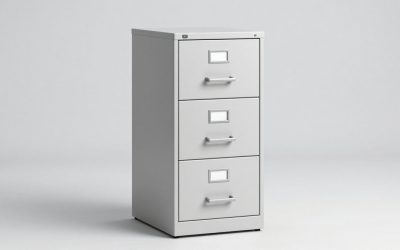
HON MOD Support Pedestal File Cabinet, 3 Storage Drawers, Mahogany
Chosen because it specifies 3 Storage Drawers and Mahogany.
View on AmazonWhat Makes a Filing Cabinet Look Like Furniture, Not Office Equipment
Office file cabinets are built for capacity – 36-inch wide lateral units, 52-inch tall vertical units, exposed lock bars and thin steel. Filing cabinets for home flip that logic. Look for these furniture-grade details:
- Finished on all sides: Veneer or paint wraps around sides and back so it can float in a room, not just face a wall.
- Top designed for display: Solid wood, engineered wood with wood veneer, or metal with a wood top supports 50-75 lbs for a lamp, plant, or stack of books without denting.
- Letter-size only file rails: Saves 3-4 inches of depth vs. legal/letter convertible rails, keeping depth at 16-20 inches instead of 22-26 inches.
- Hardware that matches decor: Recessed pulls, leather tabs, or slim brass bar pulls instead of stamped label holders.
If you need to store legal-size documents, check the interior drawer specs before buying. Many stylish 2-drawer cabinets are letter-size only to keep the footprint small.
The 3 Styles That Blend Best With Home Decor
1. Solid Wood and Wood Veneer Cabinets
Best for: Traditional, mid-century, Scandinavian, and modern farmhouse living rooms and primary bedrooms.
These are the most versatile filing cabinets for home because they match existing dressers and nightstands. Brands like Pottery Barn, West Elm, and Bush Furniture offer 2-drawer lateral wood cabinets in walnut, white oak, and painted white or soft black finishes.
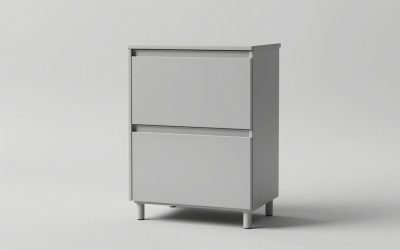
Expect a 2-drawer lateral wood cabinet to measure 28-32″ W x 18-20″ D x 24-30″ H. That height aligns with standard side table height (24-26″) and nightstand height (24-28″), so it can double as a bedside table or end table without looking oversized. Solid wood versions usually weigh 70-95 lbs assembled; engineered wood with veneer is 55-75 lbs. Weight capacity per file drawer is typically 40-60 lbs of paper, which is about 1.2 to 1.5 linear feet of letter files per drawer.
Wood is quiet, warm to the touch, and hides fingerprints. The trade-off is humidity: solid wood can expand slightly in summer and veneer can peel if placed against a damp exterior wall or near a radiator.
2. Rattan and Cane-Front Cabinets
Best for: Coastal, boho, Japandi, and light-filled apartments where you want storage to disappear.
Rattan-front file cabinets use a wood frame with a woven cane or synthetic rattan panel. The texture breaks up a wall of flat furniture and makes a file cabinet read as a credenza. Most are lateral 2-drawer units, 30-32″ wide and 28-30″ high.
Because the drawer front is ventilated, these cabinets do not trap humidity and are lighter, usually 45-65 lbs. The drawer box itself is still solid wood or metal with hanging rails hidden behind the cane. Check that the cane is sealed with a clear lacquer and that the drawer slides are full-extension ball bearing slides – natural rattan without a solid backer can snag if the drawer box is thin.
Rattan is ideal if your living room already has cane chairs, an arched rattan headboard, or a boucle sofa. Stick to natural, honey, or whitewashed cane with oak or walnut frames to avoid a mismatched yellow tone.
3. Metal Cabinets With Wood Tops or Powder-Coated Finishes
Best for: Industrial lofts, small spaces, kids’ rooms, and anyone who wants maximum durability.
Modern metal filing cabinets for home are not the gray vertical units from an office. Look for brands like CB2, IKEA, and Poppin that offer 2-drawer and 3-drawer vertical units in matte black, putty, cream, or forest green powder coat, often with a solid oak or walnut top.
A typical 2-drawer vertical metal cabinet is 15-18″ W x 20-22″ D x 27-28″ H. A 3-drawer vertical is 15-18″ W x 20-22″ D x 38-42″ H. Because they are narrow, they tuck beside a desk or inside a closet and still hold the same letter-size files. Metal supports the highest weight capacity, usually 60-80 lbs per drawer, and resists scratches and sticky drawers better than wood in humid climates.
Choose powder-coated steel over bare steel or chrome if you want a softer look that matches painted dressers. Add felt pads under the base to prevent scraping hardwood floors.
How to Choose the Right Size, Color and Finish for Your Room
Measure before you buy. Filing cabinets look bulky when they block walkways or tower over low sofas.
- Clearance for drawers: Leave 24-30 inches of open floor in front of the cabinet for a lateral drawer to fully extend, plus your standing room. For vertical drawers, leave 48-50 inches total depth when open.
- Height alignment: For use as an end table next to a sofa with a 17-18″ seat height, keep the cabinet at 24-26″ high. For use as a nightstand next to a bed with a 22-24″ mattress top, aim for 24-28″ high so the top is 2-4 inches below the mattress.
- Room fit: In a 10×12 ft bedroom, a 30″ wide lateral cabinet leaves about 90 inches of wall length for a queen bed (60″ wide) plus two 20″ nightstands without crowding. In a 12×15 ft living room, a 30″ cabinet works as a console under a window without blocking the 36-inch minimum walkway.
- Doorway and stair fit: Most interior doorways are 29-30″ wide. Boxes for lateral wood cabinets are often 34″ x 24″ x 28″ and weigh 60-90 lbs in one box, so measure turns in hallways and apartment stairwells.
- Color matching: Match undertones, not just names. Walnut filing cabinets pair with walnut or dark espresso furniture; white oak pairs with natural oak and cane; painted white (often with a slight warm undertone) pairs with existing IKEA or Pottery Barn white finishes. If your furniture is brass hardware, choose brushed brass pulls; if chrome or black, choose matching bar pulls.
Material and Construction Trade-Offs
Price ranges reflect the general market in 2026 for new 2-drawer home file cabinets: engineered wood usually $180–$400, solid wood and rattan-front usually $350–$700, metal with wood top usually $250–$550.
| Material / Build | Typical Weight (Assembled) | Drawer Weight Limit | Durability | Best For / Watch Out |
|---|---|---|---|---|
| Solid Wood (oak, walnut) | 70–95 lbs | 45–60 lbs per drawer | Most repairable, dents can be sanded; needs coasters for moisture | Best for matching bedroom sets; avoid placing within 6″ of a heat vent |
| Engineered Wood with Veneer (MDF/particleboard) | 55–75 lbs | 35–50 lbs per drawer | Resists warping, but chips on corners and swells if water sits | Best value for living room use; lift, don’t drag, and keep from standing water |
| Rattan / Cane Front on Wood Frame | 45–65 lbs | 40–55 lbs per drawer | Lightweight, ventilated; cane can loosen if not lacquered | Best for bright, textured rooms; check for solid wood drawer boxes behind cane |
| Powder-Coated Steel with Wood Top | 50–70 lbs | 60–80 lbs per drawer | Most scratch and moisture resistant; can dent on sharp impact | Best for kids, pets, and heavy files; add felt pads to protect floors |
Decision Matrix: Pick by Your Situation
| Your Situation | Recommended Type | Why It Works |
|---|---|---|
| Small apartment or renter, limited floor space | 2-drawer or 3-drawer vertical metal, 15–18″ wide | Narrow footprint fits beside a desk or in a closet; no wall anchoring needed and easy to move; usually $250–$450 |
| Want the cabinet in the living room as furniture | 2-drawer lateral wood or rattan-front, 30–32″ wide, 28–30″ high | Reads as a credenza or console; top holds lamp and decor; depth 18–20″ keeps walkway clear |
| Bedroom use as nightstand with files | 2-drawer lateral wood, 24–28″ high | Height matches mattress top; soft-close drawers are quiet at night; look for finished back if visible from the door |
| Kids and pets, high traffic | Powder-coated metal with wood top or engineered wood with high-pressure laminate top | Wipes clean, resists scratches and crayon marks; metal glides handle frequent opening better |
| Back pain or frequent access | Lateral 2-drawer, not vertical 3-drawer | Top drawer at 22–26″ high requires less bending than a bottom vertical drawer at 8–12″ high |
| Need to hide printer and files together | Lateral cabinet 30–32″ wide with open shelf or printer compartment | Stores printer on top or in open cubby at 30″ working height while files stay in drawers below |
Assembly, Moving and What Wears Out First
Stylish filing cabinets for home usually ship flat-pack in one heavy box, except for some metal units that ship fully assembled. Set expectations before delivery:
- Assembly time: Engineered wood and rattan-front units take 45-90 minutes with two people; solid wood may come mostly assembled and need only handle and rail installation (15-30 minutes). Metal vertical units often require only wheel or foot attachment.
- What needs two people: Any box over 65 lbs or wider than 30 inches. Carry boxes upright through doorways to avoid corner crush.
- Tools: Most kits include an Allen key; have a Phillips screwdriver and a rubber mallet for dowels. Tighten cams firmly but do not over-torque on particleboard.
- What wears first: Drawer slides, then the hanging rail clips, then the top finish. Full-extension ball-bearing slides rated for 75-100 lbs last longer than epoxy roller slides. Keep files evenly distributed and avoid overloading one drawer, which can cause tipping.
- Anti-tip: Lateral cabinets under 30″ high are generally stable, but use the included anti-tip strap if you have children who may climb or if you place a 3-drawer vertical unit on carpet.
- Floor protection: Add 1-inch felt pads under all corners; for hardwood, use 50-60 lb rated pads to prevent indenting from loaded cabinets.
For renters who move frequently, a 2-drawer vertical metal cabinet or a 2-drawer engineered wood cabinet under 65 lbs is easiest to carry up stairs and through 29-inch apartment doorways without disassembly.
Styling Tips So It Disappears Into Your Decor
Treat the cabinet top like any other furniture surface. A table lamp at 24-28″ tall, a 5×7 framed photo, and a small plant keep it from looking like storage. If the cabinet is walnut, repeat walnut in a picture frame or side table nearby. If it is white or cream, add texture with a rattan tray or linen storage box on top so the flat paint does not look stark next to warm wood floors.
Match the cabinet depth to neighboring furniture. A 20-inch deep cabinet next to a 22-inch deep sofa side table looks intentional; a 26-inch deep office lateral next to a 16-inch console looks oversized. When in doubt, go narrower and use vertical height instead of width.