A hundred bucks won’t buy you a Herman Miller, but it also doesn’t need to. Most of what makes a chair tolerable for an 8-hour workday — lumbar support, seat height adjustment, armrests that don’t dig into your forearms — shows up in chairs well under $100. What you give up is durability, breathable mesh in some cases, and the kind of warranty that covers you for a decade instead of two years. Here’s what actually matters at this price point and what you’re trading off.
What $100 actually gets you
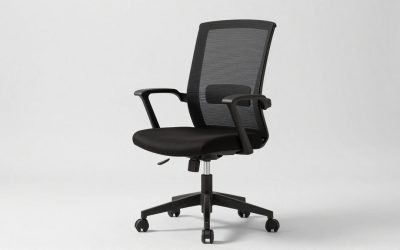
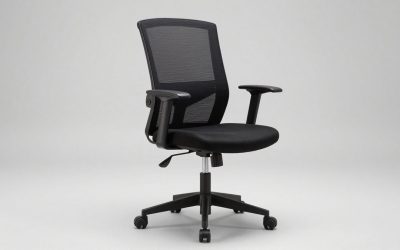
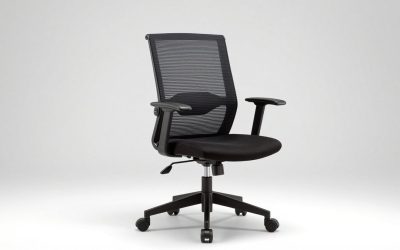
In the sub-$100 bracket you’re generally choosing between two chair types: a basic mesh-back task chair, or a padded fabric/faux-leather chair with a thicker cushion. Both can be fine. The mesh chairs breathe better and tend to hold up longer because there’s no foam to compress, but the lumbar support is often a fixed curve rather than adjustable. The padded chairs feel more plush out of the box but the foam will noticeably flatten within 12-18 months of daily use — that’s the main failure mode at this price, not the frame or the wheels.
Gas lift cylinders are the other weak point. Cheap ones start to sink slowly over months, meaning you adjust the height once and find yourself three inches lower by spring. If a chair’s listing doesn’t mention cylinder life (rated cycles) or a class (Class 3 or 4 is standard for office use), assume it’s a corner that was cut. It’s rarely fatal, but it’s the first thing to go wrong.
Chair types compared
| Type | Typical price | Comfort for long sits | Lifespan | Best for |
|---|---|---|---|---|
| Mesh task chair | $60-$100 | Good, breathes well | 3-5 years | Warm rooms, daily 6+ hour use |
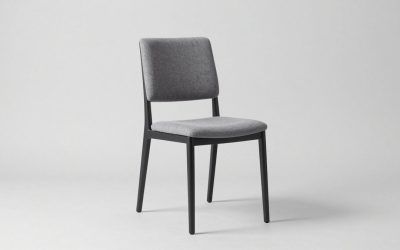
| Padded fabric chair | $50-$90 | Great at first, declines | 1-3 years | Light daily use, casual home office |
| Faux-leather executive-style | $70-$100 | Comfortable but runs hot | 1-2 years (cracking/peeling) | Looks over longevity, part-time use |
| Kneeling/saddle chair | $50-$90 | Good posture, poor for long static sits | 3-5 years | Alternating with a regular chair |
If you sit more than six hours a day, mesh is the safer bet. Faux leather looks the most “executive” in a video call background, but it’s the first material to crack at the seams, usually right where your legs meet the seat edge.
What actually matters vs. what’s marketing
Adjustable lumbar support is nice but not essential — a well-shaped fixed lumbar curve works for a lot of body types. What you shouldn’t skip is seat height adjustment and a seat depth that matches your thighs; if your knees are jammed against the front edge or your feet dangle, no amount of padding fixes that. Armrests at this price are usually fixed height, which is fine as long as they’re not positioned so high they force your shoulders up when typing. If they bother you, it’s easy enough to remove them.
Weight capacity listings are worth checking even if you’re well under the limit, because they correlate with how robust the frame and casters are overall. A chair rated for 220 lbs with wheels that squeak and skip on carpet after a month is a different build quality than one rated for 300 lbs. If you’re shopping this category, a search for an ergonomic office chair under $100 will surface most of the mesh and padded options worth comparing side by side on these specs.
Hard floors change the calculation
If you’re on hardwood, tile, or laminate, the stock casters on cheap chairs are a real problem — they’re usually hard plastic wheels designed for carpet, and they’ll either skid or slowly scuff the floor finish. Swapping to soft rubber casters is a $15-20 fix and worth doing on day one rather than waiting until you notice marks on the floor. It’s a small addition on top of the chair budget, but it’s cheaper than refinishing a floor or replacing wheels that have worn flat on one side.
When the cheap chair is genuinely the right call
If you’re in a shared space, a dorm, or you work from a desk for under four hours a day, there’s no reason to spend more than $100. The ergonomic gains above that price mostly come from adjustability (seat depth sliders, adjustable lumbar, 4D armrests) that matters for long sits, not short ones. Buying a $400 chair for occasional use is solving a problem you don’t have.
Where it’s worth stretching the budget is if you have an existing back issue, you’re over 220 lbs and want more margin on the frame, or you’re going to be in the chair 8+ hours a day for years. In that case the $150-250 range buys real adjustability, not just a nicer-looking shell.
A short checklist before you buy
Check the weight rating against your own weight with margin, not right at the limit. Look for a stated cylinder class or warranty length — even one year tells you the maker expects some return rate. Decide mesh vs. padded based on room temperature and how many hours a day you’ll be seated. And if you’re on hard flooring, budget separately for caster replacements rather than assuming the stock wheels will be fine.
For a quick side-by-side before buying, it’s worth pulling up a mesh back office chair listing alongside a couple of padded options and comparing the actual seat width and depth in inches, not just the stock photos — that’s where most of the comfort difference at this price actually comes from.