Key takeaways
- PU faux leather: the most common cover. Easy to wipe, but warm in summer and prone to flaking on the seat front after a few years of daily use.
- Fabric or linen-look upholstery: breathes better, hides wear, but stains are harder to clean.
- Pillow-top padding: feels plush at first, but loose fiberfill shifts and flattens over months. Molded or high-density foam keeps its shape longer.
- Bonded leather: avoid on a daily chair; it peels.
An executive vibrating massage office chair with footrest is a padded high-back desk chair with small vibration motors in the seat and back plus a pull-out leg rest, and it is best understood as a comfortable break chair rather than a massage chair: the motors buzz and relax, they do not knead. If you want a plush chair that reclines for a few minutes of rest between calls, it is a reasonable buy at usually $150 to $400. If you expect real muscle work for back pain, a dedicated massage chair or a separate massage cushion does the job far better.
What “Vibrating Massage” Actually Means
Most chairs in this category use between 4 and 8 small eccentric-weight vibration motors, similar to the motor in a phone but larger, sewn into pockets in the back cushion and seat. A wired remote lets you choose zones, intensity levels and preset patterns, and many include an auto-off timer around 15 minutes. Some models add a mild lumbar heat pad.

COLAMY Executive Office Chair with Heat Massage, Footrest & Lumbar Support
Included for 'Executive Vibrating Massage Office Chair With Footrest: What It Does, Recline Space and Who It Suits' because the listing specifies Footrest & Lumbar Support, details this guide uses to compare options.
View on Amazon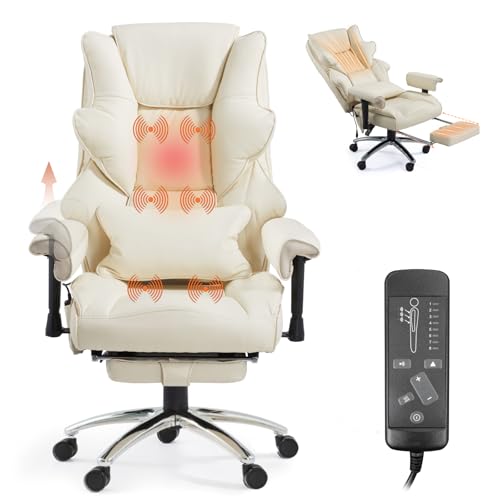
Mvpipi Vibration Massage Heated Office Desk Chair with Foot Rest, Beige
Included for 'Executive Vibrating Massage Office Chair With Footrest: What It Does, Recline Space and Who It Suits' because the listing specifies Beige, details this guide uses to compare options.
View on Amazon
Realbear Big & Tall 6-Point Massage Office Chair with Footrest
Included for 'Executive Vibrating Massage Office Chair With Footrest: What It Does, Recline Space and Who It Suits' as a relevant option in this category; details come from the product listing.
View on Amazon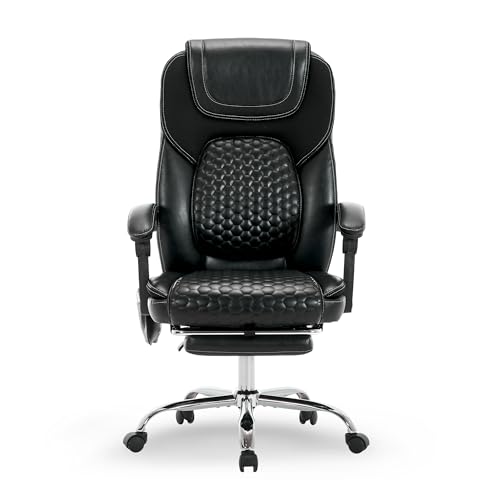
MALOL Massage Office Chair with 3-Level Heat and Footrest, Black
Included for 'Executive Vibrating Massage Office Chair With Footrest: What It Does, Recline Space and Who It Suits' because the listing specifies Black, details this guide uses to compare options.
View on Amazon| Feature | Vibrating office chair | Shiatsu massage cushion on a regular chair | Full massage chair (recliner) |
|---|---|---|---|
| Massage type | Vibration only | Rotating nodes, kneading | Rollers, airbags, often L-track |
| Typical price range | $150–$400 | $60–$200 (cushion) | $1,500–$8,000+ |
| Weight | 45–70 lb assembled | Cushion 8–15 lb | 150–300 lb |
| Works as a daily desk chair | Yes | Yes, but raises you 2–4 in | No |
| Felt pressure on knotted muscles | Low | Moderate to strong | Strong |
| Power | USB or small adapter | Wall adapter or car plug | Wall outlet |
Power source matters at a desk
Many vibrating chairs run from a USB cable to a power bank or a USB wall adapter, while others use a small AC adapter. A USB-powered chair is easier to place anywhere, but if the cable runs across the floor to the wall it can snag on the casters. Route it along the chair column with a couple of cable ties, and unplug it when you roll away from the desk.
The Footrest and Recline: Space You Need
The retractable footrest is usually a padded panel on a metal bracket that slides out from under the seat. It only works with recline, and recline needs room behind and in front of the chair.
| Position | Typical depth from front of base to back of chair | Floor space to plan |
|---|---|---|
| Upright, footrest stowed | 26–30 in | Standard desk chair zone, 36 in behind desk |
| Reclined 135°, footrest out | 55–65 in | About 5.5 ft of clear floor, pushed back from the desk |
| Full recline 150–160° | 60–70 in | Clear the wall behind by 12 in or more |
In a 10×10 ft spare bedroom office with the desk against one wall, that is usually fine. In a small apartment corner with a bookcase behind the chair, full recline may be impossible.
Realistic footrest expectations
The footrest is designed to hold your calves, not your full body. Typical extension adds 12 to 18 inches of support, so taller users’ heels hang off the end. Do not sit or stand on the footrest; bent brackets are among the most common failures on this type of chair.
Who This Chair Suits
| Your situation | Fit | Notes |
|---|---|---|
| Remote worker who wants short reclined breaks | Good | Recline plus footrest is the real value |
| Gamer wanting a plush high-back look | Good | Similar comfort to gaming chairs, softer padding |
| Chronic lower back pain | Limited | Look first at adjustable lumbar and seat depth; vibration is secondary |
| Over 6’2″ tall | Check carefully | Headrest and footrest are often short for tall users |
| Over 250 lb | Check rating | Many are rated 250–300 lb; choose margin and a metal base |
| Small studio desk with no space behind | Poor | You cannot use recline and footrest |
Materials and Comfort Trade-Offs
- PU faux leather: the most common cover. Easy to wipe, but warm in summer and prone to flaking on the seat front after a few years of daily use.
- Fabric or linen-look upholstery: breathes better, hides wear, but stains are harder to clean.
- Pillow-top padding: feels plush at first, but loose fiberfill shifts and flattens over months. Molded or high-density foam keeps its shape longer.
- Bonded leather: avoid on a daily chair; it peels.
Ergonomic Settings to Check
Because the comfort marketing focuses on massage, it is easy to overlook basics. For a chair you sit in all day, confirm a seat height range that reaches your desk (often about 18 to 22 inches seat height), a tilt lock that holds the backrest at your working angle, and armrests that do not block the chair from sliding under the desk. Fixed padded arms on executive chairs are often the reason a chair will not tuck in.
Assembly and Durability Realities
- Boxes typically weigh 45 to 70 lb; carry with two people up stairs.
- Assembly usually takes 20 to 45 minutes: base, casters, cylinder, seat mechanism, back, arms, then the footrest bracket.
- Connect the vibration wiring plug between seat and back before tightening the back bolts; a pinched wire is a common reason a new chair’s motors do not work.
- Keep the remote clipped to the side pocket; dangling remotes get caught in the casters.
What wears first, in rough order: the PU cover on the seat edge, the footrest slide mechanism, the remote cable at its joint, and then individual vibration motors. The gas cylinder is replaceable with a standard part on most chairs, so it is rarely the reason to discard one.
Safety and Sensible Use
Keep vibration sessions to the timer length, usually around 15 minutes, and avoid using heat while dozing. People with medical devices, circulation problems or pregnancy should check with a clinician before using vibration or heat. Keep drinks away from the remote and cable connectors.
The Short Version
Buy an executive vibrating massage chair with footrest for comfort and reclined rest, check that you have about 5.5 feet of floor space for the recline, choose a weight rating with margin and avoid bonded leather. Treat the vibration as a pleasant extra, and if deeper massage is the real goal, pair a supportive office chair with a separate shiatsu cushion instead.