
Our Top Picks
Pros & cons
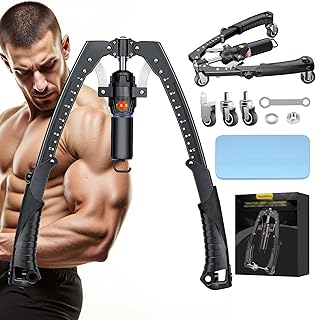
- Hydraulic resistance adjusts smoothly from 22 to 440 pounds
- Converts into an ab wheel or resistance-band anchor
- Adjustable arm length fits different body sizes
- Hydraulic cylinder adds more moving parts than spring trainers
- Needs a flat surface for stable, controlled reps
Pros & cons
- 660-pound capacity on a reinforced steel frame
- Eight backrest angles cover incline, decline, and flat training
- Folds in one step for compact storage
- 29.3-inch backrest may be long for smaller rooms
- Leather-style padding needs periodic wiping to resist wear
Pros & cons
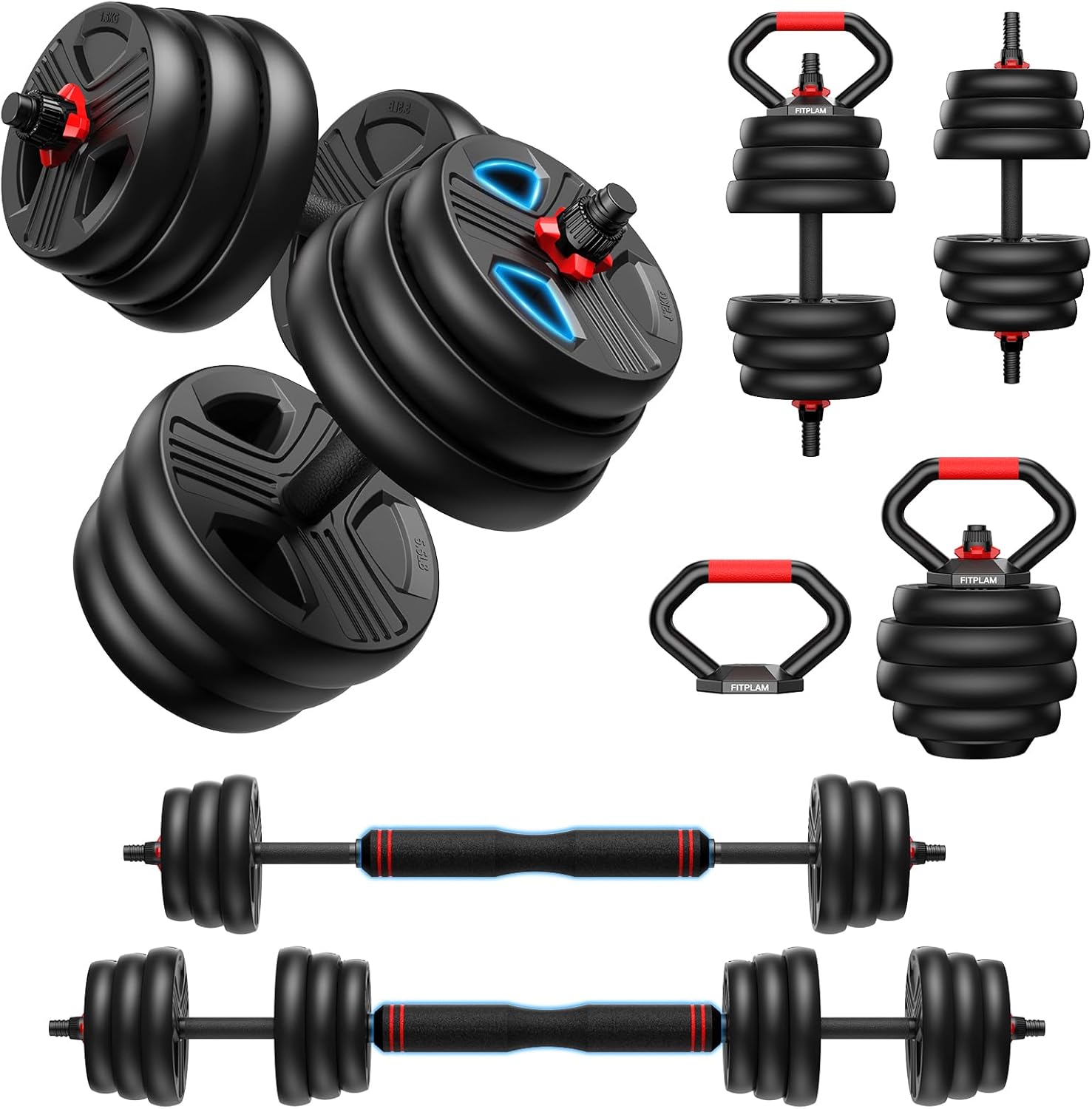
- Converts between dumbbells, kettlebells, barbells, and push-up stands
- Dual-lock nuts add a second layer of plate security
- Iron-sand plates resist rattling and shifting during lifts
- Swapping between five configurations takes setup time
- 45-pound set weight makes storage bulkier than fixed dumbbells


The bench press is the lift that suffers most in a home gym. A barbell needs a rack with safeties and, ideally, a training partner willing to stand behind you while you grind out a fifth rep. Dumbbells solve that problem in the least glamorous way possible: when a press stalls, you set the weights down on your chest and roll them off to the floor. Nobody dies. In exchange for that safety, you get a deeper stretch at the bottom, independent arms that expose the weak side you have been hiding, and a wrist that can rotate instead of being pinned to a fixed bar path.
The catch is that chest pressing eats weight faster than any other dumbbell movement. Curls and lateral raises live happily in the 15-to-30-pound range; a flat press climbs past 50 per hand sooner than most people plan for. So the picks below are judged on the things that actually matter under a bench: how high the weight ceiling goes, how thick and stable the handle feels when your grip is smoked, how quickly you can drop the load for a burnout set, and whether the head shape lets you get your elbows below your torso without a plate jamming into your ribs.
As an Amazon Associate we earn from qualifying purchases.
#1 Pick
As an Amazon Associate we earn from qualifying purchases.


As an Amazon Associate we earn from qualifying purchases.
Quick Comparison
| Pick | Type | Range per hand | Change speed | Best for |
|---|---|---|---|---|
| Bowflex SelectTech 552 | Dial adjustable | 5–52.5 lb | Seconds | Small increments, beginners to intermediates |
| NÜOBELL 80 lb | Twist-handle adjustable | 5–80 lb | Seconds | Heavy pressing in a compact footprint |
| PowerBlock Elite EXP | Selector-pin block | 5–50 lb, expandable to 90 | Seconds | Tightest storage space |
| Ironmaster Quick-Lock | Plate-loaded adjustable | 5–75 lb, expandable to 120 | ~20–30 seconds | Long-term strength progression |
| Rogue Rubber Hex | Fixed pairs | Sold per weight, 2.5–125 lb | Instant | Drop sets and abuse tolerance |
| CAP Barbell spinlock set | Cast iron with collars | Roughly 5–50 lb | 1–2 minutes | Lowest budget |
How to Choose
- Ceiling, then increments. Pick a set whose top weight is about double your current working press per hand. Then check the jump size — a 5-pound step at the low end is a 20 percent load increase, which is why the 2.5-pound increments on some models matter more than the headline number.
- Handle diameter and length. Adjustable dumbbells often use fatter handles than the 1.25-inch fixed standard, and a thick handle steals grip strength on incline sets. Handle length also decides whether your hands sit neutrally or get shoved outward at the bottom of a press.
- Head geometry. Long-bodied adjustables extend well past your hand. On a flat bench with the elbows tucked, those ends can collide with your torso before the chest reaches full stretch. Shorter, squarer heads press cleaner.
- Adjustment friction. If a weight change takes ninety seconds, you will skip the drop set. Dial and twist systems keep supersets alive; plate-loaded designs trade speed for durability and a higher top end.
- What happens when you drop them. Failed presses end with weights hitting the floor. Rubber-coated fixed dumbbells shrug it off. Adjustables with plastic shells and internal selector hardware do not, so budget for a mat and plan to lower them deliberately.
Top Picks Reviewed
Bowflex SelectTech 552 — Best All-Around Adjustable
Two dials, sixteen settings per bell, and 2.5-pound jumps through the first half of the range. That granularity is the reason this set keeps showing up in home gyms: it lets you add the smallest useful increment to a press instead of stalling at a 5-pound wall. The ceiling of 52.5 pounds per hand covers most lifters through a couple of years of honest training, and the cradles keep the bells off the floor so the selector teeth stay clean. The trade-off is length — these are long dumbbells, and if you press with a tight tuck you will feel the ends near your ribs. Treat the plastic shell gently and they last.
NÜOBELL 80 lb — Best for Heavy Pressing
Rotate the handle, lift, done. The NÜOBELL’s twist mechanism is the fastest genuinely heavy adjustment on the market, and the 80-pound model gives serious pressers room to grow without buying a second set. What sells it for chest work specifically is the shape: the steel plates stack into a short, dense block that sits closer to a fixed dumbbell’s proportions than any other adjustable, so your press path stays natural at the bottom. It costs real money and the mechanism deserves respect — set them down on the tray rather than the concrete.
PowerBlock Elite EXP — Best for Tight Spaces
A pair of these occupies roughly the footprint of a shoebox. The selector pin slides through a nested cage of steel, so nothing is left lying around and there are no collars to lose. The rectangular cage takes some getting used to on presses — the weight sits around your hand rather than beside it, and the top bar can brush your forearm. Most people adapt within a session or two. The expansion kits are the real argument: start at 50 pounds per hand and extend to 70 or 90 later without replacing the base.
Ironmaster 75 lb Quick-Lock — Best Long-Term Investment
These are plate-loaded dumbbells with a locking screw instead of an internal mechanism, which means there is almost nothing to break. Changing weight takes twenty or thirty seconds and a bit of intention, so they suit straight-set programming more than frantic drop sets. In return you get a solid steel handle with proper knurling, a compact square-plate profile that presses beautifully, and add-on kits that carry you to 120 pounds per hand. If you intend to still be pressing dumbbells a decade from now, this is the least wasteful purchase on the list.
Rogue Rubber Hex — Best Fixed Dumbbells
Nothing beats grabbing the next weight off a rack. Fixed hex dumbbells have the ideal handle for pressing, they do not roll away between sets, and the rubber heads survive being dropped from lockout without complaint — which makes them the honest choice for training close to failure. Buying a full range gets expensive and demands wall space, so most home lifters cherry-pick: a pair at their working press weight, one lighter pair for warm-ups and flyes, and one heavier pair to chase.
CAP Barbell Cast Iron Spinlock Set — Best Budget Option
Threaded handles, cast iron plates, spin-on collars. The adjustment is slow and the collars need snugging before every set, but the total cost is a fraction of any dial system and the top weight lands around 50 pounds per hand depending on plate count. The plates are narrow, which keeps the bell short and the press path clean. Check your collars religiously — a plate sliding mid-rep on an incline press is the one failure mode here that actually hurts.
Frequently Asked Questions
How heavy should my dumbbells be for chest pressing?
A useful starting benchmark for a flat press is about a third of your bodyweight in each hand for a set of eight. Someone at 175 pounds might press 50s to 60s within a year of consistent work. Buy for where you are heading, not where you are today, because pressing outgrows a set faster than any other movement.
Are adjustable dumbbells safe to press overhead or on a bench?
Yes, provided you confirm the mechanism is locked before every set and never lower them onto a hard floor from lockout. Give the handle a shake and a twist after each adjustment. Spinlock models need the most attention, since a loose collar lets a plate drift under load.
Can I build a strong chest without a barbell?
Comfortably. Dumbbells allow a longer range of motion at the bottom of the press and force each side to work independently, which addresses the imbalance a barbell lets you paper over. Cover flat, incline, and a fly or squeeze-press variation, keep adding load or reps, and the chest responds the same way.
Do I need a bench, or is floor pressing enough?
Floor presses build real strength and are safer to fail on, but the floor stops your elbows before the chest fully lengthens. An adjustable bench also unlocks incline work, which most lifters need for the upper chest. Start on the floor if space or budget is tight, then add the bench.
Final Thoughts
If you want one set that handles pressing for the long haul, the NÜOBELL 80 and the Ironmaster Quick-Lock are the two that will not cap your progress — the first prioritizing speed, the second durability and an enormous ceiling. Lifters newer to pressing get more out of the SelectTech 552’s fine increments, and anyone squeezing a gym into a closet should look hard at the PowerBlock. Whatever you choose, put a rubber mat under the bench and get in the habit of setting the weights down instead of dropping them. Both your floor and your mechanism will last longer for it.
8 Best Ab Workouts with Dumbbells: 6 Support Picks Compared
Best ab workouts with dumbbells are limited more often by position than...
Best Budget Adjustable Dumbbell: 6 Picks and Trade-Offs
Best budget adjustable dumbbell shopping is really a question about what you...
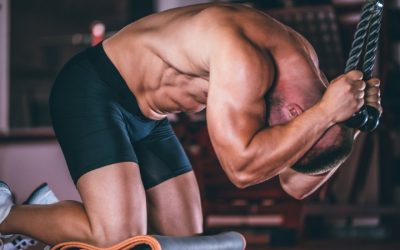
Best Abs Exercise with Dumbbells: 6 Picks by Coating Type
Best abs exercise with dumbbells movements rest the weight against your chest,...
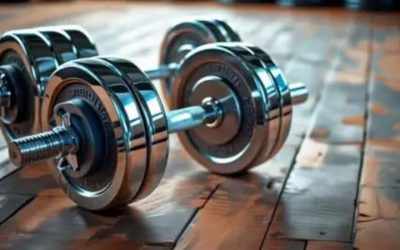
Best Abs Workout with Dumbbells: 6 Picks for Fast Circuits
Best abs workout with dumbbells formats are almost always circuits, and circuits...
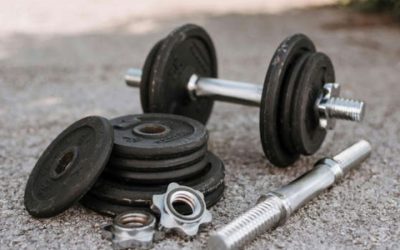
Best at Home Dumbbells: 6 Picks for Sharing a Household
Best at home dumbbells guides assume one user. Most households have two,...
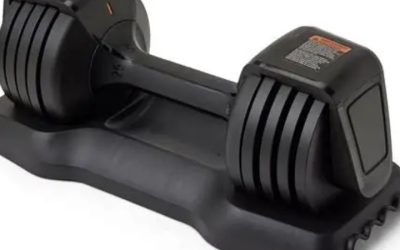
Best Dumbbells Home Gyms Use: 6 Picks Ranked by Delivery
Best dumbbells home buyers compare weight ranges and then discover the real...
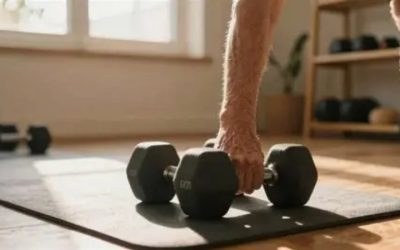
8 Best Ab Exercises with Dumbbells: 6 Floor-Friendly Picks
Best ab exercise with dumbbells options are mostly done lying down, which...
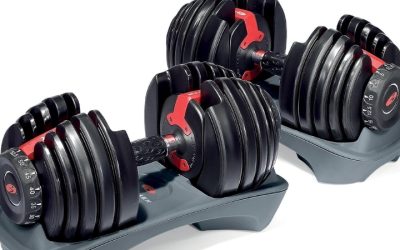
Best Dumbbell Set for Home Gym: 5 Picks Ranked by Space
Best dumbbell set for home gym shopping starts with a definition problem....
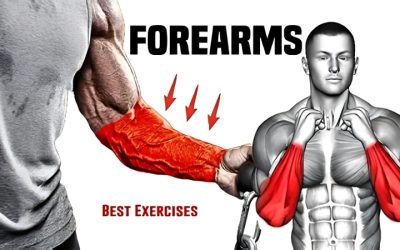
8 Best Workouts for Forearms with Dumbbells: 5 Gear Choices
Best workout for forearms with dumbbells depends less on the exercise list...
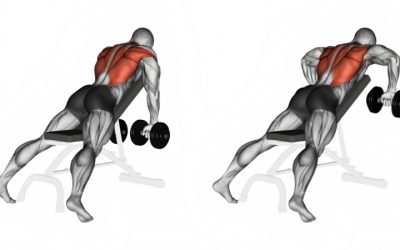
Best Lat Exercises Dumbbells: 6 Picks for Heavy Row Work
Best lat exercises dumbbells face a problem arm work never does: the...
Write Your Review
No reviews yet. Be the first to share your experience!