
Key takeaways
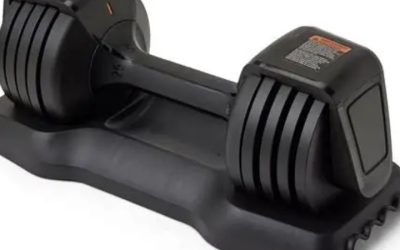
- Set Name: Expandable Set
- Item Dimensions L x W: 4.88"L x 1.78"W
- Handle Diameter: 1 inch
Twenty minutes is the realistic training window for a lot of people, and arm work is where that budget gets wasted fastest. A typical home session goes like this: four exercises, three sets each, with a weight change before every single set because the curl weight is not the extension weight. That is twelve adjustments at roughly 45 seconds apiece, which is nine minutes of standing over a dumbbell with a collar in your hand. The workout was fine; the logistics ate half of it.
Time-efficient arm training solves this at the equipment level. Fixed pairs eliminate adjustment entirely. Convertible sets consolidate a session into two blocks with one changeover. Supersetting a biceps exercise with a triceps exercise at the same weight halves the rest time by letting one muscle recover while the other works. The five setups below are evaluated on exactly that: how many minutes of your twenty they consume before you have done any work.
Our top picks
 Amazon Basics Neoprene Dumbbell Hand Weights for
- Set Name: Expandable Set
- Item Dimensions L x W: 4.88"L x 1.78"W
- Handle Diameter: 1 inch
 Amazon Basics Neoprene Dumbbell Hand Weights for
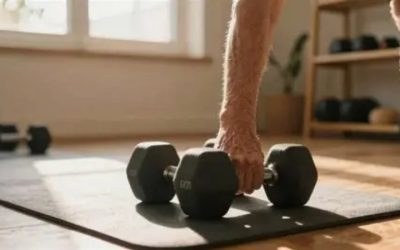
- Set Name: Pair
- Item Dimensions L x W: 7.05"L x 3.21"W
- Handle Diameter: 3 inch
Hexagon-shaped ends keep dumbbells from rolling away
Color-coded caps make weight identification quick
Neoprene coating adds a comfortable, secure grip
Fixed 5-pound weight offers no adjustability
Additional sizes must be purchased separately to mix and match


 Women's Health The Woman's Guide To Strength
- Target Audience: Adult
- Recommended Uses For Product: Health & Fitness
- Format: Notebook


As an Amazon Associate we earn from qualifying purchases at no extra cost to you.
Quick Comparison
| Product | Best For | Standout Feature | Watch Out For |
|---|---|---|---|
| Amazon Basics Neoprene Dumbbells | Zero-setup supersets | Pick up and go, no adjustment at all | One weight limits exercise pairing |
| EQUIPRO Adjustable Set | Sessions organized by load block | Quick changes compared with plate systems | Still interrupts fast-paced circuits |
| Convertible Dumbbell-to-Barbell Set | Two-block workout structure | One changeover covers a whole session half | Conversion is the slowest here |
| Women’s Health Dumbbell Training Guide | Sessions planned in advance | Removes decision time from the workout | Requires reading before, not during |
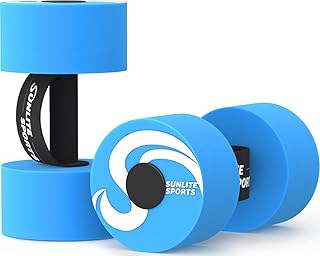
| Sunlite Sports Water Weights | Continuous work with no rest breaks | Intensity changes instantly with effort | Only viable with a pool nearby |
How to Choose
- Superset opposing muscles: Pair a curl with an overhead extension and rest only after both. The biceps recover while the triceps work, which cuts total session time by roughly a third without reducing quality.
- Group exercises by weight: Order your session so that everything using 20 pounds happens together. Most wasted time comes from bouncing between loads that could have been sequenced.
- Count the adjustment time honestly: Multiply the seconds per weight change by the number of changes in your program. If the answer exceeds five minutes, restructure the session or buy a fixed pair for your most-used weight.
- Decide the workout before you start: Standing in the room choosing exercises burns more time than any weight change. Write the session down, even three lines on a phone, before picking anything up.
- Use tempo instead of load changes: Slowing the lowering phase to four seconds makes a lighter weight sufficient, letting you complete several exercises without touching the collars at all.
Top Picks Reviewed
Fastest Sessions: Amazon Basics Neoprene Dumbbells
Nothing is quicker than a fixed pair. Pick up, superset curls and kickbacks, put down. For a twenty-minute window, zero adjustment time means the entire budget goes into working sets.
A single weight constrains what you can pair. Some exercises will be too light and some too heavy, which limits how well you can balance a session.
Best Structured Blocks: EQUIPRO Adjustable Set
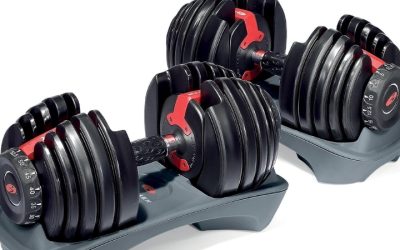
Changes are quick enough that organizing a session into two or three load blocks keeps the interruptions to a couple of minutes total while retaining full progression.
It still breaks the rhythm of a genuine circuit. If your preferred style is continuous movement with minimal rest, any adjustable system will fight you.
Best Two-Block Structure: Convertible Dumbbell-to-Barbell Set
Plan a dumbbell half and a barbell half with a single changeover between them, and you get two formats out of one twenty-minute session with only one interruption.
That single conversion is the longest single pause of any option here. It works because it happens once; attempt it twice and the session is gone.
Best Planning Tool: Women’s Health Dumbbell Training Guide
Deciding what to do is dead time nobody accounts for. Having the session written out in advance means you start working within thirty seconds of walking into the room.
The reading has to happen beforehand. Consulting a book between sets is exactly the sort of interruption a time-efficient session is trying to eliminate.
Best Continuous Work: Sunlite Sports Water Weights
Because resistance scales with your own effort, you can move straight from one exercise to another with no adjustment and no equipment change, which makes for genuinely continuous sessions.
It requires a pool, and getting to and from one usually costs far more time than any weight change ever would.
Frequently Asked Questions
How long should an arm session take?
Fifteen to twenty minutes of actual working sets is enough for most people, particularly if arms are also being trained indirectly by rows and presses on other days.
Are supersets as effective as straight sets?
For arm training, yes, and often more time-efficient. Pairing opposing muscle groups lets each rest while the other works without reducing the quality of either.
How much rest do I need between sets?
For arm isolation work, 60 to 90 seconds is usually plenty. Supersetting effectively provides that rest for each muscle while keeping the session moving.
Can short sessions build muscle?
Yes, provided the sets are taken close to failure and the weekly volume adds up. Three focused twenty-minute sessions beat one long session done half-heartedly.
Final Thoughts
If time is your constraint, buy the setup with the least adjustment overhead and structure the session around supersets. A fixed pair at your most-used weight is the fastest tool in the room; an adjustable set works well if you group exercises into load blocks. Whatever you own, write the session down before you start, because deciding on the fly costs more minutes than any collar ever will.
Write Your Review
No reviews yet. Be the first to share your experience!