
Key takeaways
- Set Name: Expandable Set
- Item Dimensions L x W: 4.88"L x 1.78"W
- Handle Diameter: 1 inch
People buying dumbbells for arm training almost always misjudge the ceiling in one of two directions. Some buy a 15-pound pair, outgrow it in six weeks, and then stop progressing because replacing it feels like admitting the first purchase was wrong. Others buy a system capable of 90 pounds per hand for a routine that consists of curls and kickbacks, and never load more than a third of it. Both errors cost money and both come from not knowing where arm training actually plateaus.
Some useful reference points: a reasonably trained person will curl somewhere in the 25 to 40 pound range per hand for sets of ten, and perform overhead triceps extensions considerably lighter than that, often 15 to 25 pounds. Rows and presses climb much faster and are the reason to own heavier weights at all. Understanding that split tells you how much capacity you genuinely need. The four options below sit at different points on that curve, and matching them to a realistic trajectory saves both an early plateau and a wasted purchase.
Our top picks
 Amazon Basics Neoprene Dumbbell Hand Weights for
- Set Name: Expandable Set
- Item Dimensions L x W: 4.88"L x 1.78"W
- Handle Diameter: 1 inch
| Product | Key specs | |
|---|---|---|
| Amazon Basics Neoprene Dumbbell Hand Weights for | Set Name: Expandable Set Item Dimensions L x W: 4.88"L x 1.78"W Handle Diameter: 1 inch | Check price |
 Amazon Basics Neoprene Dumbbell Hand Weights for Amazon Basics Neoprene Dumbbell Hand Weights for | Check price | |
 Amazon Basics Rubber Hex Dumbbell Hand Weight Amazon Basics Rubber Hex Dumbbell Hand Weight | Check price | |
 Amazon Basics Neoprene Dumbbell Hand Weights for Amazon Basics Neoprene Dumbbell Hand Weights for | Set Name: 3-Piece Dumbbell Set Item Dimensions L x W: 8.19"L x 6.69"W Handle Diameter: 1.25 | Check price |
 Amazon Basics Neoprene Dumbbell Hand Weights for Amazon Basics Neoprene Dumbbell Hand Weights for | Check price | |
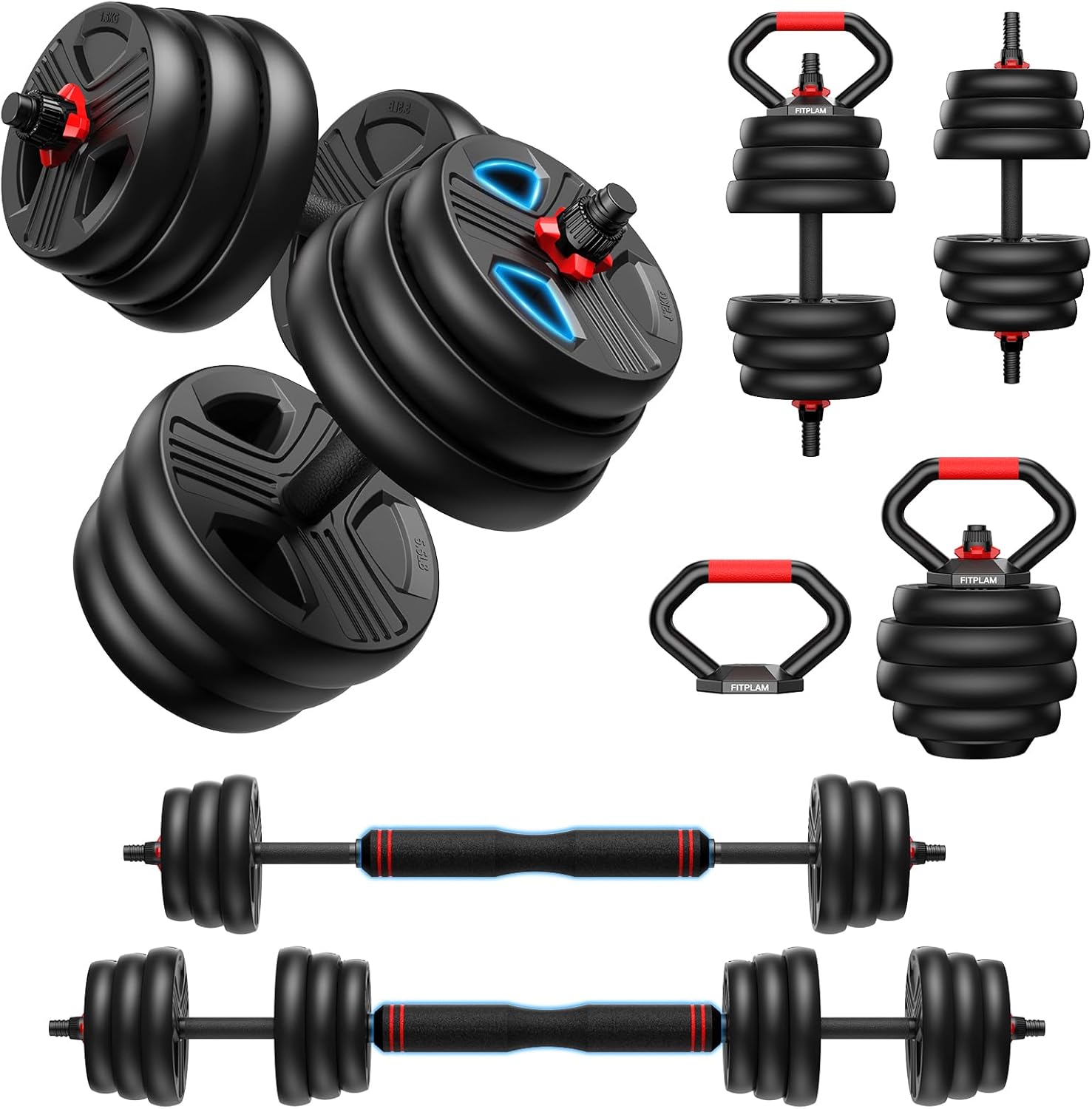 FITPLAM Adjustable dumbbell set FITPLAM Adjustable dumbbell set | Material: Alloy Steel, Iron, Polyethylene (PE) | Check price |
 Amazon Basics Neoprene Dumbbell Hand Weights for Amazon Basics Neoprene Dumbbell Hand Weights for | Set Name: Pair Item Dimensions L x W: 7.05"L x 3.21"W Handle Diameter: 3 inch | Check price |
 EQUIPRO Adjustable Dumbbell Set EQUIPRO Adjustable Dumbbell Set | Check price |
As an Amazon Associate we earn from qualifying purchases at no extra cost to you.
Quick Comparison
| Product | Best For | Standout Feature | Watch Out For |
|---|---|---|---|
| Amazon Basics Neoprene Dumbbells | The first two months only | Perfect for raises and rehab-style work | Ceiling reached faster than almost anyone expects |
| Amazon Basics Rubber Hex Dumbbell | Locking in one proven working weight | Available in the sizes arms actually plateau at | No headroom once you get stronger |
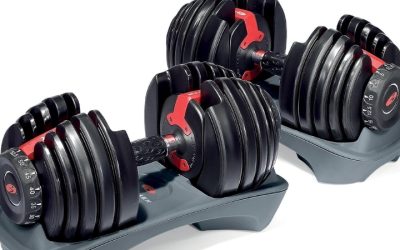
| FITPLAM Adjustable Set | Training that will include rows and presses | Capacity far beyond any arm requirement | Upper plates may never get used for arms |
| EQUIPRO Adjustable Set | Isolation-focused arm programs | Range matched to real curl and extension loads | Insufficient for heavy compound progression |
How to Choose
- Separate isolation from compound needs: Curls and extensions plateau at modest loads for most people. Rows, presses and goblet squats keep climbing. If you only do the former, capacity above 40 pounds per hand is decorative.
- Project twelve months forward: A beginner curling 12 pounds may reach 20 to 25 within a year of consistent training. Buy something that covers that trajectory rather than only your current strength.
- Do not confuse strength with weight jumped: Progress on arms often shows up as more reps and better control before it shows up as more load. A set that allows small increments captures that progress; one with 10-pound jumps hides it.
- Add intensity techniques before adding weight: Slower eccentrics, pauses at peak contraction and drop sets extend the useful life of a given pair of dumbbells by months. Load is not the only progression variable.
- Plan the second purchase deliberately: Most successful home setups end up as a light fixed pair plus one adjustable set. Buying with that endpoint in mind is cheaper than discovering it through three separate mistakes.
Top Picks Reviewed
Highest Ceiling: FITPLAM Adjustable Set
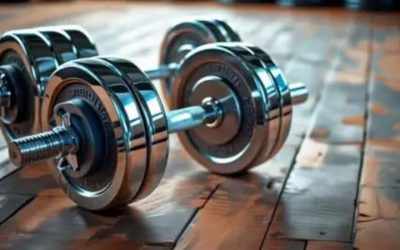
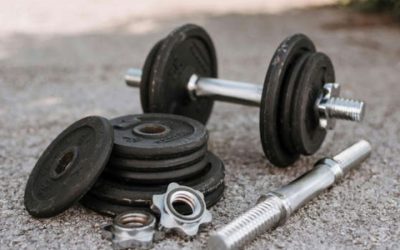
Capacity up around 90 pounds means the set will never be the limiting factor, not for arms and not for the heavier rows and presses that build the surrounding muscle. This is the buy-once option for someone with a long horizon.
For pure arm work you will use perhaps the bottom half. That is not wasted if you also do compound lifts, but it is if curls are genuinely all you plan to do.
Best Matched to Arm Loads: EQUIPRO Adjustable Set
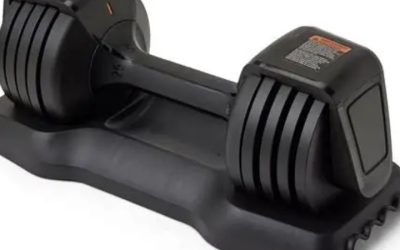
The range sits where arm isolation work actually lives, with increments small enough to keep progressing month after month rather than stalling between big jumps.
It will not carry you through heavy compound progression. If your training broadens to include serious rowing and pressing, this becomes a light accessory rather than the main set.
Best Single Fixed Weight: Amazon Basics Rubber Hex Dumbbell
Choosing one pair at your realistic six-month curl weight is a sound strategy. It gives you a target to grow into and a permanent, zero-setup tool once you get there.
There is no headroom at all. When you outgrow it, the only options are another purchase or switching to higher-rep and slower-tempo work to keep the stimulus useful.
Best Starting Point: Amazon Basics Neoprene Dumbbells
Light pairs are genuinely the right tool for lateral raises, rear delt work and the first weeks of learning movement patterns, and they stay useful as warm-up weights forever.
The ceiling arrives quickly. Anyone training consistently will exceed this range within about two months, and continuing to use them past that point is why so many home routines stop producing results.
Frequently Asked Questions
How heavy do I need to go to build bigger arms?
Less than most people assume. Sets of eight to fifteen taken close to failure work well, which for many people means 20 to 35 pounds per hand on curls. Consistency and progression matter more than absolute load.
When should I increase the weight?
When you can complete every set at the top of your target rep range with clean form and a rep or two still in reserve. Then add the smallest increment your equipment allows.
What if I plateau at my dumbbells’ maximum?
Slow the lowering phase to three or four seconds, pause at peak contraction, add reps, or use drop sets. These extend a fixed weight’s usefulness considerably before another purchase is necessary.
Do heavier weights build arms faster?
Not inherently. Muscle responds to effort and volume close to failure across a wide range of loads. Heavier weights simply get you there in fewer reps, with more joint stress.
Final Thoughts
Buy for where your training will be in a year, not where it is today, but be honest about which exercises you will actually do. If arms are the focus, a set covering the 5 to 40 pound band with small increments is sufficient and cheaper. If rows and presses are in the plan, the extra capacity earns its place. Either way, expect to end up with one light fixed pair alongside whatever else you choose.
Write Your Review
No reviews yet. Be the first to share your experience!