Key takeaways
- Distributed vs. point load: A “750 lb capacity” figure usually describes evenly spread static weight. Assume your real-world margin is smaller once you factor in sitting on one edge, so target a rating at least 1.5× the combined sleeper weight plus mattress.
- Leg count and placement: Four corner legs are not enough past queen size. Look for a minimum of six support points, with at least two along the centerline directly under the hip and shoulder zone where deflection begins.
- Slat span and material: Steel slats spaced 3 inches or less resist bowing far better than wide-spaced wood. Every extra inch of unsupported span multiplies flex and shortens foam mattress life.
- Transfer height: Aim for a sleep surface where your knees sit at or slightly below hip level, typically 22–26 inches total. Too low forces a deep squat to stand; too high strains hamstrings and shoulders.
- Motor and hinge duty on adjustables: On lift bases, check the actuator rating, hinge pin thickness, and whether the frame uses a full welded perimeter. Split configurations halve the load on each motor, which meaningfully extends service life for couples.
What's inside
Most bed frame failures don’t happen all at once. They start as a faint creak near a center leg, progress to a shallow dip under the hips, and end with a cracked slat or a bent weld some months later. For sleepers over roughly 250 lbs — and especially for two heavier partners sharing a surface — the culprit is rarely the mattress. It’s the structure underneath, which was engineered around a 500 lb static rating that assumes weight spread evenly across the whole deck rather than concentrated over a 20-inch hip zone, absorbed repeatedly as you sit down on the edge, roll, or push up to stand.
This guide looks at bed frames through two lenses that matter most for plus-size sleepers: load engineering (steel gauge, leg count, slat span, dynamic versus static capacity) and ergonomics (deck height for easier transfers, adjustable positioning to unload the lumbar spine and hips, and edge rigidity where you actually sit). Below you’ll find heavy-duty platform options alongside adjustable bases with motors and hinges built for real-world cycling, not showroom demos.
As an Amazon Associate we earn from qualifying purchases.



🛒 Best Price Today on Amazon
Prime members get fast, free shipping on everything above, plus member-only deals. New members get a 30-day free trial — cancel anytime.
How to Choose a Bed Frame For Obese People (2026)
- Distributed vs. point load: A “750 lb capacity” figure usually describes evenly spread static weight. Assume your real-world margin is smaller once you factor in sitting on one edge, so target a rating at least 1.5× the combined sleeper weight plus mattress.
- Leg count and placement: Four corner legs are not enough past queen size. Look for a minimum of six support points, with at least two along the centerline directly under the hip and shoulder zone where deflection begins.
- Slat span and material: Steel slats spaced 3 inches or less resist bowing far better than wide-spaced wood. Every extra inch of unsupported span multiplies flex and shortens foam mattress life.
- Transfer height: Aim for a sleep surface where your knees sit at or slightly below hip level, typically 22–26 inches total. Too low forces a deep squat to stand; too high strains hamstrings and shoulders.
- Motor and hinge duty on adjustables: On lift bases, check the actuator rating, hinge pin thickness, and whether the frame uses a full welded perimeter. Split configurations halve the load on each motor, which meaningfully extends service life for couples.
The Best Bed Frames For Obese People (2026) Reviewed
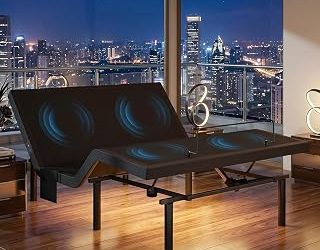
Mixcous King Adjustable Bed Frame, 750 lbs
This is the most straightforward answer to a high-capacity adjustable in king width, with a 750 lb rating, a reinforced steel deck, and zero-gravity plus anti-snore presets that take pressure off the lower back and airway. The head-and-foot articulation is smooth under load, which is where lighter-duty bases tend to stall or whine.
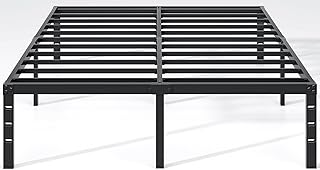
JETO Metal Bed Frame, Queen 14 Inch
If you want durability without motors to eventually service, this heavy-gauge steel platform is a sensible pick: closely spaced slats, multiple center legs, and no box spring needed. The 14-inch clearance also gives you usable under-bed storage and a comfortable transfer height with most 10–12 inch mattresses.
Sven & Son Platinum Base + 14″ Hybrid Mattress, Split King
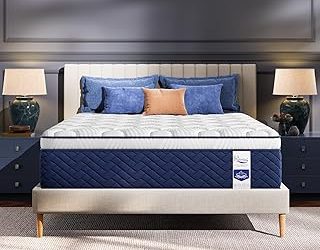
The split-king layout is the smartest structural choice for two heavier partners, since each side carries its own load on its own motor and legs. Lumbar support and head-pillow tilt give you genuine ergonomic adjustment rather than a simple two-hinge bend, and the 14-inch hybrid handles edge sitting better than all-foam builds.
Sven & Son Classic Base + 10″ Memory Foam, Full
A well-balanced entry point for a single sleeper who wants zero-gravity positioning, massage, and under-bed lighting without a premium price. Pair it with the included firm foam mattress and confirm the base rating against your weight, since full-size decks have fewer support points than split configurations.
Nectar Premier Adjustable Base, Twin XL
Tool-free assembly, four USB ports, and a memory-equipped remote make this the most user-friendly base here, with anti-snore and zero-gravity modes that help reduce hip and lumbar pressure. Two Twin XL units side by side is also a solid way to build an independent split king with separate load paths.
Frequently Asked Questions
How much weight capacity do I actually need?
Add both sleepers’ weight plus the mattress (often 80–140 lbs), then add a 50% buffer for dynamic loading. A couple totaling 500 lbs with a hybrid mattress should be shopping at 900 lbs or above across a split setup.
Are adjustable bases durable enough for heavier sleepers?
Quality ones are, provided the actuator rating matches your load and you avoid concentrating weight on the raised foot section. Split models like the Sven & Son Platinum split the burden across two independent mechanisms, which is the most reliable configuration long-term.
Do I still need a box spring?
No, and you generally shouldn’t use one. Steel platform decks with tight slat spacing support foam and hybrid mattresses more evenly, while box springs introduce a compressible layer that sags under concentrated weight.
What about smaller rooms or single sleepers?
Twin XL bases such as the MULIN massage frame or the Nectar Premier deliver the same ergonomic positioning in a narrower footprint, and can be paired later if your needs change.
Final Thoughts
For couples, the Sven & Son Platinum split king is the strongest combination of load engineering and real lumbar adjustment. If you want maximum rated capacity in a single king surface, the Mixcous 750 lb base is the clearest choice, and the JETO metal platform remains the most durable low-maintenance option for anyone who’d rather skip motors entirely.