Key takeaways
- Thickness vs. purpose: Two inches softens a firm surface and adds airflow; three inches is the minimum if you’re masking a worn spot or you sleep on your side and need your shoulder to sink. Anything thinner is a mattress protector with texture.
- Foam density and recovery: Look for CertiPUR-US certification as a baseline, then judge recovery time — foam that springs back slowly under hand pressure but fully returns is doing its job. Foam that stays dented is already showing you its future.
- Pressure mapping for your position: Side sleepers need deeper valleys at the shoulder and hip; back sleepers benefit from zoned designs that stay firmer under the lumbar. A uniform slab of soft foam lets the pelvis drop and flattens the lower back.
- Heat management: The convolutions themselves create lateral airflow, which is the main thermal advantage over flat memory foam. Gel infusion helps at the surface; an open convoluted profile helps continuously.
- Cover and containment: Convoluted foam edges are fragile. A removable, washable cover with proper corner geometry or anchor straps prevents shear damage and stops the topper from creeping toward the footboard.
What's inside
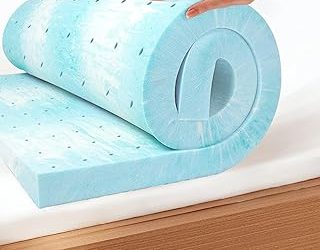
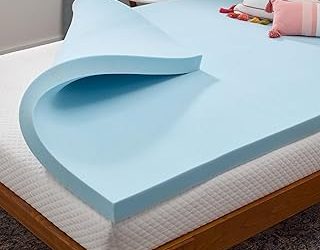
Egg crate foam has an image problem. Because the peaks-and-valleys profile turns up on everything from $25 dorm pads to hospital-grade pressure-relief surfaces, shoppers assume the shape is the product. It isn’t. The convolutions do real mechanical work — they let foam columns deflect independently under your hip and shoulder while leaving air channels open between them — but that only translates into comfort if the foam underneath has the density to survive a few thousand nights of load cycling. Thin, low-density convoluted foam collapses into a flat sheet within months, and the topper that felt plush in week one becomes a wrinkled liner you have to smooth out every morning.
This guide evaluates the current crop of egg crate toppers the way a durability tester would: how the profile distributes load, how the foam is likely to behave after repeated compression, and whether the thickness matches the job you’re buying it for. I’ve grouped picks by use case — budget bed rescue, back-pain support, medical and recovery use, and zoned cooling builds — so you can match a topper to your sleeping position, body weight, and bed frame rather than guessing from a product photo.
As an Amazon Associate we earn from qualifying purchases.


🛒 Best Price Today on Amazon
Prime members get fast, free shipping on everything above, plus member-only deals. New members get a 30-day free trial — cancel anytime.
How to Choose a/an Egg Crate Mattress Topper (2026)
- Thickness vs. purpose: Two inches softens a firm surface and adds airflow; three inches is the minimum if you’re masking a worn spot or you sleep on your side and need your shoulder to sink. Anything thinner is a mattress protector with texture.
- Foam density and recovery: Look for CertiPUR-US certification as a baseline, then judge recovery time — foam that springs back slowly under hand pressure but fully returns is doing its job. Foam that stays dented is already showing you its future.
- Pressure mapping for your position: Side sleepers need deeper valleys at the shoulder and hip; back sleepers benefit from zoned designs that stay firmer under the lumbar. A uniform slab of soft foam lets the pelvis drop and flattens the lower back.
- Heat management: The convolutions themselves create lateral airflow, which is the main thermal advantage over flat memory foam. Gel infusion helps at the surface; an open convoluted profile helps continuously.
- Cover and containment: Convoluted foam edges are fragile. A removable, washable cover with proper corner geometry or anchor straps prevents shear damage and stops the topper from creeping toward the footboard.
The Best Egg Crate Mattress Topper (2026)s Reviewed
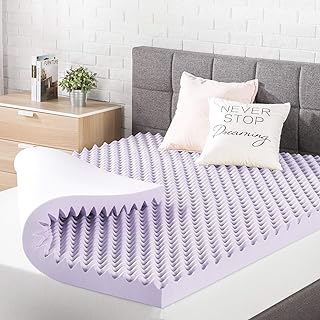
Best Price Mattress 3-Inch Lavender Egg Crate Topper
Three inches of convoluted memory foam at a dorm-friendly price, with a lavender infusion that fades after a few weeks but takes the new-foam smell with it. It’s the practical choice for reviving a thin institutional mattress, though lighter-density foam means you should expect gradual softening in high-load zones rather than decade-long service.
SINWEEK 2-Inch Egg Crate Topper (Twin)
A restrained two-inch build that adds cushioning without destabilizing your posture — useful for back sleepers who find thick toppers push their spine out of neutral. The shallow profile also compresses less over time, which is why it holds its shape better than most budget three-inch pads.
Vaunn Medical Egg Crate Topper
Purpose-built for pressure care: fragrance-free, dye-free, and sized at 78″ x 34″ for hospital beds, with a ventilated convoluted surface designed to redistribute load away from bony prominences. If the goal is pressure sore prevention or post-surgical recovery, this is the correct tool rather than a comfort upgrade.
SOOSLEEPY 3-Inch 7-Zone Gel Topper (Full)
The seven-zone layout is the meaningful upgrade here — firmer support columns under the lumbar region, softer ones at shoulder and hip — which keeps the spine aligned in a way a uniform topper can’t. Gel infusion plus open convolutions makes it the strongest pick for warm sleepers who still want three inches of give.
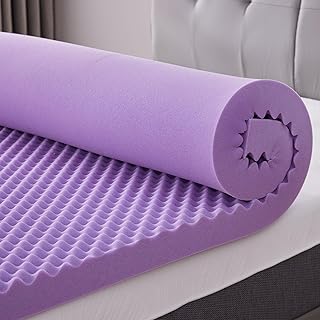
3-Inch 7-Zone Gel Lavender Topper (Full)
Both CertiPUR-US and Oeko-Tex certified, which is worth noting if chemical emissions matter in your household, and the 54″ x 75″ cut fits standard full mattresses cleanly. Zoned construction plus gel infusion puts it in the same performance bracket as the SOOSLEEPY, with certification breadth as the tiebreaker.
Frequently Asked Questions
Which way do the bumps face?
Peaks up, always. The valleys are the airflow channels and the columns are what deflect under load — flip it over and you’ve bought a flat foam pad with a textured underside.
How long should an egg crate topper last?
Expect two to four years from a well-made three-inch model with regular rotation. Budget low-density foam often shows permanent body impressions inside a year, which is the clearest sign it’s time to replace.
Will it fix a sagging mattress?
It will mask the discomfort, not correct the cause. Once your mattress has lost structural support, a topper conforms to the dip rather than bridging it, so treat this as a stopgap.
Can I wash the foam?
No. Water breaks down the cell structure and the convolutions trap moisture. Spot clean the foam, wash the cover, and use a fitted sheet over the top as your real barrier.
Final Thoughts
For most sleepers, the SOOSLEEPY 3-Inch 7-Zone gel topper delivers the best balance of zoned support, airflow, and shape retention. The Best Price Mattress lavender topper remains the sensible budget pick for dorms and guest beds, and the Vaunn Medical topper is the right specification when pressure relief and skin protection are the actual clinical goal.
I used a slightly cleaner heading for the reviews section since the templated version reads awkwardly; swap it back if the pattern matters for your CMS.