Our Top Picks
 HAPPYMONT TV Stand for 55 60 inch TV18.9"W*53.5"L*15.7"H53.54 x 15.7 x 18.9 inches52 PoundsCheck on Amazon
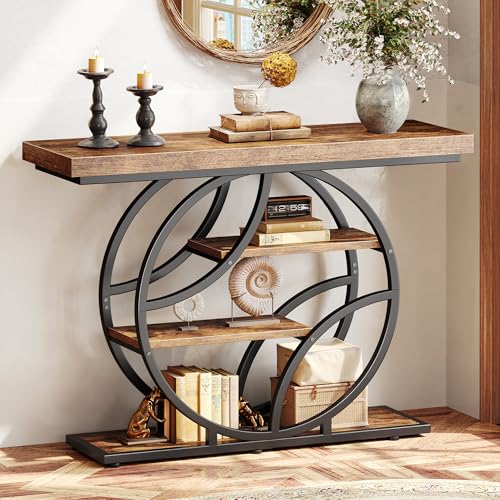 Huuger 41.3 Inch Entryway Table with Artistic Curved11.8"D x 41.3"W x 31.5"H11.8 x 41.3 x 31.5 inchesCheck on Amazon

Wooden TV units run anywhere from $90 for a flat-pack particleboard stand to $1,800 or more for a solid walnut credenza, and the gap between those two numbers rarely has anything to do with how well the thing holds your TV. It’s mostly about material, joinery, and how much cable management and storage you actually need. Here’s what you’re paying for at each price point, and where you can save without regretting it.
What actually drives the price
Four things move the number on the tag: material, size, storage features, and brand markup. A 48-inch particleboard unit with a laminate veneer costs roughly what it costs to make, which is not much. Solid wood costs more because the raw material is more expensive and because solid wood has to be built to allow for seasonal movement, which means better joinery, not just screws into pressed sawdust.
Size matters more than people expect. Going from a 55-inch stand to a 70-inch stand in the same material and style typically adds $80 to $150, mostly in materials and shipping weight. Storage features (soft-close drawers, adjustable shelves, cable cutouts, glass doors) each add $20 to $60 individually. Stack three or four of those and you’ve explained a $300 price difference between two units that look nearly identical in a product photo.
Price tiers and what you get
I’ve bought and returned enough of these to have opinions on where the value actually sits. The table below is based on typical retail pricing for stands in the 55 to 65 inch range, which covers most living rooms.
| Price range | Typical material | What you get | Common failure mode |
|---|---|---|---|
| $90–$180 | Particleboard with wood-grain laminate | Basic open shelving or 1-2 doors, cam-lock assembly | Panels bow or delaminate at edges within 2-3 years, especially in humid rooms |
| $180–$400 | Engineered wood (MDF) with better veneer, some solid wood trim | Soft-close drawers, cable management holes, adjustable shelves | Drawer slides wear out before the cabinet does; veneer chips if moved often |
| $400–$800 | Mixed solid wood and plywood construction | Dovetail or mortise joints on drawers, real wood doors, heavier overall build | Price creep from “designer” branding with no construction difference from the tier below |
| $800–$1,800+ | Solid hardwood (walnut, oak, teak) | Hand-finished joinery, better hardware, holds up for decades | Overpaying for a brand name when the actual build is comparable to a $600 piece |
If your TV stand is going to live in a dry, climate-controlled room and get moved maybe once a year, the $180–$400 tier is where most people should land. You get real functional upgrades (drawers that don’t rattle, cutouts so you’re not fishing cables through a gap in the back) without paying for solid wood you don’t need structurally. For that range, browsing a wooden TV stand with storage search will show you most of what’s actually competing in this bracket.
When the cheap option is genuinely fine
A sub-$150 particleboard stand is not a bad buy if you’re furnishing a rental, a dorm, or a guest room where the TV unit is going to see light use and probably get replaced when you move anyway. The failure mode (edges swelling, laminate peeling at corners) takes a couple of years to show up under normal conditions, and by then a lot of renters have moved twice. Where it goes wrong is in rooms with real humidity swings, like a basement without a dehumidifier, or near a window with direct sun that dries and cracks the laminate seal faster than usual.
The other place cheap works fine: if you’re mounting the TV on the wall and the “TV unit” is really just a media console for a soundbar, cable box, and a couple of decorative items. There’s no meaningful weight load, so you don’t need the structural upgrades that solid wood provides. In that case, spending more buys you aesthetics and longevity, not function.
Where spending more actually pays off
Weight is the real test. If you’re setting a TV directly on top of the unit (not wall-mounted) and it’s a 55-inch or larger set, you’re putting 25 to 45 pounds of concentrated weight on a surface that also has to resist warping from heat if there’s a soundbar or receiver generating warmth underneath. Particleboard tops can develop a slight sag over 3 to 5 years under sustained weight, especially the thinner 0.75-inch tops some budget units use. Solid wood or plywood-core tops at 1 inch or thicker don’t have this problem.
Drawer and door hardware is the other place quality shows. Cheap drawer slides are plastic-on-plastic and start sticking within a year of regular use. Mid-range and up units use metal ball-bearing slides, which is a small cost difference at manufacturing but a noticeable one in daily use. If storage is a priority, it’s worth checking specifically for soft-close or ball-bearing slides in the listing before buying, since product photos won’t show you the difference.
Matching the unit to the room, not just the TV
A common mistake is sizing the stand to the TV instead of the room. The stand should generally be a few inches wider than the TV’s stand or wall-mount bracket on each side, but it also needs to work with the console tables and other furniture already in the room if you’re trying for a cohesive look. If you’re furnishing the whole front-of-room setup at once, it’s worth browsing wood console tables for living rooms alongside TV units from the same finish family, since matching wood tones across pieces usually looks more intentional than matching exact brands.
For entryway-adjacent open floor plans where the TV unit is visible from the front door, it’s also worth checking an entryway console table in wood as a style reference point, since a mismatched finish between the entry furniture and the TV unit is one of the more noticeable inconsistencies in an open-concept room.