Our Top Picks
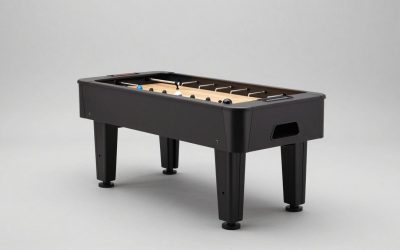
 Doc and Pies Arcade Factory 60-Game Full Size31.5" Tall x 23" Wide x 32" Deep32 x 23 x 29 inchesCheck on Amazon
- Doc and Pies Arcade Factory 516-Game Full Size31.5" Tall x 23" Wide x 32" Deep32 x 23 x 29 inchesCheck on Amazon
- Doc and Pies Arcade Factory 412-Game Full Size31.5" Tall x 23" Wide x 32" Deep32 x 23 x 29 inchesCheck on Amazon
The best full size retro arcade cabinets for home game rooms are the AtGames Legends Ultimate for broad game variety, a full-height Arcade1Up cabinet for a more traditional dedicated design, and an iiRcade cabinet for shoppers who want a large built-in library with downloadable expansion options.
Quick picks by gaming situation
| Situation | Best cabinet type | Why it fits | Typical budget |
|---|---|---|---|
| Family game room with many players | AtGames Legends Ultimate | Large control deck, two-player controls, and a broad mix of arcade-style games | Usually $500–$900 |
| Authentic look for one franchise | Full-height Arcade1Up cabinet | Recognizable artwork, familiar controls, and a cabinet footprint similar to a classic machine | Usually $500–$1,000 |
| Expandable digital library | iiRcade cabinet | Large screen and access to additional licensed games through its platform | Usually $600–$1,200 |
| Small apartment or shared room | Compact upright cabinet or bartop on a stand | Less depth and easier relocation than a full deluxe machine | Usually $300–$700 |
| Competitive two-player use | Cabinet with a 22-inch-or-larger screen and full-width control panel | More elbow room and better visibility when players stand side by side | Usually $600–$1,200 |
What “full size” means in a home arcade
A full-size upright cabinet is generally about 60–72 inches tall, 20–30 inches wide, and 20–35 inches deep. It is designed for standing play without a riser. Some machines sold as “full size” are actually countertop cabinets placed on a separate stand, so check the assembled height rather than the product title.
Doc and Pies Arcade Factory 60-Game Full Size Cocktail Arcade Machine – 2 Player Retro Arcade Table with LCD Screen, Joysticks & Buttons – Classic Arcade Cabinet for Home or Game Room
Chosen because it specifies 2 Player Retro Arcade Table with LCD Screen and Joysticks & Buttons.
View on AmazonDoc and Pies Arcade Factory 516-Game Full Size Cocktail Arcade Machine – 2 Player Retro Arcade Table with LCD Screen, Joysticks & Buttons – Classic Arcade Cabinet for Home or Game Room
Chosen because it specifies 2 Player Retro Arcade Table with LCD Screen and Joysticks & Buttons.
View on AmazonDoc and Pies Arcade Factory 412-Game Full Size Cocktail Arcade Machine – 2 Player Retro Arcade Table with LCD Screen, Joysticks & Buttons – Classic Arcade Cabinet for Home or Game Room
Chosen because it specifies 2 Player Retro Arcade Table with LCD Screen and Joysticks & Buttons.
View on AmazonScreen size is usually between 17 and 24 inches diagonally. A 19-inch screen can look authentic and keep the cabinet relatively narrow, while a 22- or 24-inch display is more comfortable for two players and modern fighting games. Larger screens also make the cabinet deeper and heavier, so screen size is not an automatic upgrade for every room.
Head-to-head: the leading full-height choices
AtGames Legends Ultimate: best for variety
The AtGames Legends Ultimate is one of the strongest choices when “retro” means a broad collection rather than one specific publisher. Its appeal is the full-width two-player control panel, trackball, spinner, and a substantial built-in game selection on applicable versions. It can suit families who want arcade games, puzzle games, sports titles, and competitive play in one machine.
Allow for roughly 23–25 inches of cabinet width and approximately 30–35 inches of depth, depending on the version and how far the controls project. Its control deck is generous, but that also means it can feel bulky in a narrow passage. Confirm the exact model’s included games and online features because Legends products differ by edition.
Arcade1Up full-height cabinets: best for a dedicated theme
Arcade1Up is a practical choice when the cabinet’s artwork and game lineup matter more than having every type of control. Full-height and Pro Series machines typically offer a focused collection from a recognizable franchise, such as fighting, racing, pinball, or classic arcade titles. The visual design often makes them the easiest cabinets to match with a themed game room.
Many Arcade1Up machines use engineered wood panels rather than solid hardwood. That keeps the price and weight manageable, but edges and screw joints deserve care during assembly and moving. A full-height model commonly occupies about 25–27 inches of width and 20–30 inches of depth, although racing and pinball cabinets require more room.
Choose a model with a real control panel rather than a small joystick layout if two adults will play regularly. For fighting games, six-button arrangements and a sturdy control deck matter more than the number of games advertised.
iiRcade: best for a growing game library
iiRcade cabinets are appealing to buyers who want a modern platform with a large built-in library and the option to obtain additional licensed titles. They generally use a large display and a conventional two-player control layout, making them suitable as a central machine in a family room.
The trade-off is platform dependence: future availability, account features, and downloadable content can matter more than they do with a cabinet that only plays its included games. Before buying, check whether the titles you care about are included, separately sold, or unavailable in your region.
Measure the room before buying
Do not measure only the empty floor rectangle. Leave at least 30 inches of clear walkway in front of the cabinet, and aim for 36 inches if the arcade sits on a main route through the room. For two-player standing use, allow about 42–48 inches from the front of the control panel to the nearest wall, sofa, or another machine. This gives players room to step back without blocking the room.
| Room or placement | Recommended clear space | Practical result |
|---|---|---|
| Cabinet against a wall | Cabinet depth plus 30 inches in front | Works for one-player use and occasional two-player sessions |
| Two cabinets side by side | At least 2 inches between cabinets; 36 inches in front | Prevents control panels from colliding and preserves a walkway |
| Two-player game station | 42–48 inches from panel to obstruction | Allows players to stand shoulder to shoulder and step back |
| 10-by-12-foot room | One 24-inch-wide cabinet plus seating or a second shallow cabinet | Usually comfortable if the remaining walkway stays at least 30–36 inches |
| Doorway delivery route | Measure the narrowest opening, not just the room door | Prevents a cabinet from becoming stuck in a hall or stairwell |
Also measure ceiling height if the cabinet must be tilted upright. A 68-inch cabinet can need more than 72 inches of diagonal clearance during installation. Remove the box dimensions from the manufacturer’s specification sheet and compare them with door, elevator, stair, and hallway measurements.
Controls, screen, and game library: what matters most
- Controls: A quality joystick should return to center cleanly without excessive looseness. Sanwa-style replacement parts are popular, but not every cabinet includes them. Trackballs and spinners are valuable only if the game library uses them.
- Screen: Choose 19 inches for a traditional, space-conscious cabinet; 22–24 inches for comfortable two-player viewing. Look for adjustable brightness and a viewing angle that works for standing players.
- Game library: Count the games you will actually play, not just the total number. A smaller licensed collection can be better than hundreds of poorly matched titles.
- Audio: Front-facing speakers are easier to hear than speakers hidden behind the marquee. A headphone jack is useful in apartments.
- Connectivity: Wi-Fi, Bluetooth, USB ports, and downloadable content can add flexibility, but they may introduce updates, accounts, and compatibility issues.
Assembly, moving, and durability realities
Most home arcade cabinets arrive flat-packed or partially assembled. Plan for one to three hours of assembly, two people for lifting, and a large clear floor area. The cabinet may be manageable in separate panels but difficult once assembled. A finished machine commonly weighs about 70–150 pounds; racing, pinball, and commercial-style metal cabinets can weigh more.
Use a manual screwdriver or a low-torque driver during assembly. Over-tightening can strip engineered-wood panels. Keep the cabinet upright on a level floor, use the supplied anti-tip strap, and avoid dragging it across carpet. If you rent, place a furniture pad beneath the feet and confirm that the wall strap can be installed without violating the lease.
The parts most likely to wear first are joystick microswitches, buttons, spinner or trackball bearings, power switches, and cabinet-edge surfaces around the control deck. These parts are often replaceable, but check whether the manufacturer sells compatible replacements before purchase. A machine with accessible controls and standard connectors is easier to maintain than one with proprietary assemblies.
Which cabinet should you choose?
Choose the AtGames Legends Ultimate if your priority is variety, two-player flexibility, and a large control panel. Choose a full-height Arcade1Up if you want a themed centerpiece with a focused licensed collection and a familiar retro appearance. Choose iiRcade if downloadable expansion and a modern platform matter more than owning a fixed, self-contained library.
For renters, narrow rooms, or frequent moves, select the lightest cabinet that still has the controls and screen you need. For children and pets, favor rounded cabinet edges, stable anti-tip hardware, a protected screen, and controls that can be replaced. For back pain, a standing cabinet paired with a sturdy 24–30-inch arcade stool can reduce fatigue, but leave enough clearance for the stool without blocking the room’s main walkway.
Frequently asked questions
Is a full-size arcade cabinet suitable for a 10-by-12-foot room?
Yes, usually one standard upright cabinet fits comfortably. Keep the cabinet on a wall, preserve at least 30–36 inches of walkway, and avoid placing a deep racing or pinball machine where it narrows the entrance.
Do full-size cabinets need to be attached to a wall?
Not always, but an anti-tip strap is wise for tall, narrow cabinets, especially in homes with children or pets. Follow the manufacturer’s installation instructions and use an appropriate wall anchor.
Should I buy a cabinet with more games?
Only if the additional games match your interests and the controls support them. A cabinet with fewer licensed games, reliable controls, and a better screen can provide more value than a large but repetitive library.