Our Top Picks
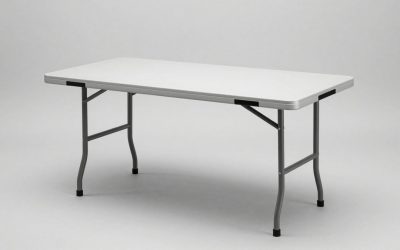
 GIANTEX Folding Sewing Table with Charging Station45.5"L x 16"W x 31"H16 x 45.5 x 31 inches43 PoundsCheck on Amazon
 Best Choice Products Folding Sewing Table Multipurpose CraftCompact46 x 14.75 x 30.5 inches41 poundsCheck on Amazon
 Athena Collection 60 Inch Sewing Machine Table with60''L x 23.5''W x 29.5'' H23.5 x 60 x 29.5 inches45.86 PoundsCheck on Amazon
The best sewing tables are matched to your machine’s weight, the size of your fabric projects, and the space needed to sit, fold fabric, open drawers, and move around the room—not simply the number of storage compartments.
Quick picks by sewing setup
| Sewing situation | Best table type | Useful specifications | Main compromise |
|---|---|---|---|
| Small apartment or shared room | Compact folding or drop-leaf sewing table | 36–48 inches wide, 19–24 inches deep when closed, locking casters | Less uninterrupted work surface and lighter construction |
| Dedicated craft room | Full-size modular sewing cabinet or workstation | 50–72 inches wide, 24–30 inches deep, adjustable machine platform | Requires a permanent location and careful delivery planning |
| Quilting and large fabric pieces | Wide-height cutting and sewing workstation | 60–72 inches of table width, 30–36 inches of total depth, 29–36 inch work height | Costs more and needs more floor clearance |
| Heavy-duty or multiple machines | Reinforced table with separate machine bays | At least 150–200 pounds of distributed capacity; 24–30 inch depth | Usually less portable and more involved to assemble |
| Back or shoulder discomfort | Height-adjustable sit-to-stand table | Approximately 27–42 inch adjustment range; stable cross-bracing | More visible hardware and potentially more vibration at maximum height |
Compare the work surface before the storage
A sewing table should leave enough room for the machine, your forearms, thread tools, and the fabric moving through the needle. A 36-inch-wide surface can accommodate a compact machine, but it becomes crowded when you add a serger or fabric organizer. For general garment sewing, 48–60 inches of width is more comfortable. Quilters usually benefit from at least 60 inches, especially when the table is also used for piecing or binding.
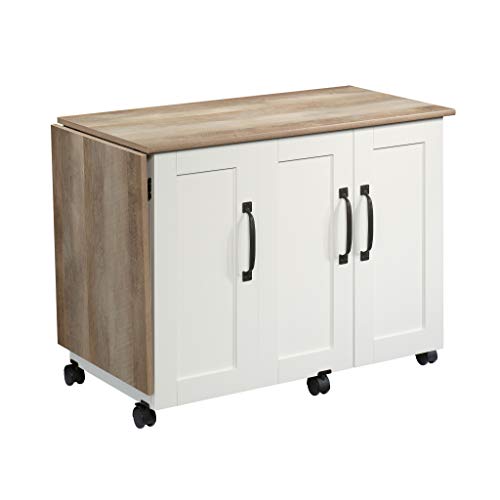
Sauder Miscellaneous Storage Sewing Cart, Drop-Leaf Craft Table, Sewing Table with Storage - Soft White Finish
Chosen because it specifies Drop-Leaf Craft Table and Sewing Table with Storage.
View on AmazonGIANTEX Folding Sewing Table with Charging Station, Storage Trays & Shelf
Chosen because it specifies Storage Trays & Shelf.
View on AmazonBest Choice Products Folding Sewing Table Multipurpose Craft Station & Side Desk with Compact Design, Wheels, Shelves, Storage Trays, Pegs, Magnetic Doors, Metal Doorknobs - White
Chosen because it specifies Wheels and Shelves.
View on AmazonAthena Collection 60 Inch Sewing Machine Table with Storage, Black/White
Chosen because it specifies Black/White.
View on AmazonDepth matters just as much. A 19–24 inch table fits smaller rooms, but a 24–30 inch surface better supports fabric behind and beside the needle. If you use a large extension table, check its actual footprint rather than relying on the sewing table’s outside dimensions.
Leave at least 30 inches of clearance behind your chair and 24 inches on the side where you handle fabric. Around a freestanding island, 36 inches is more practical because it lets two people pass and makes drawers easier to open. In a 10-by-12-foot craft room, a 60-by-30-inch workstation can fit well against a wall, but adding a 48-by-24-inch cutting table opposite it leaves only about 48 inches between the units before chair clearance is considered.
Machine storage: cabinet, shelf, or open bay?
Recessed machine platforms
A recessed platform lowers the sewing machine so its bed is nearly level with the tabletop. This reduces the drop from the machine to the table and helps prevent fabric from catching on an edge. It is particularly useful for quilting and slippery garments. Before buying, measure the machine’s width, depth, height, and free-arm shape. A cabinet opening that fits a standard machine may not fit a tall computerized model or a serger.
Lift-up storage
A lift mechanism hides the machine when the table is closed and can preserve a clean work surface. Look for a platform rated for the combined weight of your machine, extension table, and accessories. A small domestic sewing machine may weigh 12–20 pounds, while heavier computerized or semi-industrial models can exceed 30 pounds. The lift should move without scraping and should hold the machine securely at sewing height.
Open shelves and accessory drawers
Open storage is easier to access and usually easier to assemble, but it collects lint and makes the room look busier. Shallow drawers are best for bobbins, presser feet, needles, and seam rippers; deep drawers can swallow supplies and become difficult to organize. For thread, choose drawers or bins that keep spools upright and away from direct sunlight.
Height and stability are head-to-head priorities
Most fixed sewing tables are approximately 28–30 inches high, which suits many standard chairs. The correct height is the one that lets your shoulders stay relaxed, elbows remain close to your sides, and wrists stay fairly straight while sewing. A chair height of roughly 17–19 inches from floor to seat works for many adults, but the machine’s needle position can change the ideal setup.
For cutting fabric, many people prefer a higher surface, usually around 34–36 inches. A sewing table that doubles as a cutting station may therefore need adjustable legs or a separate cutting table. Raising a fixed sewing table with improvised blocks can make it unstable and is not recommended.
Stability comes from more than a heavy top. Look for wide side panels, a solid rear stretcher, levelers, and a platform that does not flex under pressure. Locking casters are useful for renters and multipurpose rooms, but all four should lock; two locking wheels may still allow the table to twist while sewing. Metal frames generally resist racking, while thick engineered-wood panels can offer good stiffness at a lower price when properly braced.
| Construction | Advantages | Limitations | Best use |
|---|---|---|---|
| Solid wood | Durable, repairable, naturally resistant to minor edge damage | Heavy, costly, may expand or contract with humidity | Permanent sewing rooms and heavy machines |
| Engineered wood with laminate | Consistent panels, easy-clean surface, lower price | Edges can swell if water reaches damaged seams; fasteners need care | Most general-purpose craft rooms |
| Steel or aluminum frame | Strong support, useful for height adjustment and rolling designs | Can transmit vibration; often has less enclosed storage | Sit-to-stand setups and portable workstations |
| Folding-leg or lightweight board design | Easy to move and store, usually least expensive | More movement during high-speed sewing; hinges and latches wear first | Occasional sewing and small apartments |
When foldable designs are the better choice
Choose a folding or drop-leaf table when the room serves several purposes, such as a guest room, dining area, or home office. Measure the table both open and closed. A table that is 20 inches deep when folded may extend to 40 inches with both leaves raised, and the chair still needs roughly 30 inches behind it.
Folding designs are convenient for renters, but they should have positive latches, level feet, and a rigid center section. Avoid placing a heavy machine on a leaf unless the manufacturer specifically supports that configuration. Store the machine separately if the table will be folded frequently. Repeated lifting can loosen hinges and strain the back, particularly with machines over 20 pounds.
Assembly, moving, and durability realities
Many sewing cabinets arrive flat-packed in several cartons. Allow two adults for assembly of a full-size cabinet, especially when turning over a wide top or attaching a lift mechanism. Set aside approximately two to four hours for a storage-heavy unit, and less for a simple metal-frame table. Tighten fasteners only after panels are aligned; forcing a misaligned cam or screw can damage engineered wood.
Check the assembled table’s narrowest dimension before delivery. A 30-inch-deep cabinet may need to pass through a 32-inch doorway, but packaging can add several inches. Measure hallways, stair turns, elevator doors, and the final room entrance. A large cabinet can weigh 100–180 pounds once packed, so confirm whether delivery includes room placement or only drop-off.
The parts most likely to wear are folding hinges, caster locks, drawer slides, lift springs, and laminate edges near the floor. Protect the table from moisture, vacuum dust from mechanisms, and avoid dragging it while loaded. If a lift platform begins to bind, remove the machine before adjusting or lubricating anything; forcing it can bend the hardware.
How to choose the best sewing table for your room
- Measure the machine first. Record its footprint, height with the presser foot raised, and weight. Include an extension table and thread stand if you use them.
- Mark the furniture footprint with painter’s tape. Add 24 inches beside the chair for fabric handling and 30–36 inches behind it for movement.
- Decide whether the table is for sewing, cutting, or both. A 29-inch sewing height is not automatically comfortable for standing cutting work.
- Choose storage based on access frequency. Keep daily tools in shallow drawers and reserve cabinets for fabric, stabilizers, and rarely used accessories.
- Check the support rating and hardware. Prioritize a rigid frame, locking casters where needed, and a machine platform rated above your complete machine setup.
- Plan the move before ordering. Confirm carton dimensions, finished weight, assembly time, and whether replacement hinges or lift parts are available.
For 2026 buyers, the strongest all-around choice is usually a 48–60-inch engineered-wood or metal-framed workstation with a rigid base, adjustable machine platform, and at least 24 inches of usable depth. Choose a folding model when reclaiming floor space is more important than maximum stability, and choose a wider modular cabinet when quilting, multiple machines, or long fabric pieces are central to your sewing routine.