Our Top Picks
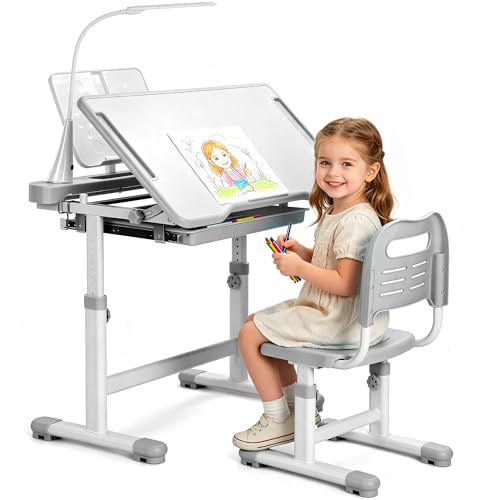 Rengue Kids Desk and Chair Set28.74" L x 19.69" W x 28.74" H27.56 x 19.69 x 27.95 inchesCheck on Amazon
The best kids desks are adjustable enough to fit a child’s seated posture, large enough for the work they actually do, and sturdy without crowding the room. For a growing child, prioritize a height-adjustable desk; for a fixed budget or a shared bedroom, a well-sized fixed desk with a separate, correctly fitted chair may be the more practical choice.
Choose by situation
| Your situation | Desk to look for | What to check before buying |
|---|---|---|
| Young child who is still growing | Height-adjustable desk with a broad adjustment range | Check the minimum and maximum desktop heights against the child’s chair and measured seated elbow height. |
| Small bedroom or apartment | Compact rectangular desk, about 36–42 in. wide and 20–24 in. deep | Allow room for the chair to pull out and for drawers or doors to open. |
| Art, building projects, or two open books | Desk about 48–60 in. wide and 24–30 in. deep | Look for a clear work surface; shelves and organizers should not consume the space needed for projects. |
| Shared room or frequent rearranging | Lightweight desk with a simple frame and minimal built-in storage | Confirm assembled dimensions, package weight, and whether it can be disassembled without damaging the joints. |
| Craft supplies and school materials need a home | Desk with drawers or a nearby separate storage unit | Check drawer depth, smooth operation, and whether the unit leaves knee room. |
Get the height and fit right
A desk can be labeled “for kids” and still fit poorly. While the child is seated, their feet should rest on the floor or a footrest, their shoulders should stay relaxed, and their elbows should sit near desktop level with forearms roughly parallel to the floor. If the chair is too high, a footrest helps; if the desktop is too high, raising the chair alone can leave the child’s feet unsupported.
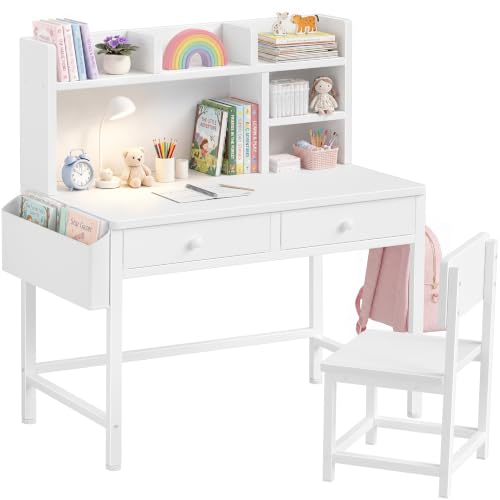
BOLUO White Kids Desk with Hutch for Kids Desk and Chair Set 10-12 Year Old, Children Study Desk with Fabric Drawer Storage for Girls Boys
Picked as a relevant option in this category.
View on AmazonRengue Kids Desk and Chair Set, Height Adjustable Children School Functional Study Desk with 55° Tiltable Desktop, 3 Modes & Brightness LED Light, Storage Drawer & Metal Hook for Boys Girls (Grey)
Chosen because it specifies 3 Modes & Brightness LED Light and Storage Drawer & Metal Hook for Boys Girls (Grey).
View on Amazon
WINAZ White Kids Desk with Hutch, Height Adjustable 32" Small Study Table | Mobile Rolling Desk with Drawers, Storage Shelves, Felt Pin Board, Side Bag & Hooks for Girls Boys Teen Study Writing
Chosen because it specifies Height Adjustable 32" Small Study Table.
View on Amazon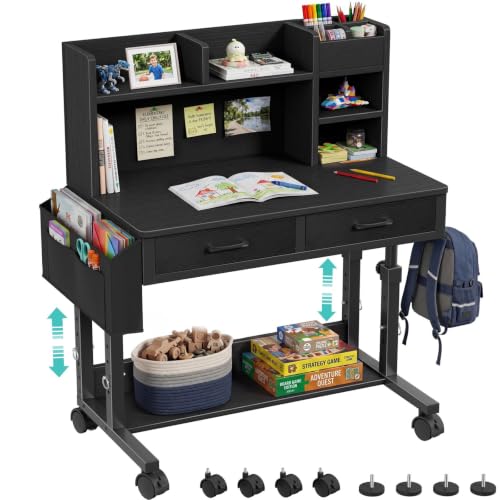
WINAZ Black Mobile Kids Desk - 32" Height Adjustable Study Table with Hutch
Chosen because it specifies 32" Height Adjustable Study Table with Hutch.
View on AmazonMeasure the child seated in the chair they will use, then compare that posture with the desk’s actual height range. A typical fixed desk is around 28–30 in. high, which often suits older children and adults better than smaller children. Adjustable desks can accommodate more stages of growth, but the label “adjustable” is not enough: the lowest setting matters just as much as the maximum. Check whether adjustment requires tools and whether the desk stays stable at its highest setting.
Leave about 30–36 in. behind the chair for a child to pull it out and sit down comfortably. In a 10 × 12 ft bedroom, a 48 × 24 in. desk can fit along a wall, but measure the bed, closet doors, and walking route before choosing one. A 60 × 30 in. surface can be useful for art or a computer setup, yet it may narrow the path through a compact room.
Compare usable surface, storage, and construction
| Desk feature | Useful starting point | Trade-off to consider |
|---|---|---|
| Compact worktop | 36–42 in. wide × 20–24 in. deep | Fits a laptop and notebook, but offers limited room for projects left out between sessions. |
| General homework surface | 48 in. wide × 24 in. deep | Balances writing space and room footprint; measure carefully around nearby furniture. |
| Large project surface | 48–60 in. wide × 24–30 in. deep | Accommodates art supplies or books spread open, but needs more floor area and a larger chair clearance zone. |
| Drawer storage | One or two drawers for everyday supplies | Convenient, but deep drawers can strike a child’s knees or reduce legroom. |
Measure the clear area between the legs, not just the top. A desktop may look generous while a thick apron, central support, or drawer unit makes it uncomfortable to sit at. For a laptop and writing, a clear area around 36 × 20 in. is a workable baseline; art projects, large books, or a monitor call for more space. Shelves above the desk can free the desktop, but place frequently used items within easy reach and keep heavy objects low and secure.
Materials and durability
| Construction | Advantages | Watch-outs |
|---|---|---|
| Solid wood | Can be sturdy and repairable; dents and scratches may be refinished depending on the finish. | Often heavier and more expensive; quality varies by species, joinery, and finish. |
| Engineered wood | Often affordable, with a smooth, easy-to-clean surface and many shape options. | Edges and screw holes can wear or chip; avoid soaking spills and repeated disassembly. |
| Metal frame with wood or composite top | Frame can provide a rigid base while keeping the design visually light. | Check for wobble, exposed fasteners, and sharp corners; a thin top may show wear sooner. |
For any material, look for a stable frame, securely attached legs, and a finish that can be wiped clean. A child’s desk is likely to collect pencil marks, water rings, and craft residue; a replaceable desk mat can protect the surface. Manufacturers do not use one universal load-rating standard for children’s desks, so compare the stated capacity with the expected load and avoid letting a child climb or sit on the desktop.
Safety details worth checking
- Edges and corners: Rounded corners or softened edges reduce the chance of bumps. Run a hand along accessible edges and check for rough seams or exposed hardware.
- Stability: The desk should not rock on a level floor. Adjustable feet can help with minor unevenness; anchor tall hutches or shelving to the wall according to the manufacturer’s instructions.
- Moving parts: For a tilting or height-adjustable top, check for pinch points and a secure locking mechanism. Keep fingers clear during adjustment.
- Drawers: A stop that prevents a drawer from falling out is useful. Confirm it opens without hitting the child’s legs or nearby furniture.
- Electrical setup: Route charging cables away from walking paths and keep liquids away from power strips.
Assembly and moving: plan for the room, not the box photo
Before ordering, compare the assembled desk dimensions with the room and check the package dimensions against the narrowest doorway, stair turn, or hallway. A flat-packed desk may fit through an entry that cannot accommodate a fully assembled top. Some desktops are awkward for one person to carry even when the package weight seems manageable, so check the listed box weight and arrange help for heavier pieces.
Assembly quality affects stability. Tighten fasteners in the sequence given, set the desk on a level surface, and recheck screws after the first few weeks of use. Do not overtighten hardware into engineered-wood panels, where screw holes can strip. If the desk will move between rooms, a simpler frame with fewer delicate shelves and add-on parts is usually easier to handle. Repeatedly taking apart and rebuilding a desk can loosen joints, especially in composite panels.
A quick buying checklist
- Measure the child’s seated posture and verify the desk’s real height range.
- Choose a surface based on the work: compact for a laptop and notebook, wider for books, crafts, or shared projects.
- Measure chair clearance, drawer swing, closet access, and the route through the room.
- Check knee space, rounded edges, stability, drawer stops, and the stated weight capacity.
- Confirm assembly requirements, package dimensions, and whether the desk can be moved through the home.
For most families, a stable desk around 48 × 24 in. is a flexible starting point for homework, while a genuinely height-adjustable model is worth considering when the child is likely to outgrow a fixed-height desk soon. In a tight room, preserving safe chair clearance and an easy walking route matters more than adding drawers or choosing the largest top.