Our Top Picks
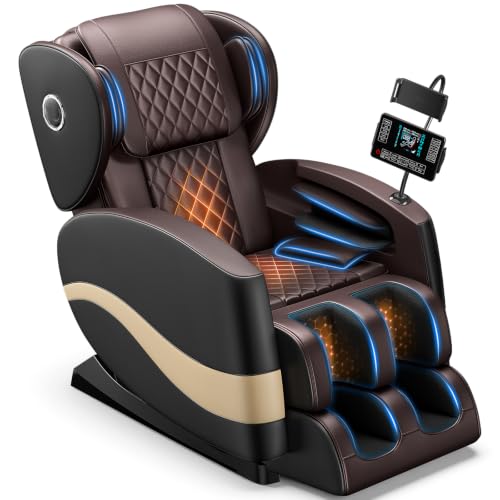
 LEOMOO Upgraded Full Body Massage Chair Recliner ZeroStandard40.9 x 26.7 x 40.5 Inches115 PoundsCheck on Amazon
The Fujiiryoki JP-2000 doesn’t exist as a current production model, and that’s worth saying up front rather than burying in a disclaimer at the bottom. Fujiiryoki (sometimes written Fuji Medical or Fuji Iryoki) is the Japanese company that essentially invented the home massage chair back in the 1950s, and they number their flagship chairs in a way that confuses a lot of shoppers. You’ll find references floating around to a “JP-2000” in forum posts and old import listings, but what people are usually describing is either a Cyber-Relax series chair, the JP-1000 or JP-1100 lineup, or a mistranslated model number from a Japanese retailer. If you’re searching for a price on this specific unit, you’re likely chasing a ghost or a chair that was only ever sold domestically in Japan.
That matters because the price you’ll see quoted anywhere from $2,500 to $9,000 for a “JP-2000” reflects wildly different things: sometimes a used chair being resold, sometimes an import with shipping and voltage conversion baked in, sometimes just a listing error. I’ll walk through what’s actually going on, what Fujiiryoki chairs cost in reality, and what to do if you want the closest legitimate equivalent.
Why the JP-2000 name keeps showing up
Fujiiryoki sells different lineups in Japan than it does in the US and Europe. Domestically, their flagship line has gone through names like the CYBER-RELAX, JP-1000, JP-1100, and JP-2500, with the numbers roughly tracking release year and feature tier rather than following a clean sequential logic. A “JP-2000” isn’t a model I can confirm ever shipped under that exact name in a major market. What happens in practice is one of three things:
- A listing site auto-generates a model number from a Japanese product page and gets it wrong in translation.
- A reseller is using “JP-2000” as a shorthand or placeholder for a chair in the $2,000 price bracket, which is a sales trick, not a real SKU.
- Someone is referencing a genuinely obscure Japan-only model that never had US distribution, in which case pricing data from American retailers is useless anyway.
If you’ve seen this exact phrase on a site trying to sell you the chair, that’s a signal to double check the model number against Fujiiryoki’s own site or an authorized US dealer before you commit any money.
What Fujiiryoki chairs actually cost
Fujiiryoki’s real lineup, as sold through authorized channels in the US, generally lands in the premium tier of the massage chair market. These aren’t budget chairs, and they’re not trying to be. Expect the following rough bands based on current and recent models:
| Tier | Typical street price | What you get |
|---|---|---|
| Entry Fujiiryoki (older Cyber-Relax models, refurbished) | $1,800 – $3,000 | Basic L-track or S-track rollers, air compression, fewer presets |
| Mid-tier current models | $4,000 – $6,500 | Full-body air compression, heat therapy, zero-gravity recline, app or voice control |
| Flagship (JP-1100 and similar) | $7,000 – $10,000+ | 4D rollers, extensive body scanning, foot rollers, premium upholstery |
Compare that to the broader massage chair market, where you can find a competent chair for $1,200 to $2,000 from brands like Osaki, Kahuna, or Titan. Fujiiryoki’s pricing reflects build quality and a longer track record, not necessarily double the massage sophistication. If you’re new to this category entirely, it’s worth browsing a range of full body massage chairs to get a feel for what features actually matter to you before fixating on one brand name.
Is a premium Japanese brand worth the jump
Fujiiryoki, along with Panasonic and Family Inada, built their reputation on mechanical reliability and roller precision rather than flashy marketing features. If you’ve used a cheap chair that developed a clunking noise in the track after 18 months, or whose air cells stopped inflating evenly on one side, you understand why some buyers are willing to pay 3x for a chair that’s rated to run smoothly for a decade. That said, the gap has narrowed. Mid-range Chinese-manufactured chairs have improved a lot in the last five years, and the main failure modes now are around motor longevity and electronics (remote control boards, Bluetooth modules) rather than the mechanical roller systems themselves.
Where premium brands still clearly earn their price: quieter motors, more consistent air cell pressure across sessions, and better long-term parts support. Where they don’t: the actual massage programs. A $2,000 chair and an $8,000 chair can both deliver a solid kneading and shiatsu-style session; the expensive chair just does it more quietly and for longer before something needs servicing.
What to actually do
If you’re set on a genuine Fujiiryoki, go through an authorized dealer and get the real model number in writing before paying anything, since the resale and gray-market scene for Japanese chairs is full of mislabeled stock. If you’re price-shopping and the “JP-2000” name is what led you here, treat it as a budget signal (around $2,000) rather than a specific product, and look at that segment broadly across brands. For most households, a well-reviewed chair in the $1,500 to $2,500 range covers the core features (zero gravity, heat, full-body airbags, decent roller tracks) without the premium markup. If space is a constraint alongside budget, it’s also worth checking compact massage chairs, since Fujiiryoki’s flagship units tend to be large and need real recline clearance.
Before buying anything in this category, measure your available space including recline clearance (many chairs need 25-30 inches behind them even in zero-gravity mode), check the warranty terms on parts versus labor, and if possible test the chair in person. A roller track that feels great to one person’s spine can feel misaligned to another, and no price point fixes that mismatch.