Our Top Picks
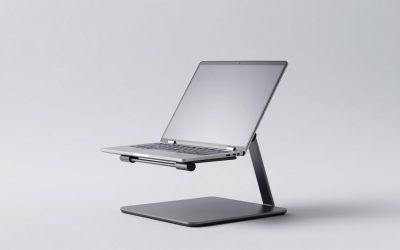
 VIVO Black Universal Wooden Laptop Treadmill Desk27” x 11”11 x 26.9 x 14 inches13.2 poundsCheck on Amazon
 Nnewvante Bamboo Treadmill Desk Attachment with Tilting Top33.6 x 11.8 x 1.96 inches7.93 poundsCheck on Amazon
Best Treadmill Desks for Walking While You Work
The best treadmill desks for productive home-office use combine a desk at least 47 inches wide, a walking speed of roughly 0.5–2.5 mph, a belt of about 40–50 inches long, and noise low enough for calls—rather than simply offering the highest top speed.
For most people, the strongest choice is a height-adjustable desk paired with a compact under-desk treadmill. This arrangement is easier to replace, customize, and move than an all-in-one treadmill desk. Choose an integrated model when you value a smaller footprint and simple setup more than upgrade flexibility.
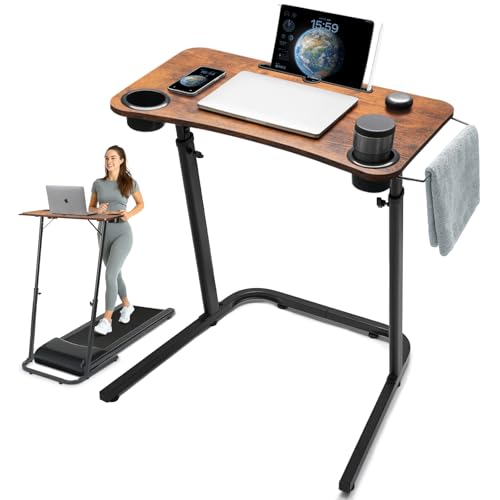
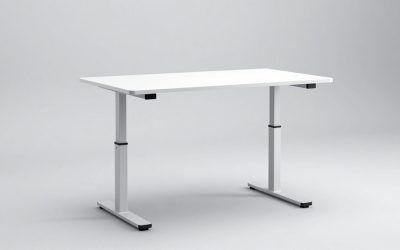
HOMELYM Treadmill Desk, Small Standing Desk for Walking Pad, 30-47 Inch Adjustable Height Walking Pad Stand for Treadmill, Portable Standing Table for Bike and Home Office Work - Brown
Chosen because it specifies Small Standing Desk for Walking Pad and 30-47 Inch Adjustable Height Walking Pad Stand for Treadmill.
View on Amazon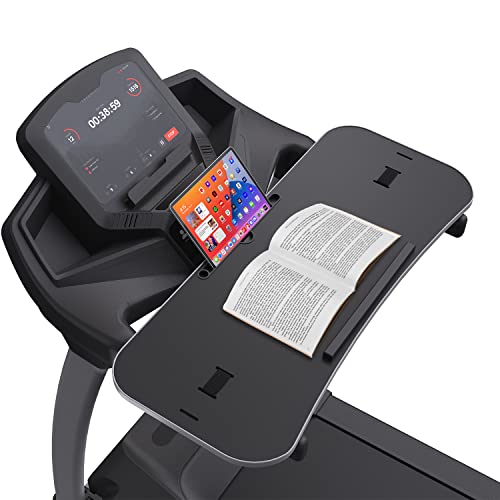
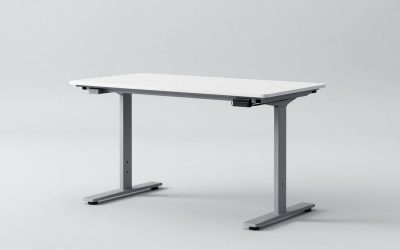
Treadmill Desk Attachment, Universal 36" Laptop Desk for Walking Treadmill
Chosen because it specifies Universal 36" Laptop Desk for Walking Treadmill.
View on AmazonVIVO Black Universal Wooden Laptop Treadmill Desk, Stand-TDML4
Chosen because it specifies Stand-TDML4.
View on AmazonNnewvante Bamboo Treadmill Desk Attachment with Tilting Top Laptop Holder
Picked as a relevant option in this category.
View on AmazonWhat matters most before you buy
Desktop size and ergonomics
A desktop measuring 47–55 inches wide and 24–30 inches deep gives a laptop, monitor, keyboard, mouse, and water bottle enough room without forcing your wrists or shoulders into awkward positions. A 36–40-inch desktop can work for a laptop alone, but it is restrictive for dual-monitor work.
Look for electric height adjustment with a range of approximately 27–47 inches. The correct sitting height is the one that lets your elbows rest near 90 degrees while your shoulders stay relaxed. For walking, raise the surface until the monitor’s top third is near eye level and your wrists remain neutral. Many users need a desk around 40–46 inches high while walking, but your height, monitor stand, and footwear change the result.
A desk that is too shallow can leave the monitor too close to your face. A 28-inch depth is more forgiving than a 20-inch worktop. If you use a large monitor arm, confirm that the rear edge can support its clamp and that the treadmill does not make the desk wobble.
Walking speed and motor behavior
For typing, reading, and video meetings, a speed range of 0.5–2.5 mph is generally more useful than a 4 mph maximum. Most people work most accurately between 1 and 2 mph. A higher top speed is valuable only if you also want occasional brisk walking and the desk remains stable at that pace.
Pay attention to low-speed control. A treadmill that jumps from a standstill to a fast walking pace is harder to use during focused work. A gradual start, a responsive remote, and saved speed controls are practical advantages. Continuous horsepower is more informative than a prominent peak-horsepower figure because it better reflects sustained operation.
Noise, vibration, and calls
Noise comes from the motor, belt rollers, foot impact, and vibration transmitted into the floor. Even a quiet motor can become distracting on hardwood if the treadmill is placed directly on it. A dense rubber mat helps reduce vibration and protects the floor.
For shared rooms, aim for a model advertised around 55–65 dB during walking, while remembering that manufacturer measurements may use different distances and speeds. A headset with a good microphone can solve some call problems, but it cannot eliminate vibration through a lightweight desk. Keep the desk legs off the moving belt and use a stable, wide frame.
Belt dimensions and walking comfort
A belt around 40 inches long and 16 inches wide is usually adequate for short, careful walking at a desk. A 45–50-inch belt with an 18–20-inch width gives taller users and people with a longer stride more confidence. If you are over about 6 feet tall, walk quickly, or naturally drift while looking at a monitor, choose the longer and wider option.
Do not judge fit by belt length alone. Leave clear space behind the treadmill so a misstep does not put you against a wall. About 24 inches is a sensible minimum behind the rear edge, with 30–36 inches more comfortable. Allow roughly 20 inches on each side for stepping off safely and for cleaning around the machine.
Weight capacity and frame stability
Choose a stated user capacity at least 50 pounds above your body weight, especially if the treadmill will run daily. This margin reduces the strain on the motor and gives the machine a better chance of maintaining speed smoothly. A 220-pound user should look for at least a 270-pound capacity rather than buying a 220-pound-rated treadmill.
Capacity is only part of stability. Wider side rails, a heavier frame, leveling feet, and a desk with a broad base matter when you type or use a monitor arm. A lightweight walking pad may be easy to store, but it can transmit more movement to the desk.
Best treadmill desks by home-office situation
| Situation | Best configuration | Specifications to prioritize | Trade-off |
|---|---|---|---|
| Small apartment | Foldable walking pad with a separate compact sit-stand desk | Under 60 inches long when stored, 16–18-inch belt, transport wheels | Usually less stable and quieter only at moderate speeds |
| Kids or pets | Model with a safety key, side rails, and controlled acceleration | Wide belt, emergency stop, protected underside, 250-pound-plus capacity | Heavier and harder to slide under furniture |
| Renter | Portable treadmill on a thick floor mat | Approximately 55–75 pounds, rubber feet, no permanent installation | May need to be stored after each work session |
| Back or balance concerns | Long, wide treadmill with a stable height-adjustable desk | 18–20-inch belt, gradual speed control, handrail option, low step-up height | Costs more and takes more floor space |
| Dual-monitor office | Heavy under-desk treadmill plus a 55-inch or wider desk | Strong frame, 28–30-inch desktop depth, 300-pound-plus capacity | Desk and treadmill together can weigh over 200 pounds |
Three sensible ways to buy
1. The compact walking pad and separate standing desk
This is the best all-around format for many home offices. You can choose a treadmill that fits your body and a desk that fits your equipment. It also lets you remove the treadmill for sitting work or store it under a bed.
Typical market pricing is about $300–$700 for the walking pad and $250–$800 for a powered sit-stand desk. The combined price can exceed an entry-level all-in-one desk, but replacement is simpler if either component fails. Walking pads from brands such as WalkingPad, UREVO, and LifeSpan are examples of established product categories; always compare the specific model’s belt size, capacity, warranty, and noise claims.
2. The integrated treadmill desk
An integrated unit combines the belt, uprights, and work surface in one frame. It can be a good choice when you want a visually unified workstation and do not need to move the treadmill away from the desk. The downside is limited desk customization: some worktops are narrow, fixed-height, or poorly suited to monitor arms.
Check whether the desk rises high enough for your elbows and monitor. Some integrated units are comfortable for standing but too low for walking, particularly for taller users. Expect broad market pricing from roughly $600 to more than $1,500 depending on motor strength, desk adjustment, belt size, and construction.
3. The heavy-duty office setup
For eight-hour workdays, larger users, or frequent monitor use, choose a heavier treadmill and a separate commercial-style desk. Look for a 45-inch-or-longer belt, a 300-pound-or-higher capacity, strong leveling feet, and a desk frame rated for the treadmill’s vibration. This setup is less portable but generally more composed while typing.
Assembly, moving, and long-term durability
Walking pads often arrive mostly assembled, but “easy assembly” may still mean unpacking a 60–90-pound box, attaching feet or rails, and carrying it through a doorway. Larger treadmill desks can weigh 150–250 pounds once the desk and treadmill are combined. Measure the narrowest doorway, elevator, stair turn, and storage opening before ordering. A 30-inch doorway is usually workable for a compact unit, but packaging can be wider than the finished treadmill.
Do not plan to lift a heavy machine alone. Use two adults, keep fingers away from folding hinges, and avoid dragging it across finished flooring. Locking transport wheels are useful, but they are not a substitute for a level installation.
The walking belt is usually the first wear item. Dust, misalignment, and insufficient lubrication can increase motor load and noise. Inspect the belt periodically, follow the manufacturer’s lubrication instructions, and keep the area beneath the treadmill clean. Desk fasteners can loosen from vibration, while cheap plastic covers and remote controls are more vulnerable than the metal frame. A generous warranty on the motor and frame is more valuable than decorative features.
A practical buying checklist
- Choose a desk at least 47 inches wide for a laptop and monitor, or 55 inches for dual monitors.
- Confirm the desk reaches your correct seated and walking heights before buying.
- Prefer a 45-inch-or-longer belt if you are tall, walk quickly, or want extra margin.
- Select a capacity at least 50 pounds above the heaviest expected user.
- Look for gradual acceleration, a safety key, a remote, and a clear emergency-stop method.
- Plan for 24–36 inches behind the treadmill and about 20 inches at each side.
- Use a dense mat on hard flooring and keep the treadmill clear of rugs that can shift.
- Measure the delivery path and check the packed weight before purchase.
The best treadmill desk is the one that keeps walking slow, stable, and repeatable enough for your actual work. Prioritize ergonomic height, a sufficiently large belt, low vibration, and a realistic clearance plan before paying extra for apps, speakers, or a higher maximum speed.