Our Top Picks
Pros & cons
- Four memory presets simplify switching between heights
- Aerospace-grade lifting columns aim for long-term stability
- Low-VOC materials support a healthier indoor workspace
- 48 x 24 inch top limits room for larger multi-monitor setups
- At nearly 44 pounds, assembly needs some help
Pros & cons
- FSC-certified wood supports a more sustainable build choice
- Three memory presets simplify sit-stand height switching
- Motor runs under 45 decibels during adjustment
- 176-pound load capacity trails some heavier-duty desks
- 48 x 24 inch top limits space for larger setups
 Veken 55 Inch Large Electric Standing Desk55×23.6 Inch23.64 x 55.12 x 28.3 Inches42.1 poundsCheck on Amazon
Pros & cons
- Quiet motor runs under 52 decibels during height changes
- Built-in cable management keeps cords tidy
- 55-inch desktop fits multiple monitors and gaming gear
- Two-board desktop construction may show a center seam
- At over 42 pounds, assembly needs some help
A desk that moves up and down uses one of three lift mechanisms: a dual-motor electric system, a pneumatic gas-spring column, or a hand-crank gearbox, and the mechanism you pick determines how far the desk travels, how much weight it can lift without stalling, and how much it wobbles once you’re standing. Electric versions dominate the market now because they handle heavier desktops and gaming setups with less shake, but pneumatic and crank frames still have a place if budget or simplicity matters more than smoothness.
How each mechanism actually works
Electric (dual-motor and single-motor) lift columns
Most electric standing desks use two telescoping steel columns, each with its own motor, synced by a control board. A keypad or knob sets the height and stores 2-4 memory presets. Dual-motor frames are the standard for anything wider than 48 inches because a single motor struggles to keep both sides level under load, which shows up as one side drifting a few millimeters higher than the other over time.

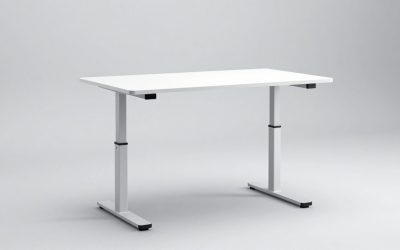
ErGear 48 X 24 Inch Height Adjustable Electric Standing Desk, Black | Stand Up office Desk, Home Office Computer Desk with 4 Memory Presets, Stable Steel Frame, 176 lbs Capacity, Easy Assembly
Chosen because it specifies Black.
View on Amazon
FEZIBO Standing Desk 48 × 24 Inch Electric Height Adjustable, Maple | Sit and Stand Up Adjustable Desk, Home Office Computer Desk with 3 Customizable Memory Presets
Chosen because it specifies Maple.
View on Amazon
Huuger 47 X 24 Inch Electric Standing Desk with Power Outlets and USB-C Port, Height Adjustable Desk, Sit Stand Desk for Home Office, Computer & Gaming Desk with 3 Presets, Stable Steel Frame, Black
Chosen because it specifies Height Adjustable Desk and Sit Stand Desk for Home Office.
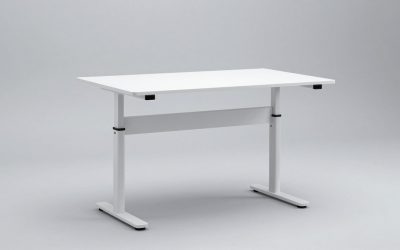
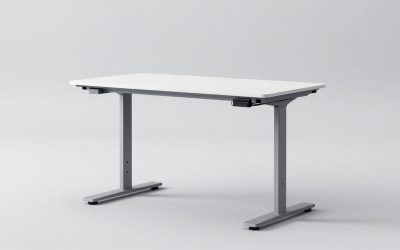
View on AmazonVeken 55 Inch Large Electric Standing Desk, Gaming Table, White | Height Adjustable Sit Stand Up Computer Tables for Home Office, Study , Writing, Suit students, employees and group work
Chosen because it specifies Gaming Table and White.
View on AmazonTravel range on most dual-motor frames runs 22.6 to 48.7 inches, which covers seated work for a 5’0″ user up to standing work for someone 6’5″ or taller. Lift speed averages 1-1.5 inches per second. Lifting capacity typically sits between 220 and 350 lbs, though the number that matters more is how much weight it can move smoothly rather than the static maximum it can merely hold.
Pneumatic (gas-spring) desks
Pneumatic frames use a sealed gas cylinder, the same principle as an office chair’s height lever. You release a lever or lift a handle, and the compressed gas pushes the desktop up while your own strength does most of the work moving it down. There’s no motor, no cord, and height adjustment takes 2-4 seconds once you get the technique down, though it’s less precise than a keypad since you’re eyeballing the position.
Travel range is narrower, usually 28 to 44 inches, and weight capacity tops out around 130-175 lbs. That’s enough for a laptop and monitor but tight for a dual-monitor arm plus a desktop tower. Because there’s no motor housing, pneumatic frames are also the lightest to ship and easiest to assemble.
Manual crank desks
A crank desk uses a hand-turned gearbox connected to a screw-drive column, mechanically similar to a car jack. Full travel from lowest to highest position takes 40-60 crank rotations, roughly 45-90 seconds of turning. This is the reason crank desks have mostly disappeared from home offices and shifted into classrooms and budget commercial furniture, where height rarely changes and the lower price justifies the manual effort. Weight capacity runs 150-250 lbs, comparable to mid-range electric frames, but travel range is usually limited to 27-45 inches.
Wobble at standing height: what the numbers mean
Every sit-stand desk sways slightly at full height, especially with a keyboard tray or a monitor arm attached. The wobble is measured in millimeters of deflection at the front edge of the desktop when you push it laterally.
| Mechanism | Typical travel range | Load capacity | Wobble at max height | Best desktop size for the frame |
|---|---|---|---|---|
| Dual-motor electric | 22.6″-48.7″ | 220-350 lbs | Low to moderate (3-8mm) | Up to 72″ wide, 30″ deep, 1″-1.5″ thick |
| Single-motor electric | 28″-46″ | 150-220 lbs | Moderate (6-12mm) | Up to 55″ wide, 24″-28″ deep |
| Pneumatic gas-spring | 28″-44″ | 130-175 lbs | Moderate to high (8-15mm) | Up to 48″ wide, 24″ deep, under 1″ thick |
| Manual crank | 27″-45″ | 150-250 lbs | Low (4-9mm) | Up to 60″ wide, 28″ deep |
Dual-motor electric frames generally wobble the least at height because the two columns brace each other and the crossbar underneath adds rigidity. Crank desks are surprisingly stable too, since the screw-drive mechanism locks in place mechanically rather than relying on a motor brake. Pneumatic desks tend to wobble the most, particularly cheaper models with a single central column instead of two independent legs.
What desktop size and thickness each frame can actually carry
The frame’s weight rating is only half the story. Desktop dimensions affect wobble and tipping risk independently of raw weight capacity.
- Under 48″ wide: Any of the three mechanisms works fine, including single-motor electric and pneumatic frames.
- 48″-60″ wide (the range most gaming desks and dual-monitor setups need): Dual-motor electric or a well-built crank frame. A pneumatic desk this size will feel noticeably springy at standing height.
- 60″-72″ wide, L-shaped, or corner desks: Dual-motor electric only, and check that the listed weight capacity includes a safety margin above your actual load (monitor arms, PC tower, and cable trays add up faster than people expect).
- Desktop thickness: A 1″-1.25″ engineered wood or laminate top is standard and keeps total weight manageable. Solid wood tops over 1.5″ thick look better but can push total desk weight past 100 lbs, which cuts into the frame’s usable lifting capacity for monitors and accessories on top.
This is also where a “gaming desk that moves up and down” differs from a standard computer desk that goes up and down. Gaming desks tend to be wider (55″-63″), often carry curved fronts, and support more accessories per square foot (monitor arms, controller hooks, cup holders, cable management trays). That combined load pushes most gaming desks toward dual-motor electric frames even at moderate widths, because the extra hardware weight and the wider curved top both increase leverage and wobble at standing height.
Matching the mechanism to your situation
| Your situation | Recommended mechanism | Why |
|---|---|---|
| Small home office, laptop-only setup | Pneumatic or single-motor electric | Lower weight load means wobble and capacity limits rarely matter |
| Dual-monitor or gaming setup, desk 50″+ wide | Dual-motor electric | Needs the higher capacity and lower wobble at standing height |
| Shared office / classroom, height rarely changed | Manual crank | Lowest cost, no motor to fail, fine since adjustments are infrequent |
| Frequent sit-stand switching through the day | Dual-motor electric with memory presets | One-touch height recall matters more when you’re adjusting 4-6+ times daily |
| Renters or frequent movers | Pneumatic or crank, bolted top optional | Lighter overall weight (30-45 lbs vs. 55-70 lbs for dual-motor steel frames), easier to break down |
| Back pain, need precise height repeatability | Dual-motor electric | Digital presets return to the exact same height every time, unlike eyeballing a pneumatic lever |
Assembly and durability notes worth knowing before you buy
Electric frames ship in two boxes typically totaling 55-75 lbs, and assembly (attaching legs, crossbar, control box, and desktop) usually takes 30-45 minutes with a power drill. Pneumatic and crank frames ship lighter, often 35-50 lbs total, and assemble in 20-30 minutes since there’s no wiring for a control panel.
The part that wears first differs by mechanism. On electric desks, it’s usually the motor gearbox after 8,000-15,000 lift cycles (roughly 8-15 years of daily use), or the height sensor drifting out of calibration, which shows up as the desk stopping a bit short of your saved presets. On pneumatic desks, the gas cylinder gradually loses pressure over 5-8 years, so the desk no longer rises fully on its own. On crank desks, the point of failure is usually the internal gear teeth stripping if the desk is cranked past its mechanical stop or loaded near its weight limit repeatedly.
If you’re moving often, check doorway width against the assembled desk, not the boxed dimensions. A 60″ wide desktop won’t fit through a standard 32″ door diagonally without disassembly, so plan to unbolt the top from the frame for any move rather than carrying it whole.