Our Top Picks
 Amazon Basics 8-Sheet High Security Cross Cut Paper8 Sheet12.76 x 7.28 x 14.09 Inches8.7 PoundsCheck on Amazon
 Bonsaii 12-Sheet Micro Cut Heavy Duty Paper Shredder12 Sheet-6 0Mins13.15 x 9.57 x 18.03 inchesCheck on Amazon
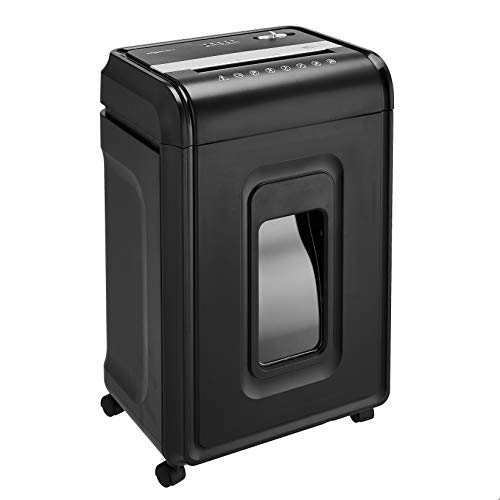 Amazon Basics 24-Sheet Cross Cut High Security Paper24 Sheet10.95 x 14.76 x 23.23 Inches31.55 PoundsCheck on Amazon
Best Paper Shredders for Home and Office: Choose by Workload
The best paper shredder is a cross-cut or micro-cut model sized for your busiest shredding session—not just your average day—with enough bin capacity, cooldown time, and jam protection to handle it. For most home offices, a cross-cut shredder rated P-4, accepting at least 10 sheets at once and holding 4–6 gallons, is a practical starting point; choose P-5 micro-cut for more sensitive paperwork or a frequent shared workload.
Start with security, then match the workload
DIN 66399 security levels describe how small a shredder cuts material; for paper, the most relevant are P-3 through P-7. A higher number means smaller particles, but usually also slower shredding, lower sheet capacity, and more frequent bin emptying. A P-4 cross-cut shredder is a common fit for everyday documents containing personal information. P-5 micro-cut is a sensible step up for financial, medical, or business records. P-6 and P-7 are specialist choices for highly confidential material, not necessary for routine household mail.

Bonsaii 12-Sheet Cross Cut Paper Shredder, 5.5 Gal Home Office Heavy Duty Shredder for Paper, Credit Card, Mail, Staples, with Transparent Window, High Security Level P-4 (C275-A)
Chosen because it specifies 5.5 Gal Home Office Heavy Duty Shredder for Paper and Credit Card.
View on AmazonAmazon Basics 8-Sheet High Security Cross Cut Paper and Credit Card Shredder with P-4 Security, Auto Shut-off, Black
Chosen because it specifies Auto Shut-off and Black.
View on AmazonBonsaii 12-Sheet Micro Cut Heavy Duty Paper Shredder for Home Office
Picked as a relevant option in this category.
View on AmazonAmazon Basics 24-Sheet Cross Cut High Security Paper Shredder for Home Use, P-4 Security, CD and Credit Card Document Shredder with Pullout Basket, Black
Chosen because it specifies P-4 Security and CD and Credit Card Document Shredder with Pullout Basket.
View on AmazonDo not rely on the words “cross-cut” or “micro-cut” alone: check the stated P-level. Also check whether the machine accepts staples, paper clips, credit cards, or CDs. These capabilities vary, and feeding unapproved materials can cause jams or damage.
Match the shredder to your situation
| Workload or space | Useful specifications | Trade-off to expect |
|---|---|---|
| Occasional household mail, one person | P-4; 6–10 sheets; 3–4-gallon bin; 3–5 minutes of run time | Compact and less expensive, but may need pauses during a backlog |
| Regular home-office paperwork | P-4 or P-5; 10–15 sheets; 4–6-gallon bin; 10–20 minutes of run time | More capable, but larger and heavier than a desktop unit |
| Shared small office | P-4 or P-5; 15–20 sheets; 6–10-gallon bin; 20 minutes or more of run time | Higher capacity and fewer interruptions take more floor space |
| Confidential files, occasional batches | P-5 or higher; follow the maker’s stated sheet limit and duty cycle | Smaller particles can mean slower feed rates and faster bin fill |
These are practical shopping targets, not guarantees: manufacturers measure capacity under particular conditions, and paper thickness, humidity, and wear affect results. Compare run time and cooldown time together. A shredder advertised for five minutes of continuous operation may need a substantial cooling period before the next batch.
What matters beyond the headline sheet count
Bin capacity and dimensions
Bin capacity is often listed in gallons or liters. Roughly, a 3-gallon bin holds about 11 liters; a 6-gallon bin holds about 23 liters. Shredded paper volume varies with cut size and how tightly it settles, so treat these figures as a comparison rather than an exact page count. A pull-out bin is convenient, while a lift-off head may be lighter to empty but awkward to handle. A full indicator helps prevent overfilling, which can cause paper to back up into the cutters.
Measure the intended spot before buying. Leave roughly 2–3 inches of clearance at the sides and back for airflow and access, and enough room above the unit to remove its head or open its feed. If it will sit under a desk, measure the opening with the desk chair in its usual position; a shredder that technically fits may block legroom or a drawer.
Noise, jams, and everyday handling
Noise ratings are not consistently stated in comparable ways, so look for a decibel figure only when the manufacturer provides one and compare models measured under the same conditions. If calls or shared rooms matter, prioritize a model specifically described as quiet and avoid running it during meetings. A shredder’s sound can change under load, so a low advertised idle figure is not the whole story.
For jam resistance, look for automatic reverse, overload detection, and a clear maximum sheet count. Feed fewer sheets than the stated maximum when documents are stapled, folded, or unusually thick. Keep paper straight and remove adhesive labels, envelopes with plastic windows, or other materials the manual excludes. A jam-reverse function is useful, but it cannot compensate for repeatedly overfeeding the machine.
Buying checklist: choose in this order
- Set the security level: P-4 for routine personal paperwork; consider P-5 for sensitive financial, health, or business records.
- Estimate the batch: If you regularly clear a stack at once, prioritize run time and cooldown over a high sheet-count claim.
- Choose the bin: A larger bin reduces interruptions, especially for shared use; check how it opens and empties.
- Check the footprint: Confirm width, depth, height, weight, and clearance at the actual location. Casters help with larger floor models, but do not make them easy to carry up stairs.
- Confirm accepted materials: Verify whether staples, clips, cards, or other items are allowed, and whether the warranty covers cutter damage.
Compact, home-office, or shared-office model?
Choose a compact personal shredder if you dispose of a few envelopes or documents at a time and have limited floor space. Expect a smaller bin and shorter duty cycle; it is a poor fit for clearing a filing cabinet in one sitting.
Choose a mid-size home-office shredder for recurring bills, statements, and work papers. This category is often the best balance of P-4 or P-5 security, useful bin size, and manageable footprint. If two people share it, favor a longer run time and a bin that is easy to monitor.
Choose a larger shared-office shredder when several people generate regular batches. A wider feed and bigger bin can reduce the number of trips and pauses, but check the unit’s weight and route into the room. Measure doorways, tight turns, and the final parking spot before moving a floor model; packaging can also make delivery substantially bulkier than the machine itself.
Keep it working well
Follow the manual’s duty cycle rather than running the motor until it stops. Empty the bin before shreds reach the cutter area, and use shredder oil or manufacturer-approved maintenance sheets at the recommended interval. Oiling helps reduce friction and can support smooth feeding, but it will not fix dull cutters, a persistent mechanical fault, or damage from an unsuitable material.
For most shoppers, a P-4 cross-cut model with a 10–15-sheet stated capacity, a 4–6-gallon bin, and a run time suited to the actual batch is the strongest all-around starting point. Move to P-5 when confidentiality matters more than speed and capacity; move up to a larger bin and longer duty cycle when multiple people will use it. The right match is the one that can finish your typical session without overheating, constant emptying, or becoming a noisy obstacle in the room.