
Key takeaways
- Warranty Description: 1 year
- Material Type: Natural Rubber
- Sport Type: Body Building
Most resistance band setups fail for the same boring reason: someone buys a single band, uses it for three weeks, and then has nowhere to go. The band that made your first assisted pull-up feel possible becomes the band you barely notice by week six. Worse, the numbers printed on the packaging are close to fiction. A 41-inch loop stamped “50-120 lbs” only delivers the top of that range when it’s stretched to roughly three times its resting length, which almost never happens in a real set. At the bottom of a squat with the band anchored under your feet, that same loop might be giving you 30 pounds. Progression, not peak tension, is what you’re actually buying.
So this guide treats bands as a system rather than a purchase. I’ve grouped picks by what they’re structurally good at — layered latex loops for pull-up assistance and heavy accessory work, stackable tube kits for pressing and rowing patterns, continuous therapy bands for shoulders and rehab, and fabric hip circles for glute work that doesn’t roll up your thighs. Below you’ll find a comparison table, the five specs that genuinely matter, and honest notes on where each option runs out of road.
Our top picks
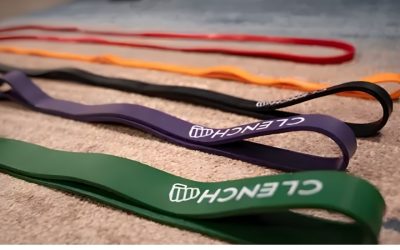
 Pull Up Bands
- Warranty Description: 1 year
- Material Type: Natural Rubber
- Sport Type: Body Building
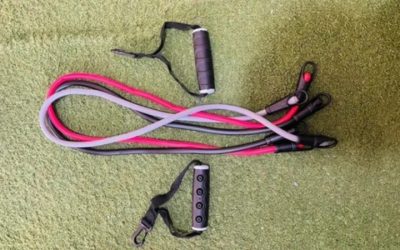
 WHATAFIT Resistance Bands with Handles
- Warranty Description: 2 Year Limited Warranty
- Sport Type: Exercise & Fitness
- Recommended Uses For Product: Workout
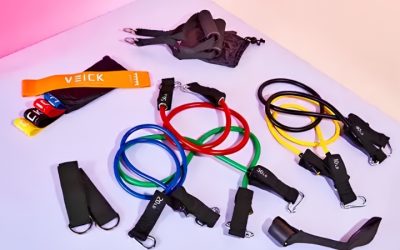
 Resistance Bands
- Material Type: Natural Rubber
- Sport Type: Exercise & Fitness
- Recommended Uses For Product: Workout
| Product | Key specs | |
|---|---|---|
| Pull Up Bands | Warranty Description: 1 year Material Type: Natural Rubber Sport Type: Body Building | Check price |
| WHATAFIT Resistance Bands with Handles | Warranty Description: 2 Year Limited Warranty Sport Type: Exercise & Fitness Recommended Uses For Product: Workout | Check price |
| Resistance Bands | Material Type: Natural Rubber Sport Type: Exercise & Fitness Recommended Uses For Product: Workout | Check price |
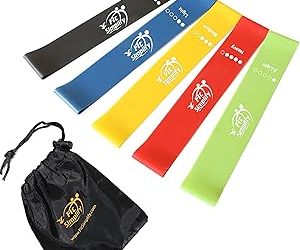
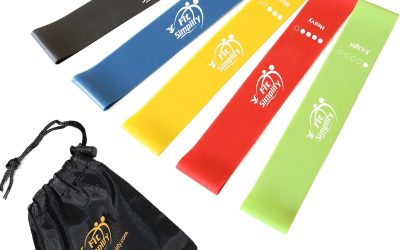
 Fit Simplify Resistance Loop Exercise Bands with Fit Simplify Resistance Loop Exercise Bands with | High End Exercise Bands Great With Any Workout Multiple Uses | Check price |
 5-Level Resistance Bands for Working Out 5-Level Resistance Bands for Working Out | League Name: Formula 1 Team Name: NO Sport Type: Exercise & Fitness | Check price |
 Renoj Resistance Bands for Working Out Renoj Resistance Bands for Working Out | Check price | |
 WIKDAY Resistance Bands WIKDAY Resistance Bands | Check price | |
 Resistance Bands for Working Out Resistance Bands for Working Out | Check price |
As an Amazon Associate we earn from qualifying purchases at no extra cost to you.
Quick Comparison
| Pick | Type | Usable Range | Anchor Style | Best For |
|---|---|---|---|---|
| Bodylastics Stackable Tube Set | Clip-on tubes with handles | ~5 to 200+ lbs stacked | Door anchor, ankle straps, carabiners | Full-body strength training |
| WODFitters Pull-Up Assist Bands | Layered latex loops | ~10 to 175 lbs | Bar, rack, or bodyweight | Pull-up progression |
| Serious Steel Assisted Pull-Up Bands | Layered latex loops | ~5 to 200 lbs | Bar, rack, barbell | Speed work and heavy accessories |
| TheraBand CLX Consecutive Loops | Flat latex with built-in loops | Light to extra-heavy | Grip through loops | Shoulders, rehab, travel |
| Fit Simplify Loop Bands | Thin latex mini loops | 5 to 40 lbs | Limb-anchored | Warm-ups and activation |
| Gymreapers Hip Circle | Woven fabric loop | Heavy, non-linear | Above knees | Glute and hip abduction work |
How to Choose
- Overlap beats maximum. Two bands with ranges of 20-60 and 50-120 pounds give you a continuous ladder. Two bands rated 20-60 and 120-200 leave a canyon in the middle that you’ll feel the moment you try to progress.
- Construction determines lifespan. Layered latex loops are built from bonded sheets and tend to fray visibly before they fail. Molded tube bands snap without much warning, which is why the anchor and handle quality on a tube kit matters more than the tube itself.
- Check the anchor before the band. A door anchor with a thin foam pad will chew itself apart in a month. Look for a wide nylon strap with a reinforced ball or block, and confirm your door swings away from you when loaded.
- Match width to the job. For pull-up assistance, a half-inch loop is a decent first step for most people and a 1.75-inch loop is essentially a whole other exercise. For hip work, fabric beats latex because it won’t roll.
- Replacement policy is real value. Bands are consumables. Brands that ship spare tubes or replace snapped bands cheaply cost less over three years than a slightly better band with no support.
Top Picks Reviewed
Bodylastics Stackable Tube Set
This is the closest thing to an adjustable dumbbell in band form. Each tube clips to the handles independently, so you build resistance in defined increments instead of guessing. The inner safety cord is the detail that earns trust — if a tube ruptures, the braided line inside stops it from whipping back at your face. Downsides: the handles are the weak link on very heavy stacks, and clipping four tubes to each side for a chest press gets fiddly. Still the most honest progression tool on this list.
WODFitters Pull-Up Assist Bands
Sold as a graduated set of loops, and the spacing between sizes is sensible enough that you can actually walk down the ladder rather than jumping. Latex is thick, edges are cleanly bonded, and they hold up to being wrapped twice around a bar. I’d buy the four-band set over the individual heaviest band, because the whole point is having the next rung ready. Wrap a towel over rough pull-up bars — knurling is what kills these, not stretching.
Serious Steel Assisted Pull-Up Bands
The value pick if you also lift barbells. These stretch cleanly for banded deadlifts and bench speed work, and the lighter widths double as pull-apart bands for upper back. Latex smell out of the package is strong for a few days; air them out. They run slightly stiffer than comparable loops at the same width, which is a plus for accommodating resistance and a minor annoyance for deep-range mobility drills.
TheraBand CLX Consecutive Loops
A flat band with a row of built-in loops, which sounds gimmicky and turns out to be genuinely clever. You slide a hand or foot into whichever loop sets the tension you want, no knots, no slipping. It’s the band I’d pack for a trip and the one I’d hand someone rehabbing a rotator cuff. Not a strength tool — the top resistance is modest and it will tear if you scrape it on concrete.
Fit Simplify Loop Bands
Inexpensive thin loops that do exactly one job well: waking up hips and shoulders before real work. Use them for monster walks, band pull-aparts, and clamshells. Expect them to roll during heavier hip abduction and expect to replace them once or twice a year. At this price, that’s fine. Don’t buy them expecting a lower-body training stimulus on their own.
Gymreapers Hip Circle
Woven fabric with a silicone grip pattern inside, wide enough that it stays parked above the knees through walking lunges and barbell hip thrusts. Because fabric doesn’t stretch linearly, resistance feels more consistent through the range than latex does. The tradeoff is no true progression — you’re buying one tension level, so choose based on your current strength rather than aspiration.
Frequently Asked Questions
How many bands do I actually need to start?
Three. One light loop for warm-ups and pull-aparts, one medium loop that covers assisted pull-ups and squats, and either a tube set or a heavier loop for pressing and pulling. Add upward from there as specific lifts stall.
Can bands replace weights for building muscle?
For hypertrophy, they can get you a long way, provided you take sets close to failure and keep adding tension over time. They struggle at the bottom of the range on movements where you’re strongest at the top — the tension curve fights you. Loaded carries, heavy hinging, and true maximal strength still favor a barbell.
How do I stop bands from snapping?
Keep them off concrete and away from knurled bars, store them out of direct sunlight, avoid stretching much past three times resting length, and inspect the edges monthly for small tears. Any band with a visible nick should be demoted to warm-up duty or thrown out.
Are the printed resistance numbers trustworthy?
Treat them as a comparison scale within a single brand, not an absolute measurement. Tension depends entirely on how far you stretch the band, so a “40 lb” loop might deliver anywhere from 12 to 45 pounds depending on your setup and limb length.
Final Thoughts
Buy for the gaps, not the extremes. A stackable tube kit plus two or three layered latex loops covers nearly every pattern you’d train at home, and the fabric hip circle handles the one job latex does poorly. Add a mini loop set for warm-ups, replace anything with a tear, and keep a written log of which band you used for which movement — that log is what turns a pile of rubber into an actual progression plan.
Write Your Review
No reviews yet. Be the first to share your experience!