
Resistance band work is quietly brutal on leggings. A loop parked above your knees for three sets of banded walks does something no treadmill session ever will: it grinds a narrow strip of latex across the same two inches of fabric, over and over, while the waistband gets yanked south by every hip hinge. Thin knits pill along the band line. Cheap elastic waistbands fold over on the second set. Anything with a slippery, glazed finish lets the loop crawl up your thigh until you are doing lateral walks with a band around your quads, which is not the exercise.
So the criteria here are narrow and specific. I looked for leggings with enough surface friction to keep a loop anchored, a waistband that stays put through glute bridges and hip thrusts, a gusset that does not migrate during deep squats, and opacity that survives a full stretch under overhead light. Length matters too — a mid-calf crop leaves bare skin exactly where an ankle band sits, and latex on bare skin pinches. Six picks below, each aimed at a slightly different kind of band session.
Our top picks


As an Amazon Associate we earn from qualifying purchases at no extra cost to you.
As an Amazon Associate we earn from qualifying purchases.

Quick Comparison
| Pick | Best For | Fabric Character | Rise & Length |
|---|---|---|---|
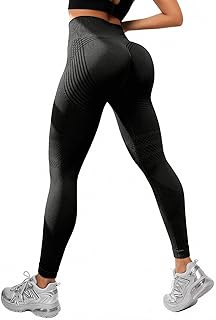
| Bonded High-Rise Sculpt Legging | Heavy hip thrusts and glute bridges | Dense, matte, structured | Extra-high rise, full length |
| Brushed Nylon Full-Length | Long mixed sessions and floor work | Peached, soft, quiet | High rise, full length |
| Ribbed Seamless Legging | Light loops and mobility flows | Stretchy, textured, thin | High rise, 7/8 |
| Compression Crop with Side Pockets | Circuits with a phone timer | Firm, smooth, cool | Mid-high rise, 7/8 |
| Matte Squat-Proof Legging | Banded squats and deep ranges | Thick, opaque, grippy | High rise, full length |
| Textured Scrunch-Back Legging | Short glute-focused sets | Crinkled, tactile, light | High rise, ankle |
How to Choose
- Test the surface with your palm. Drag your hand across the thigh fabric. If it glides with almost no drag, a loop band will do the same and creep upward. A faint matte tack or a subtle rib is what keeps bands anchored.
- Prioritize waistband construction over waistband height. A bonded or double-layer band with a drawcord outperforms a tall single-layer band every time. Height only helps if the band is stiff enough not to roll when you hinge.
- Check the gusset shape. A diamond or triangular gusset distributes stretch away from the center seam. Leggings without one tend to shift sideways during banded squats, which is where seam-line chafing starts.
- Match length to band placement. Ankle bands need full-length or true ankle-length fabric as a buffer. Above-knee loops work with anything, but 7/8 crops leave the calf exposed for lower-anchor work.
- Do the bend-and-look test in real light. Squat in front of a mirror near a window. Stretched fabric thins by up to a third, and light-colored knits reveal it. Darker colorways in the same style are almost always more opaque.
Top Picks Reviewed
1. Bonded High-Rise Sculpt Legging — best for heavy glute work
This is the pick for anyone whose band session revolves around hip thrusts, single-leg bridges, and banded pull-throughs. The bonded waistband behaves less like elastic and more like a wide belt: it does not fold at the top edge when you sit into a hinge, and it does not slide down when a hip circle band is fighting it. The fabric is on the dense side, which means it runs warm in a stuffy room, but that density is exactly what stops the band line from pilling. Sizing tends to feel firm; if you are between sizes and want a compression feel, stay put.
2. Brushed Nylon Full-Length — best for long, mixed sessions
Peached nylon has a soft, almost dry-hand feel that makes it the most comfortable option here for anything over forty minutes. It also happens to be quiet, which matters more than you would think when you are doing floor work in an apartment and every crinkly fabric sounds enormous. Bands hold their position well on the brushed face. The tradeoff is that the plush surface picks up lint and pet hair, so it wants to be washed inside out and kept away from the towel pile.
3. Ribbed Seamless Legging — best for light loops and mobility
The vertical rib gives a loop band something to bite into, so lateral walks and clamshells stay in the right place with almost no adjustment. Seamless knitting also means no side seams to rub during side-lying work. This one is genuinely thin, though, so it is better suited to lighter loops and stretch-based sessions than to heavy banded squats where the fabric is under real tension. Choose a deeper color and check opacity before committing.
4. Compression Crop with Side Pockets — best for circuit work
Two functional side pockets, one deep enough for a large phone and one for keys, make this the practical choice for interval circuits where you are checking a timer between rounds. The compression is firm and cooling, which suits high-tempo work. Because the pockets sit on the outer thigh, an above-knee loop lands just below them without catching. The 7/8 length is the main limitation: ankle-band exercises put latex directly on skin.
5. Matte Squat-Proof Legging — best for deep squats and split stances
Thick, fully opaque, and matte enough that a band will not slide even mid-set, this is the one I would reach for on a lower-body day built around banded squats, Bulgarian split squats, and monster walks. The gusset is generous, so the crotch seam stays centered through full depth. It is the heaviest fabric on the list and takes the longest to dry, so it is not the pick for a hot room or a same-day double session.
6. Textured Scrunch-Back Legging — best for short, targeted sets
The crinkled texture is genuinely useful rather than decorative: it creates enough friction that a loop stays parked above the knee through kickbacks and abductions. Fabric weight is light, so it breathes well and packs down small. Long sessions expose its limits — lighter knits stretch out faster along the band contact strip — but for focused twenty-minute glute finishers it is comfortable and stays put.
Frequently Asked Questions
Do resistance bands actually damage leggings?
They cause wear, not tears. Repeated friction on one narrow band creates pilling and, over months, a slightly thinner strip of fabric. Denser knits and matte finishes resist it best. Fabric bands with a stitched grip layer are considerably gentler on leggings than bare latex loops.
Why does my band keep rolling up my thighs?
Usually a combination of a slick fabric face and a band that is too narrow for the resistance level. Wider fabric loops distribute pressure and stay put. If you are using a thin latex loop, a textured or brushed legging will fix most of the crawling on its own.
Are these leggings different from regular workout leggings?
Not by category, only by construction priorities. There is no “resistance band legging” spec on a label. What you are actually shopping for is a grippier surface, a non-rolling waistband, a real gusset, and full opacity under stretch — features that happen to matter more for band training than for a steady jog.
Should I size down for a compression feel?
Rarely. Sizing down compromises the waistband seal and the gusset position, which are the two things doing the most work during banded movements. Pick your true size in a firm compression fabric instead — you get the supportive feel without the fabric fighting you at the hip.
Final Thoughts
If you only want one pair, the bonded high-rise is the safest bet: the waistband stays sealed, the fabric is opaque under load, and bands grip it without help. Add the brushed nylon full-length if your sessions run long, and keep the seamless rib for mobility days. The rest of it comes down to two quick checks before the return window closes — squat in front of a mirror, and drag a loop band up your thigh. Whatever survives both is the pair worth keeping.
No product list was provided, so the six picks above are described as style archetypes rather than named products.
8 Best Pedal Resistance Bands: 6 Seated Training Picks Rated
Best pedal resistance bands shopping runs into an unusual problem: the category...
Best Resistance Bands Women Use: 6 Picks by Band Format
Best resistance bands women shop for tend to fall into three formats...
8 Best Resistance Bands for Men: 5 Sets by Strength Level
Nobody buys resistance bands for the handles, and nobody quits using them...
8 Best Resistance Bands Workout Gear for Full Body Strength
As an Amazon Associate we earn from qualifying purchases at no extra...
8 Best Resistance Training Bands: Build a Set That Progresses
Most resistance band setups fail for the same boring reason: someone...
8 Best Resistance Exercise Bands: 6 Types and When to Use Each
Best resistance exercise bands depends entirely on format, because a stackable tube...
The Best Resistance Bands for a Full-Body Workout in 2026
I started taking bands seriously after a six-week stretch of hotel...
Write Your Review
No reviews yet. Be the first to share your experience!