
Key takeaways
- Target Use Body Part: Ankle, Wrist
- Target Audience: men, teenager, women
- Specific Uses For Product: Physical Therapy, Strength Training
Almost nobody measures their ankle before buying ankle weights, and it is the single most common reason a set gets returned. Adult ankle circumference just above the bone runs roughly eight to twelve inches, with calves above that spanning a far wider spread. A cuff designed around a ten-inch average will leave four inches of loose strap on a slim leg and refuse to close properly on a larger one. Neither outcome is a quality problem. It is a sizing problem that the listing never framed as a question.
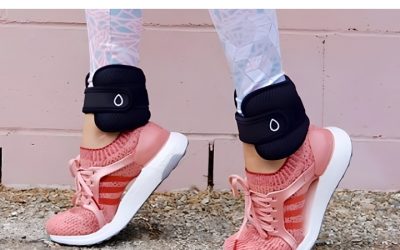
The consequences differ at each end. Too much strap means a flapping tail that catches on the opposite leg and slowly peels the closure open. Too little means you close the cuff at its absolute limit, where the hook-and-loop is under peel force and the fabric is stretched — the fastest way to wear out a set. The comparison below sorts the options by who they physically fit, and flags where a design is quietly assuming a particular leg.
Our top picks
 Sportneer Adjustable Ankle Weights
- Target Use Body Part: Ankle, Wrist
- Target Audience: men, teenager, women
- Specific Uses For Product: Physical Therapy, Strength Training
 BAGAIL Ankle Wrist Weights for Women &
- Target Use Body Part: Ankle, Arm, Legs, Wrist
- Product Style: 2 Lb Pair (1 Lb Each)
- Material: Lycra-SBR Fabric, iron sand


 Ankle Weights Set of 2
- 【Becojadde offers 3 weights options】 ①2 lb Pair…
- 【Durable & Comfortable】Our ankle weights for women are…
- 【Adjustable Resistance】Each wrist weights includes 8 blocks (6…
As an Amazon Associate we earn from qualifying purchases at no extra cost to you.
Quick Comparison
| Product | Best For | Standout Feature | Watch Out For |
|---|---|---|---|
| Adjustable Ankle Weights, 1–20 lb Pair | Larger calves and wide ankles | Long strap with generous overlap | Excessive length on slim legs |
| BAGAIL Ankle & Wrist Weights, Set of 2 | Slim ankles, teens and small frames | Short cuff that also fits a wrist | Will not close on a very large calf |
| Sportneer Adjustable Ankle Weights (2–10 lb Pair) | Mid-range adult sizing | Strap length suits most typical ankles | Cuff height rides up on short lower legs |
| Sportneer Removable-Weight Cuff | Adjusting bulk to suit leg size | Removing bars slims the cuff profile | Fewer bars means a looser, mobile fit |
| Sportneer Neoprene Adjustable Pair | Legs with limited give | Neoprene stretches slightly to conform | Stretch can mask a cuff that is too small |
| Amazon Basics Adjustable Ankle Weights | Average adult proportions | Closes anywhere along its length | Least accommodating at the size extremes |
How to Choose
- Measure twice: Take the circumference just above the ankle bone and again at the widest point of the lower calf. Buy for the larger number.
- Demand overlap: You want the strap to close with two to four inches of spare hook-and-loop. That surplus is what keeps it holding as the closure ages.
- Check cuff height: On a short lower leg, a tall cuff crowds the calf and compresses on every contraction. Slimmer profiles fit better below the knee.
- Watch the tail: More than about four inches of loose strap will catch during any movement where the legs pass close together.
- Consider the smallest user: If a household includes a teenager or someone with a slight build, sizing down beats sizing up — a big cuff cannot be made small.
Top Picks Reviewed
Best for Larger Legs: Adjustable Ankle Weights, 1–20 lb Pair
The long strap is the point here. On a calf that defeats standard cuffs, this design still closes with real overlap rather than at its stretched limit, which is what determines whether the set lasts a year or a month. The wide load ladder through 6, 8, 10, 12, 15 and 20 lb per pair is a bonus for anyone building genuine leg strength.
On a slim leg the same virtue becomes a nuisance: a long tail flaps and eventually pulls the closure open. Doubling the excess back on itself works, though the result is bulky at the fastening point.
Best for Slim Ankles: BAGAIL Ankle and Wrist Weights
Because these are sized to close on a wrist as well as an ankle, they fit small frames properly rather than approximately. Teenagers, lighter adults and anyone with a narrow lower leg get a cuff that sits flush with no leftover strap to manage.
The other end of the range is the constraint. On a substantial calf this cuff will simply not have enough length to close safely, and forcing it means training on a closure that is already at its limit.
Best Average Fit: Sportneer Adjustable Ankle Weights
For the broad middle of adult sizing, this cuff is well judged: enough strap for a comfortable overlap on a typical ankle without a metre of surplus, and a bar layout that spreads the 2–10 lb per pair load evenly around the leg rather than bunching it at the front.
Height is the caveat. Fully loaded, the cuff is tall enough to reach up into the calf on shorter legs, where it compresses with every muscle contraction. Removing a bar or two lowers the profile as well as the weight.
Best Adjustable Bulk: Sportneer Removable-Weight Cuff
Being able to pull bars out changes the fit, not just the load. A slimmer cuff wraps more closely on a small leg and sits lower below the knee, which is genuinely useful when the same set is shared between people of different sizes.
Removing too many bars leaves the shell soft and the empty channels able to fold, so the cuff can rotate on the leg mid-set. Load the outermost channels first and close it firmly to keep it oriented.
Frequently Asked Questions
Where exactly should I measure?
Just above the ankle bone, where the cuff will actually sit, with your foot flat on the floor. Measuring at the narrowest point of the ankle underestimates what the strap needs to cover.
Is it better to size up or down?
Size up. Excess strap can be folded back or tucked; missing strap has no remedy, and a cuff closed at its limit will fail early.
Why does one cuff slip more than the other?
Legs are rarely symmetrical, and the dominant leg is often slightly larger. If one cuff consistently travels, tighten that side a notch and swap the cuffs between legs periodically to even out closure wear.
Can a cuff be too tight?
Yes. If your foot tingles or the skin below the cuff changes colour, it is compressing circulation. You should be able to slide a finger under the closed cuff without forcing it.
Final Thoughts
Fit decides comfort, durability and whether the cuff stays where you put it, so start with a tape measure rather than a weight rating. Larger legs are best served by the long-strap 1–20 lb design, slim ankles by the shorter BAGAIL cuffs, and most people in between by a Sportneer adjustable pair loaded to keep the profile sensible. Buy the length that gives you spare overlap, and the rest of the decision gets much easier.
Write Your Review
No reviews yet. Be the first to share your experience!