Key takeaways
- Match the deck, not the room: Standard homecare decks are roughly 35–36 in wide by 75–80 in long. A topper that overhangs will crease along the side rails and lose loft at the edges, which is exactly where transfers happen. Measure the platform, then confirm total height stays low enough that the side rails still function as rails.
- Decide between alternating air and static foam: Alternating-pressure systems cycle air between cells so no single area carries load continuously, which suits users with limited independent movement. Static foam or gel surfaces redistribute load rather than cycling it, and are quieter, simpler, and better for someone who can still shift position. Weight capacity matters here, as does whether the pump offers a static mode for meals and care tasks.
- Look for shear management at the hinge: When the head section elevates, skin over the sacrum wants to slide against the surface while the tissue underneath stays put. Toppers with a low-friction top cover, a supple bladder material, and enough length to stay anchored during articulation reduce that dragging effect considerably.
- Read the cover spec, not just the word “waterproof”: A vapor-permeable polyurethane cover blocks fluid while letting moisture vapor escape. A fully sealed vinyl one traps heat and sweat, and macerated skin fails under far less pressure than dry skin. Removable, machine-washable covers extend the life of the whole unit.
- Judge durability by joints and welds: Air pads fail at seams, hose couplings, and connector clips long before the cells wear out. Foam fails by taking a permanent set. Look for reinforced welds, replaceable individual cells where offered, and higher-density foam rather than the softest available, since soft low-density foam bottoms out and then offers no protection at all.
What's inside
A hospital bed changes the geometry of rest. The deck articulates, the sleeper spends far more hours in contact with the surface than an ambulatory adult would, and much of that time is spent in positions that concentrate load over bone: sacrum, heels, greater trochanter, scapulae. The stock mattress that ships with most homecare beds is built to a price and a cleaning spec, not to a tissue-loading spec. Within weeks it develops compression sets at the hip line, and the person lying on it starts paying for that in redness, discomfort, and disrupted sleep.
This guide looks at hospital bed toppers through two lenses that tend to get skipped in marketing copy: ergonomics, meaning how the surface distributes load and manages shear when the head section rises, and durability, meaning whether the materials survive years of body heat, moisture, and repeated folding at the hinge points. Below are the toppers worth considering in 2026, followed by the specifications that actually predict how a surface will perform.
As an Amazon Associate we earn from qualifying purchases.


🛒 Best Price Today on Amazon
Prime members get fast, free shipping on everything above, plus member-only deals. New members get a 30-day free trial — cancel anytime.
How to Choose a Mattress Topper For Hospital Bed (2026)
- Match the deck, not the room: Standard homecare decks are roughly 35–36 in wide by 75–80 in long. A topper that overhangs will crease along the side rails and lose loft at the edges, which is exactly where transfers happen. Measure the platform, then confirm total height stays low enough that the side rails still function as rails.
- Decide between alternating air and static foam: Alternating-pressure systems cycle air between cells so no single area carries load continuously, which suits users with limited independent movement. Static foam or gel surfaces redistribute load rather than cycling it, and are quieter, simpler, and better for someone who can still shift position. Weight capacity matters here, as does whether the pump offers a static mode for meals and care tasks.
- Look for shear management at the hinge: When the head section elevates, skin over the sacrum wants to slide against the surface while the tissue underneath stays put. Toppers with a low-friction top cover, a supple bladder material, and enough length to stay anchored during articulation reduce that dragging effect considerably.
- Read the cover spec, not just the word “waterproof”: A vapor-permeable polyurethane cover blocks fluid while letting moisture vapor escape. A fully sealed vinyl one traps heat and sweat, and macerated skin fails under far less pressure than dry skin. Removable, machine-washable covers extend the life of the whole unit.
- Judge durability by joints and welds: Air pads fail at seams, hose couplings, and connector clips long before the cells wear out. Foam fails by taking a permanent set. Look for reinforced welds, replaceable individual cells where offered, and higher-density foam rather than the softest available, since soft low-density foam bottoms out and then offers no protection at all.
The Best Mattress Topper For Hospital Bed (2026)s Reviewed
Vive Alternating Air Pressure Mattress Pad
The most broadly recommended entry point into alternating pressure, and the one caregivers tend to find easiest to set up correctly on the first try. Its quiet pump and breathable waterproof cover make it viable for round-the-clock use, and the cell layout holds its shape reasonably well through repeated head elevation.
Lunderg PressuRelief with Snap-2-Pad
The snap-on comfort layer is the meaningful engineering difference here: it softens the ridged feel that puts some users off air systems, without defeating the alternating cycle underneath. Static mode is genuinely useful during transfers and meals, and the build quality at the hose connection is better than its price tier suggests.
Gel Grid Bed Sore Prevention Pad
A pump-free option that redistributes load through a buckling gel grid rather than cycling air, so there is no motor noise, no hose to snag, and nothing to fail electrically. At 71.7 x 36 in it fits most homecare decks, and the grid structure resists the permanent compression that eventually ruins foam.
Foam Global Airflow Egg Crate Topper
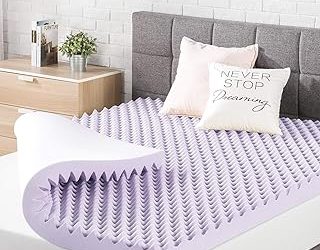
The simplest and most durable-by-omission choice: convoluted US-made foam that adds cushioning and airflow channels over a tired hospital mattress. Best suited to users who reposition themselves, since 2 in of convoluted foam manages comfort well but cannot replace true pressure redistribution for high-risk skin.
Alcedo Alternating Air Pressure Mattress Pad
Notable for its 300 lb capacity and an adjustable ultra-quiet pump, which matters more than it sounds when the bed shares a room with the sleeper. The bladder material is on the tougher end of this category, making it a sensible pick where the surface sees heavy or extended use.
Frequently Asked Questions
Can a topper alone prevent pressure injuries?
No. A good surface lowers interface pressure, but repositioning schedules, moisture control, nutrition, and skin inspection do the rest of the work. Anyone with existing skin breakdown or high risk should have the plan set by a clinician or wound care nurse.
Does an air topper need to run continuously?
Generally yes, since the protective effect comes from the cycling. Most pumps are designed for continuous duty and draw very little power. Use static mode for care tasks, then return to alternating mode.
Will a topper interfere with the bed’s articulation?
Properly sized ones will not. Problems come from oversized toppers that bridge the hinge or thick stacks that raise the sleeper above the side rails. Keep total added height modest and route the pump hose away from the moving deck.
How long should one of these last?
Expect two to three years from a quality air system with normal use, less if the cover is not cleaned and dried properly. Foam toppers show their age sooner, usually as a visible dip at the hip line, and should be replaced once that appears.
Final Thoughts
For most homecare setups, the Lunderg PressuRelief is the strongest overall pick thanks to its comfort layer and usable static mode, with the Vive Alternating Air Pressure Pad the safer choice for caregivers who want the simplest possible setup. If a pump is unwelcome and the user can still reposition independently, the Gel Grid pad delivers dependable redistribution with essentially nothing to break.