Our Top Picks
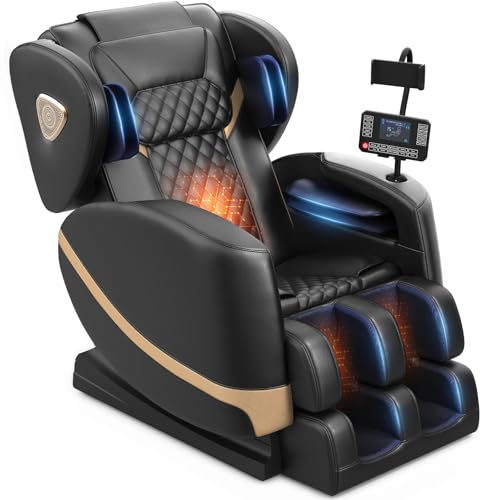 FURNIMAT Massage Chair Full Body Zero Gravity Recliner50 x 27 x 41.8 Inches125 PoundsCheck on Amazon
 Heartland Furniture Top Grain Leather Power Recliner ChairOversized41 x 41 x 42 inches138.6 PoundsCheck on Amazon

A leather power recliner with heat and massage sits in a weird middle ground. It’s not a full massage chair with rollers tracking your spine, and it’s not a basic recliner either. What you’re actually buying is a comfortable chair with a vibration motor and a heating pad built into the lumbar and sometimes the seat. Once you know that, you can judge these things on the right terms instead of expecting shiatsu-level kneading from a $700 recliner.
What “massage” means on these chairs
Almost every leather power recliner marketed with massage uses vibration motors, usually two to four of them, embedded in the backrest and seat cushion. They buzz, not knead. Intensity is typically low, medium, high, with a handful of preset patterns (wave, pulse, constant). This is fine for taking the edge off a stiff lower back after yardwork, but it won’t replicate a 2D or 3D roller system the way a dedicated massage chair does. If you’ve used an airport massage chair or a Panasonic/Osaki roller chair before, recalibrate your expectations down.
The heat function is almost always a single heating element in the lumbar area, sometimes extending into the seat pan. It’s genuinely useful for people with lower back stiffness or arthritis, and it’s the feature owners tend to say they use most, more than the massage itself.
Leather quality matters more than the massage spec sheet
Here’s where I’d spend your attention budget. The massage motors are commodity parts, nearly identical across price tiers. The leather is not. You’ll see three tiers:
- Bonded leather / faux leather (“leather match”) – a thin layer of real leather on seating surfaces with vinyl on the sides and back. Cracks and peels within 2-4 years of regular use, faster in dry climates or near heat vents. This is most of what’s sold under $900.
- Top-grain leather – full leather hide, sanded and corrected to even out imperfections. Durable, resists cracking much longer, costs more. Common in the $1,200-$2,500 range.
- Full-grain leather – the real deal, shows natural grain and marks, ages well, rarely used below $2,000 outside of specialty furniture makers.
If a listing just says “leather” without specifying, assume bonded or leather match. Check the product description for “top-grain” explicitly, and don’t trust the main photo to tell you anything about grade.
The power mechanism is the thing that actually breaks
Massage motors rarely fail first. What fails is the power recline/lift motor and the control board. Common failure modes after 2-3 years of daily use:
- Motor runs but chair doesn’t move (gear stripped, usually not repairable at home)
- Remote stops responding (often a connector issue, sometimes fixable)
- Chair stalls partway through recline (power supply or motor overheating under load, often tied to a frame that’s too heavy for the motor spec)
Weight capacity matters here beyond just “will it hold me.” A chair rated for 300 lbs that’s constantly supporting someone near that limit will wear its lift motor faster than one with headroom. If you’re above 250 lbs, look at chairs rated 350 lbs or higher, not because the chair will collapse at 310, but because the motor duty cycle will shorten.
How the tiers stack up
| Tier | Typical price | Leather | Massage | Realistic lifespan |
|---|---|---|---|---|
| Budget | $500-$800 | Bonded/leather match | 2 vibration motors, 2-3 intensities | 2-4 years before visible leather wear |
| Mid-range | $900-$1,500 | Top-grain on seating surfaces | 4 motors, multiple patterns, zone targeting | 5-8 years with normal use |
| Premium | $1,600-$2,800 | Top-grain or full-grain throughout | 4+ motors, often paired with zero-gravity recline | 8-10+ years, leather often outlasts electronics |
Who should buy which
If you want a comfortable recliner that happens to have heat and a buzz function for occasional use, the budget tier is genuinely fine. Don’t let anyone talk you into overspending for massage quality you won’t notice after the first week, since most people stop using the massage function regularly within a month and just use the recline and heat. Browsing a leather power recliner with heat and massage in this range will turn up plenty of acceptable options, just expect the leather to show wear in a few years.
If this is going to be your primary daily seat, in a living room with a dog, kids, or heavy regular use, pay for top-grain leather in the mid-range tier. The jump from bonded to top-grain is the single best money-to-durability trade in this category. It’s a bigger upgrade than more massage motors.
If you have chronic lower back pain and are debating between this category and a real massage chair, be honest with yourself about what you need. A full body massage chair with heat costs more and takes up significantly more floor space, but delivers roller-based therapy that vibration motors can’t match. For daily therapeutic use, that’s a different purchase entirely, not a recliner upgrade.
For anyone replacing an aging recliner who just wants a reliable upgrade without overthinking the massage feature, a straightforward top-grain leather power recliner with basic heat and vibration covers most needs without the premium price tag.
Before you buy
Measure your doorway and the path to the room, not just the room itself. Powered recliners in the leather-and-massage category commonly weigh 100-150 lbs and have a wall clearance requirement of 4-6 inches when reclined, more for zero-gravity models that slide forward as they recline. Check the spec sheet for “wall clearance” or “wall hugger” explicitly, since standard recline mechanisms need the chair to move away from the wall as it opens. If your room is tight, that detail will matter more than motor count or leather grade combined.