Our Top Picks
 Storkcraft Premium Hoop Glider & OttomanStandard30.31 x 29.92 x 39.96 inches45 poundsCheck on Amazon
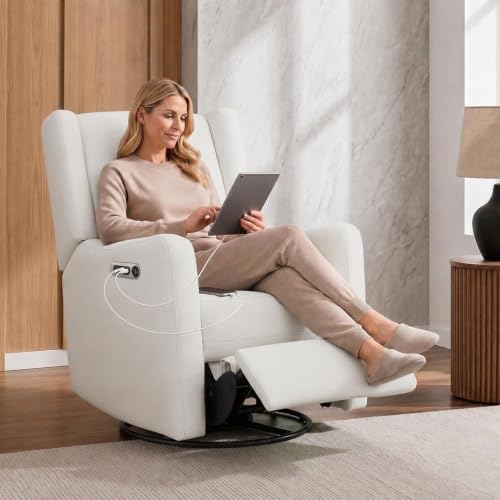 Delta Children Mercer Electronic Power Recliner and Swivel35.5 x 26.25 x 39.25 inches103.75 poundsCheck on Amazon
A nursery glider is where many parents spend hours each day in the first year: feeding, rocking, reading and soothing a baby back to sleep at 3 a.m. It is worth choosing carefully, because a chair that looks lovely in photos can be uncomfortable after twenty minutes, too narrow for nursing, or noisy when it moves. Here is how to compare gliders, rockers and recliners, and which features actually matter.
Glider, rocker or recliner
| Type | Motion | Pros | Cons |
|---|---|---|---|
| Classic wooden glider | Smooth back-and-forth on a fixed track | Steady, traditional, often with matching ottoman | Firm cushions; pinch points under the arms |
| Upholstered glider | Glides on a hidden base | Soft, looks like living room furniture | Larger footprint |
| Rocker | Curved arc | Simple, often cheaper | Rocking runners can catch toes or toys |
| Swivel glider | Glides and rotates | Turn without standing up | Needs more clearance |
| Power or manual recliner glider | Glides and reclines | Lets you rest or nap with a sleeping baby nearby | Higher price, bulkier |
Comfort details that matter
Seat width: a wide seat lets you shift positions and use a nursing pillow. Back height: a high back supports your head when you doze off. Arm height: padded arms at a comfortable height support your elbow while holding the baby. Cushion firmness: medium-firm cushions stay comfortable over hours; very soft ones sag. Try to sit in the chair or read reviews from parents of similar height.
Ottomans and footrests
Resting your feet improves posture during feeding. Gliding ottomans move with the chair; built-in footrests on recliners save floor space. If you choose a separate ottoman, make sure it is stable and does not glide away when you push against it. Compare nursery gliders with ottomans.
Safety in a home with a crawling baby
Once your baby is crawling, the moving mechanism becomes the main concern. Gliders with enclosed bases and locks prevent fingers from getting caught. Rockers can trap small hands and toes under the runners. A locking feature that stops the glide when the chair is not in use is very useful for toddler years. Keep the chair away from windows with blind cords.
Fabric and cleaning
Spit-up and spills are certain. Performance fabrics, microfiber and faux leather wipe clean more easily than linen or velvet. Removable, washable cushion covers are a big advantage. Neutral colors hide marks and let the chair move to a living room later. See swivel glider recliners in easy-clean fabrics.
Space planning
Measure the corner where the chair will go and leave room for the glide or recline motion, plus a small side table for water, burp cloths and a lamp. Swivel and recliner gliders need more clearance from walls than classic gliders.
Life after the nursery
An upholstered swivel glider or recliner in a neutral fabric fits easily into a living room, bedroom or reading corner once the baby stage is over, which makes it better long-term value than a nursery-themed chair.
Which glider suits you
Budget and traditional style: a wooden glider with ottoman. Long night feeds: a recliner glider with a high back. Small nursery: a compact upholstered glider. Toddler on the way: a model with an enclosed base and glide lock. Future living room chair: a neutral swivel glider in performance fabric.
FAQ
Is a glider better than a rocking chair for a nursery?
Many parents prefer gliders for their smoother motion and enclosed bases that are safer for crawling babies.
Do I need an ottoman with a nursery glider?
It is not required, but resting your feet improves comfort and posture during feeding.
What fabric is best for a nursery chair?
Performance fabrics, microfiber or faux leather that wipe clean easily.
Can a nursery glider be used later in a living room?
Yes, especially upholstered swivel or recliner gliders in neutral colors.