Our Top Picks
 Flash Furniture Mindy Kids 5-Piece set Folding Square5 Piece Set27 x 25.5 x 5 inches22 poundsCheck on Amazon
 GLACER 31.5" Wall Mounted Folding Desk Drop-Leaf Floating31.5" W x 23.5" D x 18" H23.5 x 31.5 x 18 inches17.5 PoundsCheck on Amazon
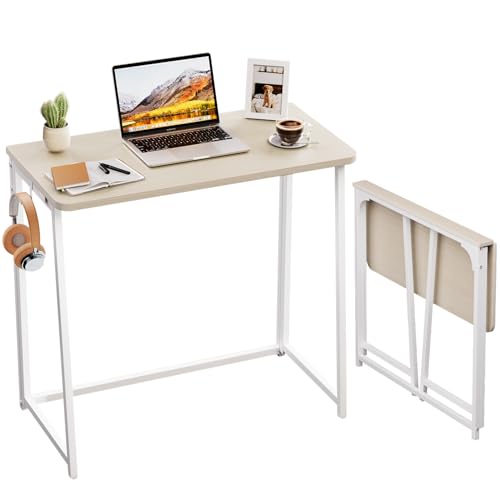
A foldable study table is useful when a permanent desk is impractical. It can turn a bedroom corner, living-room chair, or guest room into a temporary workstation, then disappear behind a door or under a bed. The catch is that “foldable” covers several very different designs. Some are stable enough for daily homework; others are best treated as occasional laptop trays.
The right choice depends on how often the table will be used, whether it needs to move, and what it must hold. A child writing with pencils has different requirements from an adult using a monitor and keyboard. Before buying, check the table’s open dimensions, folded thickness, weight capacity, and whether the legs lock securely.
Quick picks by use
| Table type | Best for | Main advantage | Main drawback |
|---|---|---|---|
| Folding card table | Children, crafts, occasional homework | Low cost and a generous work surface | Often plain-looking and less refined |
| Folding writing desk | Daily study in a small room | More desk-like proportions and better storage options | Usually costs more and may be heavier |
| Portable laptop table | Short sessions from a sofa or bed | Very easy to store and move | Limited space and often poor for handwriting |
| Wall-mounted drop-leaf table | Very tight rooms | Uses no floor space when folded | Requires reliable wall mounting and stays in one location |
Best for most people: a folding writing desk
For regular studying, a folding writing desk is usually the most balanced option. Look for a flat top at least about 36 inches wide and 20 inches deep. That gives a student room for a notebook, textbook, and laptop without forcing everything into a stack. A table around 40 to 48 inches wide is more comfortable for an adult or for shared homework help.
Many folding desks use metal legs and a laminate, engineered-wood, or bamboo-style top. The inexpensive versions can be perfectly adequate if the frame has positive locking hinges and the top does not flex when you write. You do not need premium materials for a child’s homework station or a desk used a few hours each week. Browse small folding writing desks by their open and folded measurements, not just their product photos.
The usual failure mode is wobble. A lightweight desk may shift on hard flooring, especially when someone leans on one front corner. Rubber feet help, but they do not fix a loose hinge or a frame that is too narrow for the top. If possible, choose a design with cross-bracing or legs that spread toward the corners. Avoid placing a heavy monitor on a table rated only for a laptop and books.
Best budget choice: a folding card table
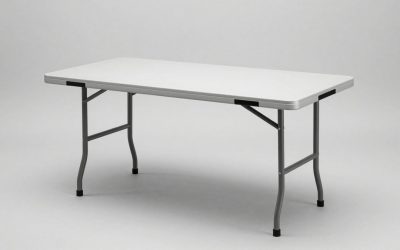
A basic folding card table is the sensible cheap option for occasional study. It opens quickly, gives plenty of surface area, and can double as a craft table, game table, or extra dining surface. For a younger child who studies at the kitchen table most days, spending more on a dedicated desk may add little.
The trade-offs are less attractive styling, limited legroom, and sometimes a slick or textured top that makes writing uncomfortable. Some card tables also fold in half, creating a central seam. That seam is harmless for a laptop but annoying under a sheet of paper. Check whether the table height works with the chair available; many are close to standard dining height and may be too tall for a small child.
For a child’s room, a kids’ folding table and chair set can be a practical gift because it creates a defined place for drawing, reading, and homework. Buy one with a stable, non-scissoring base and rounded corners. Lightweight furniture is easier for children to move, but it should not be so light that the table slides when they erase or lean.
Best for short laptop sessions: a portable laptop table
A portable laptop table is convenient for a dorm room, guest room, or occasional evening work. It may have folding legs, an adjustable tilt top, a cup holder, or a small side surface for a mouse. Storage is excellent: many models fit behind a sofa or beside a wardrobe.
These tables are not a substitute for a full study desk. The narrow top leaves little room for handwriting, and a tilted surface can make papers slide. A low table used on a bed or sofa also encourages a cramped posture. This is not automatically harmful, but comfort depends on the chair, screen height, and session length; if discomfort persists, a clinician or qualified ergonomics professional is the right source of advice.
Choose a portable model when the buyer values storage and mobility over a spacious work area. A flat, non-tilting top is more versatile for schoolwork. Adjustable legs are useful, but each hinge adds another possible point of looseness, so inspect the locking mechanism carefully.
Best for a tiny room: a wall-mounted drop-leaf table
A wall-mounted folding table offers the cleanest solution where floor space is scarce. Folded flat, it can serve as a narrow shelf; opened, it becomes a compact writing surface. This works particularly well in a studio apartment, hallway workspace, or small children’s room.
Installation is the important limitation. The mounting hardware must attach to suitable wall structure, not merely drywall with light-duty anchors. Renters may not be allowed to install one, and a poorly mounted table can pull away from the wall when someone leans on it. Measure the folded depth as well as the open surface, and leave enough clearance for knees and a chair.
These tables are best for a fixed location. If the room needs to change functions frequently, a freestanding folding desk is more flexible. Search for wall-mounted drop-leaf desks only after deciding where the studs or solid mounting points are.
What to check before buying
Open size: Measure the actual working area, excluding raised lips, cup holders, and fixed shelves. A laptop plus notebook needs more room than a laptop alone.
Folded size: A table that is easy to open but too thick for the intended closet is not space-saving in practice. Confirm whether the legs fold inward and whether the top folds in half.
Height: Most adult desks are roughly 28 to 30 inches high, while children need a lower surface or an appropriately sized chair. A height mismatch is especially frustrating during handwriting.
Locks and hinges: Look for clear leg locks, reinforced brackets, and reviews mentioning stability after repeated folding. A table that loosens after a few uses is a poor bargain.
Surface: A matte, reasonably smooth top is easier to write on than a glossy or heavily textured finish. Check the edge too; sharp unfinished edges are a bad fit for children.
Weight: A very light table is easy to carry but more likely to slide or tip. A heavier frame is preferable for daily use, provided the person storing it can lift it safely.
Which one should you buy?
Buy a folding writing desk for daily homework, a card table when price and versatility matter most, a portable laptop table for short sessions in changing locations, and a wall-mounted drop-leaf table when every inch of floor space counts. The cheaper choice is fine when use is occasional and the table is not carrying heavy equipment. Spend more for better hinges, a larger top, or stronger mounting only when those features solve a real problem.
FAQ
Are folding tables stable enough for studying?
Yes, many are, but stability depends on the frame and locks rather than the word “folding.” Cross-braced legs, rubber feet, and positive locking hinges are useful signs.
What size foldable table is best for a laptop?
For a laptop and notebook, aim for at least 36 inches wide and 20 inches deep. Smaller laptop trays are better for brief sessions than full homework.
Are folding tables suitable for children?
They can be, especially with rounded edges and a child-sized chair. Avoid tables that slide easily, pinch fingers at the hinges, or are too tall for the child.
Can a folding desk hold a monitor?
Only if its stated weight capacity and frame are suitable. Put the monitor near the center, avoid leaning on the edge, and test for wobble before regular use.