Our Top Picks
 LEOMOO Upgraded Full Body Massage Chair Recliner ZeroStandard40.9 x 26.7 x 40.5 Inches115 PoundsCheck on Amazon
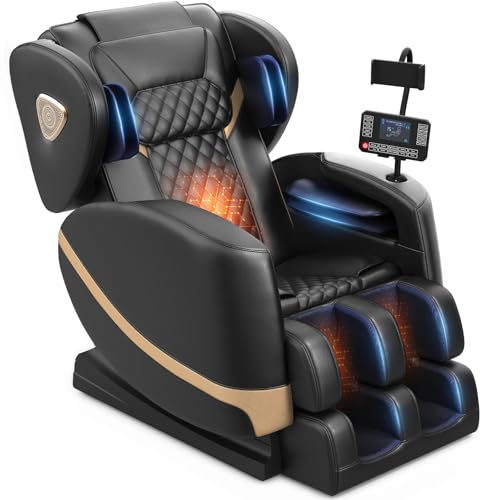 FURNIMAT Massage Chair Full Body Zero Gravity Recliner50 x 27 x 41.8 Inches125 PoundsCheck on Amazon

Most people shopping for a “seat massager” are really choosing between two very different products: a standalone massage cushion or pad you strap to an existing chair, and a dedicated massage chair or recliner built around the massage mechanism. That distinction matters more than brand or feature count, because it determines your budget, your space requirements, and honestly, how much relief you’ll actually get.
Massage cushions vs. full massage chairs
A seat massage cushion is a pad with motors and nodes built in, usually with a strap system so it sits on your existing office chair, recliner, or car seat. These run $40 to $150 for most consumer models. They do shiatsu kneading, rolling, or vibration along the back and sometimes the seat pan. The motors are small, so the pressure is noticeably lighter than a full chair, and the coverage is limited to where the pad sits. If your main complaint is lower back and upper back tightness and you already have a comfortable chair you like, this is the right category. There’s no reason to spend $2,000 on a full chair if a $90 cushion solves the actual problem.
A full massage chair is the chair itself, with rollers embedded in the backrest track, airbags in the arms/seat/calves, and often a reclining or zero-gravity mechanism. These start around $400 for basic 2D roller models and climb past $4,000 for 4D chairs with body scanning and extended foot rollers. You’re not adding massage to a chair, you’re buying a massage machine that happens to be chair-shaped. The seating comfort when the massage is off is usually mediocre to decent, not great, since the frame is built to let rollers move, not to be the plushest recliner in the room.
Who should buy which
If you sit at a desk all day and get tight traps and lower back, a cushion solves 80% of the problem for 10% of the cost. If you have chronic back pain, want full-body coverage including legs and feet, or want something you’ll use daily as your main relaxation chair, a dedicated massage chair is worth the investment. The middle ground, people who want “a bit more than a cushion but not a $3,000 chair,” is poorly served, there isn’t a great product that bridges the gap. In that case, buy the better cushion rather than the cheapest massage chair, because entry-level massage chairs under $600 often have weak motors that stall under body weight over 200 lbs and roller tracks that stop short of the lower lumbar.
| Factor | Massage cushion | Mid-range massage chair ($800-$1,800) | High-end massage chair ($2,500+) |
|---|---|---|---|
| Price | $40-$150 | $800-$1,800 | $2,500-$6,000+ |
| Space needed | None, uses existing chair | 4-5 ft recline clearance | 4-6 ft recline clearance, heavier floor load |
| Coverage | Back, sometimes seat | Back, seat, arms, calves | Full body, often feet/head |
| Motor strength | Light, vibration/light kneading | Moderate roller pressure | Strong, adjustable intensity |
| Typical lifespan | 1-3 years | 3-6 years | 5-10 years with maintenance |
| Best for | Desk workers, renters, small spaces | Daily users wanting real massage | Chronic pain, heavy daily use |
What actually fails on these things
On cushions, the most common failure is the strap system wearing out or the motor developing a grinding noise after 12-18 months of daily use, since the motors are small and not designed for continuous heavy-duty cycling. On full massage chairs, the roller track and the drive motor are the expensive parts to fail, and repair costs on an out-of-warranty chair can run $200-$400 for parts alone, which is a meaningful fraction of what a mid-range chair costs new. Airbags in the arm and calf sections also leak or stop inflating evenly after a few years, which is more annoying than disabling but does reduce the massage quality noticeably. Buying from a brand with accessible US-based parts and service matters more than any spec sheet, because a dead chair with no service network is just a very expensive recliner.
Weight capacity is worth checking regardless of category. Cheap cushions and entry chairs are often rated to 220-250 lbs, and the motors do measurably underperform near that limit, running slower and generating more heat. If you’re above that range, look specifically for chairs rated to 300 lbs or more, which usually also means a sturdier frame and stronger drive motor overall.
Recline mechanism and real-world space
Full massage chairs need real clearance to recline, often moving forward on the base as they lean back (zero-gravity models) to avoid needing wall clearance behind them, but you still need 4+ feet in front. Measure your room before buying, not after delivery, since freight shipping returns on 150+ lb chairs are expensive and some retailers charge a restocking fee plus return freight that can eat 15-20% of the purchase price.
If you’re just starting to explore the category, it’s reasonable to browse a massage seat cushion first and see if that resolves your tension before committing to furniture-sized spending. For people ready to commit to a dedicated piece, comparing a full body massage chair against a simpler zero gravity massage recliner side by side, ideally in a showroom, is the only reliable way to judge roller pressure, since spec sheets don’t convey how firm or gentle a chair actually feels against your spine.
What to actually do
Start cheap unless you already know you have chronic pain that needs daily full-body treatment. A $70-$100 cushion on your existing chair for a month will tell you whether massage actually helps your specific tightness before you spend chair money. If it does help and you want more coverage and stronger pressure, move up to a mid-range chair with at least a 2-year warranty covering parts and labor, not just parts. Skip anything under $500 for a full chair, the motors in that range rarely hold up past year two under daily use.