Our Top Picks
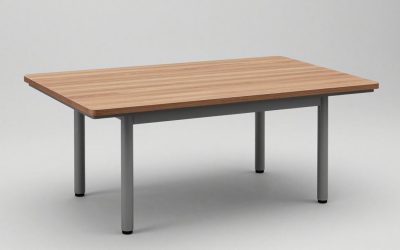
 Tribesigns 63" Solid Wood Console Table with Metal11.61 x 62.99 x 31.5 inches30.8 PoundsCheck on Amazon
 Creative Co-Op Rustic Farmhouse Metal Console Sofa Table36 x 16 x 31.75 inches24.6 poundsCheck on Amazon

Why metal legs and a wood top is its own category
Metal-leg, wood-top console tables sit in a specific spot between the all-wood traditional console and the fully industrial steel-and-glass piece. You get the warmth of a wood surface with the slimmer visual footprint of metal underneath. Legs run 0.75 to 1.5 inches thick instead of the 2 to 3 inches you’d see on turned wood legs, so the whole table reads lighter in a room even when the top is a thick slab. That’s the main reason people choose this style: it fills an entryway or sits behind a sofa without looking like a piece of furniture from a different decade.
The trade-off is that you’re now dealing with two materials that expand, contract, and age differently. A table that looks great in a showroom can develop wobble, squeaks, or finish mismatch problems that a solid wood piece with wood joinery doesn’t have. Knowing where those failure points are before you buy saves you a return shipment.
What the “wood top” actually is
Marketing copy says “wood top” on a wide range of actual materials, and the difference matters more than the leg finish does.
- Solid wood (oak, acacia, mango, pine) — real planks, usually edge-glued. Takes dents and scratches but they’re repairable with sanding and oil. Will show seasonal gaps at joints in dry winter air if your home runs below 30% humidity.
- Veneer over MDF or plywood — a thin wood layer glued to an engineered core. Looks identical to solid wood in photos. More dimensionally stable, cheaper, but a chip or deep scratch exposes the substrate underneath and can’t be sanded out the way solid wood can.
- Laminate or printed wood-grain — not real wood at all. Fine for a guest room or a table that’s mostly going to hold keys and mail, but it scratches white and doesn’t take refinishing of any kind.
If the listing doesn’t specify which of these you’re getting, assume veneer. Solid wood tops are almost always called out explicitly because sellers know it’s a selling point.
Where metal legs actually fail
Metal legs fail in three predictable ways, and all three are visible if you know to look for them before buying.
First, the leg-to-top connection. Most of these tables bolt the metal frame to the underside of the wood top through pre-drilled holes or a welded mounting plate. Cheap versions use two or three thin screws into MDF, which strips out within a year of normal use — pulling the table by one end to reposition it is enough. Better designs use a steel mounting plate with four to six bolts, or a welded apron that distributes the load. Look for mounting plate photos in the listing; if you can’t see how the top attaches, that’s often because it’s the weak point.
Second, floor contact. Metal legs transmit vibration and don’t have the natural give wood legs have, so any unevenness in your floor shows up as a wobble immediately. Check whether the feet have adjustable glides — plastic or rubber caps that screw in or out a few millimeters. Tables without them are nearly impossible to level on anything but a dead-flat floor.
Third, finish wear at contact points. Powder-coated black or bronze legs hold up well. Thin electroplated finishes (common on very cheap gold or brass-look legs) wear through to bare metal at the floor contact point and anywhere a vacuum cleaner bumps them, usually within a year.
Comparing the three common tiers
| Tier | Typical price | Top material | Leg attachment | Expect to last |
|---|---|---|---|---|
| Budget | $70–130 | Laminate or thin veneer on MDF | 2-3 screws into MDF | 1-3 years with light use |
| Mid-range | $150–300 | Veneer on plywood or solid wood edges with MDF center | Bolted mounting plate | 5-10 years |
| Solid build | $300–600+ | Solid wood, often with breadboard ends or metal apron banding | Welded steel frame bolted through solid wood | 10+ years, refinishable |
For a table that mainly holds a lamp, a tray, and mail, the budget tier is genuinely fine — you’re not stressing the joints and the finish wear won’t bother most people in an entryway with lower foot traffic than a kitchen table sees. The mid-range tier is the sweet spot for most living rooms: it holds up to kids leaning on it and the occasional moved-furniture day without the attachment points failing. The solid-build tier only earns its price if you want something that outlasts a couple of moves and could be refinished in 10 years rather than replaced.
Sizing before style
Console tables run into trouble more often from wrong dimensions than wrong materials. For an entryway, 30-32 inches high clears most people’s hip level comfortably and matches typical mirror-above placement. For behind a sofa, the table should sit within 2-4 inches of the sofa back height — taller than that and it looks like it’s floating above the couch. Depth matters more than people expect: anything over 16 inches deep in a narrow hallway becomes an obstacle people clip with their hip. Measure your walking path, not just the wall length.
If you’re shopping by category rather than a specific model, browsing metal leg console tables with wood tops and filtering by width and height first narrows things down faster than filtering by style. For entryways specifically, searching entryway console tables with metal legs tends to surface the narrower-depth options built for hallway use. If you want the heavier, longer-lasting build from the comparison table above, searching for solid wood top console tables with metal base filters out most of the laminate-top listings automatically, since sellers of real solid wood tops lead with that in the title.
Living with it
Once it’s in your home, the maintenance split follows the material split: wipe the metal legs with a dry or barely damp cloth (water spots show on matte black powder coat more than people expect), and treat the wood top according to what it actually is — oil or wax for solid wood every six months, and just a damp cloth with no soaking for veneer, since standing water finds the seams at edges and corners first. Re-tighten the leg bolts once a year; it takes two minutes with an Allen key and is the single most effective thing you can do to stop the wobble that otherwise gets blamed on “a bad table.”