Our Top Picks
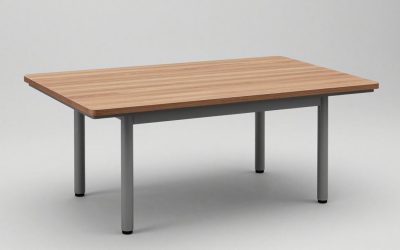
 BROTTAR 78.7" Flip Top Behind Couch Table with78.7" L × 7.7" W × 29.9" H8.07 x 48 x 9.84 inches48.9 poundsCheck on Amazon
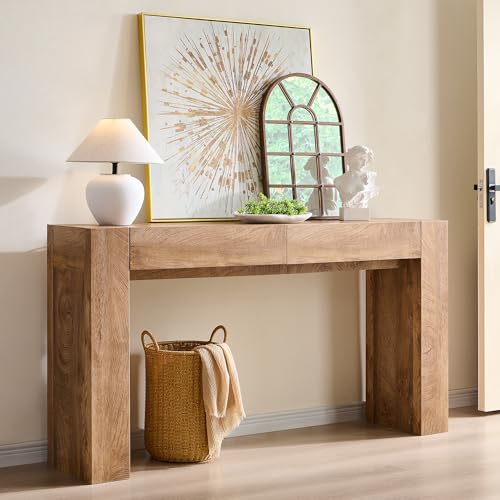

Console tables with storage earn their keep in exactly one spot: the entryway, where keys, mail, shoes, and whatever you’re carrying when you walk in the door all need somewhere to land that isn’t the floor. The storage part matters more than the style part, and most buyers get that backwards. You end up with a gorgeous narrow table and nowhere to put anything, so the clutter just migrates to the top surface anyway.
The real decision is what kind of storage you need, not what the table looks like. Drawers, open shelves, baskets, and cabinets each solve a different problem, and picking the wrong one means you’ll be fighting the furniture every day.
Drawers vs. shelves vs. baskets vs. cabinets
Drawers are good for small, flat things you want hidden: mail, chargers, dog leashes, sunglasses. They’re bad for anything bulky because console table drawers are usually shallow, often 3 to 4 inches deep. If you’re picturing storing shoes in a drawer, measure first. Most won’t fit a men’s size 10 sneaker lying flat.
Open shelves are the most forgiving option. Baskets, stacked books, a tray for shoes, whatever. The tradeoff is visibility. Everything on an open shelf is on display, so if you’re not a tidy person, open shelving just shows off the mess instead of hiding it. This is where fabric or seagrass baskets earn their place, they turn an open shelf into semi-hidden storage without the cost of drawers.
Baskets built into the design (console tables with cutouts sized for specific basket dimensions) are convenient until a basket wears out or you want to replace it, and the replacement doesn’t fit the cutout. Check the baskets are a standard size before you count on being able to swap them later.
Cabinets with doors are the best at hiding clutter completely but they’re also the heaviest, most expensive option, and the doors need clearance to swing open, which matters if the table sits in a narrow hallway. Measure the swing radius, not just the table’s footprint.
Sizing for your actual entryway
Console tables run shallow by design, typically 12 to 16 inches deep, because they’re meant to sit against a wall without blocking a walkway. Depth beyond 16 inches starts eating into usable floor space in most entryways. Length varies a lot more, anywhere from 30 inches for a tight hallway up to 60+ inches for a table meant to anchor a living room behind a sofa.
Height matters more than people expect. Standard console height is 28 to 32 inches, close to counter height, which is why these tables double as a spot to set down bags without bending over. If you’re buying one to sit behind a sofa, it should be roughly level with or slightly below the sofa back, usually in the 30 to 36 inch range for that use case.
| Storage type | Best for | Weak point | Typical price range |
|---|---|---|---|
| Open shelf | Baskets, shoes, large bulky items | Everything visible | $80–$200 |
| Drawers | Mail, keys, small flat items | Shallow depth, limited capacity | $120–$350 |
| Cabinet with doors | Fully hiding clutter | Heavy, needs door clearance | $200–$500+ |
| Shelf + basket combo | Balance of access and concealment | Basket replacement may not fit cutout | $100–$250 |
Material and build quality
Solid wood console tables hold up longest and take refinishing well, but they’re heavier and pricier. Engineered wood (particleboard or MDF with veneer) is fine for a low-traffic entryway and costs less, the failure mode to watch for is swelling or delamination if it sits near a drafty door or gets wet from dripping umbrellas and boots. If your entry gets wet, wipe it down regularly or choose a table with a sealed or laminate top rather than raw veneer edges that can lift.
Metal-framed console tables with wood or glass shelves are common in the $100-$200 range and are generally sturdy, but check weight capacity on the shelves before loading them with books or baskets full of shoes. Cheap versions sometimes have a shelf rated for 20-30 lbs, which sounds like a lot until you stack boots and bags on it.
For anyone shopping by storage type rather than style, browsing console tables with drawers narrows things down fast, as does looking at console tables with baskets if open shelving plus concealment is the goal.
Stability and tip risk
Narrow console tables (anything under 14 inches deep) can tip if a child or pet pulls on a drawer or climbs a shelf. This isn’t a theoretical risk, it’s the single most common complaint in reviews for tall, narrow consoles. If you have kids or large dogs in the house, anchor the table to the wall with an anti-tip strap, the same kind used for dressers. It’s a $10 part and five minutes of work that prevents a real injury.
Also check the base. Tables with a solid back panel or stretcher bar between the legs are meaningfully more stable than four skinny legs with nothing connecting them. If you’re torn between two similar tables, the one with cross bracing is the safer buy even if it’s slightly less sleek.
When the budget option is the right call
If you’re putting this in a low-traffic space, a studio apartment entry, a guest room, a corner that holds a lamp and not much else, a $100-$150 particleboard console with a shelf is genuinely fine. You don’t need solid wood joinery for a table that holds keys and a candle. Spend the extra money when the table is doing real work daily (heavy foot traffic entryway, holds shoes and bags for a family of four) or when it’s a focal point in a room people actually look at, like behind a sofa in an open living room. For something that size and visibility, it’s worth browsing sofa tables with storage built specifically for that longer, lower profile.