Key takeaways
- Minimum for petite frames (under 5’4″): 22 inches wide x 20 inches deep flat surface
- Standard for most adults (5’4″ to 5’11”): 24 to 26 inches wide x 21 to 23 inches deep
- Comfortable for taller or broader frames (6’0″+): 27 to 30 inches wide x 23 to 25 inches deep
A cross legged office chair needs a seat at least 24 inches wide and 21 inches deep with a flat, firm cushion and a stable four-leg or wide pedestal base to let you sit cross-legged comfortably for hours without pressure on your ankles or knees.
If your current office chair is 19 to 20 inches wide with a waterfall edge and soft foam, your legs will hang off the edge or sink and cut off circulation, which is why most task chairs fail for this sitting style. For all-day cross-legged sitting, prioritize usable flat seat surface over overall chair width, foam density over thickness, and base stability over rolling mobility.
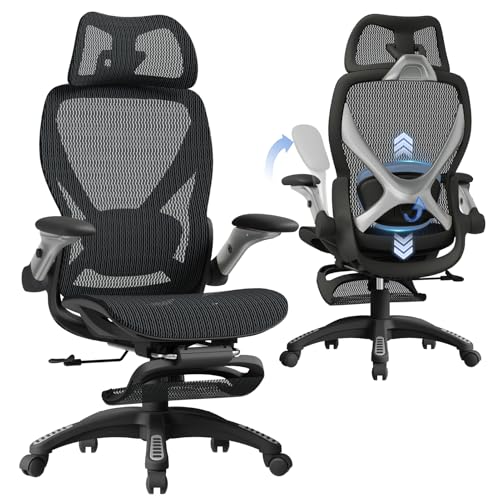
ELABEST X100 Ergonomic Mesh Office Chair with Footrest, Big and Tall Hone Desk Chair with 5D Flip-Up Arms, Adjustable 3D Lumbar Support,Gaming & Executive Computer Chairs
Included for 'Cross Legged Office Chair: Wide Seat Options for Comfortable Sitting' because the listing specifies Big and Tall Hone Desk Chair with 5D Flip-Up Arms and Adjustable 3D Lumbar Support, details this guide uses to compare options.
View on Amazon
GABRYLLY Ergonomic Office Chair, High Back Home Desk Chair with Headrest, Flip-Up Arms, 90-120° Tilt Lock and Wide Cushion, Big and Tall Mesh Chairs for Man Woman, Black Task Chair
Included for 'Cross Legged Office Chair: Wide Seat Options for Comfortable Sitting' because the listing specifies High Back Home Desk Chair with Headrest and Flip-Up Arms, details this guide uses to compare options.
View on AmazonWhat Makes a Chair Actually Work for Sitting Cross-Legged
Four factors determine whether you can sit cross-legged all day without pain. Most product listings only show overall width, which is misleading because armrests and curved edges reduce usable space.
1. Usable Seat Width and Depth
Measure the flat, load-bearing part of the seat, not the distance between armrests. You need enough room to tuck both feet without them pressing against hard edges.
- Minimum for petite frames (under 5’4″): 22 inches wide x 20 inches deep flat surface
- Standard for most adults (5’4″ to 5’11”): 24 to 26 inches wide x 21 to 23 inches deep
- Comfortable for taller or broader frames (6’0″+): 27 to 30 inches wide x 23 to 25 inches deep
A seat depth under 20 inches forces your shins over the front edge, creating pressure behind the knees. A seat wider than 30 inches can be excellent for cross-legged sitting but makes reaching a standard 29 to 30-inch high desk difficult unless the chair height is adjustable.
2. Cushion Firmness and Shape
Soft, plush foam feels comfortable for 20 minutes and then collapses, letting your ankle bones press into the seat pan. Look for medium-firm to firm foam with high density.
- Ideal foam density: 1.8 to 2.5 lbs per cubic foot for polyurethane foam. High-resilience (HR) foam at 2.5+ density will not bottom out and lasts longer.
- Thickness: 3 to 5 inches of dense foam is better than 6+ inches of soft foam. Overly thick soft cushions create instability.
- Shape: Flat or very slightly dished seat. Avoid pronounced bucket seats, waterfall front edges, or raised bolsters that dig into your calves. A square or slightly rectangular seat holds a cross-legged posture better than a round seat.
3. Base Stability
Traditional five-star caster bases are designed for rolling, not for shifting weight side to side. When you sit cross-legged, you move your center of gravity toward the edges.
- Four-leg base: Most stable for cross-legged sitting. Look for legs splayed at least 26 inches wide at the floor.
- Wide pedestal or pyramid base: Good stability if the base footprint is 24 inches or wider and uses locking casters or glides. A narrow 20-inch pedestal will feel tippy.
- Rocking or swivel-only bases without locks: Avoid for all-day use; they increase core fatigue when you are trying to hold a tucked position.
4. Armrests and Back Support
Fixed, high armrests block your knees. For cross-legged sitting, choose armless, low-profile arms (under 4 inches above seat), flip-up arms, or width-adjustable arms set to at least 26 inches apart. A low, upright back at 90 to 100 degrees helps you sit stacked over your hips. A deep recline encourages slouching, which strains the lower back when your legs are folded.
Size and Clearance: Will It Fit Your Space and Desk
Wide-seat chairs take up more room than they appear to online. Check these measurements before you buy.
| Measurement | Standard Task Chair | Wide Cross-Legged Chair | What to Check at Home |
|---|---|---|---|
| Overall Footprint (W x D) | 25″ x 25″ | 28″ x 28″ to 33″ x 33″ | Leave 36″ clearance behind desk to push back and stand |
| Seat Height Range | 17″ – 21″ | 17″ – 20″ (armless) or 18″ – 22″ (adjustable) | With 29.5″ desk, your elbows should be at 90 degrees, thighs parallel to floor |
| Doorway / Hallway Fit | Fits through 28″ door assembled | Needs 30″ minimum door, 32″ preferred | Measure narrowest doorway from box to office |
| Weight Limit | 250 – 275 lbs | 300 – 400 lbs for wide steel frames; 250 lbs for wood frames | Check frame material, not just foam rating |
| Box Weight / Assembly | 35 – 45 lbs | 50 – 75 lbs | Requires two people to carry up stairs |
In a typical 10×12 ft bedroom office, a 30-inch wide chair plus a 48-inch desk leaves about 58 inches of walking space on one side – enough for a bookshelf but tight for two chairs. If you are in a small apartment under 700 sq ft, choose a 24 to 26-inch wide armless model on glides rather than a 30-inch oversized chair to preserve floor space.
Material and Construction Trade-Offs
The frame and upholstery determine how long the chair keeps its shape and how hot it feels during long sits.
| Material / Build | Pros for Cross-Legged Sitting | Cons | Best For |
|---|---|---|---|
| Solid Wood Frame (hardwood) | Very stable, no flex, holds firm cushion well, 10+ year lifespan | Heavy (60+ lbs), not height-adjustable, usually $400-$800 | Home office where chair stays put; renters who want durability over mobility |
| Engineered Wood / Plywood | Lighter than solid wood, lower cost, usually $250-$500 | Can loosen at joints in 3-5 years, less weight capacity | Budget wide-seat options; occasional cross-legged sitting |
| Metal Frame (steel) | Highest weight capacity, adjustable height, widest span options | Can feel cold/hard, welds may creak if thin gauge | All-day sitters who shift often; users over 250 lbs |
| Woven Fabric (polyester, linen blend) | Breathable, warm in winter, good grip so you don’t slide | Absorbs stains, pet hair clings | All-day comfort in non-AC rooms |
| Velvet / Chenille | Soft on bare legs, non-slip surface | Shows wear on seat edge, hot in summer | Low-movement sitters who sit barefoot |
| Faux Leather / Vegan Leather | Wipes clean, pet-friendly, cool initial feel | Sweaty after 2+ hours, can crack in dry heat, slippery for folded legs | Homes with kids/pets where cleaning matters more than breathability |
For foam, ask about density, not just “memory foam.” Low-density memory foam (under 1.5 lbs/cu ft) bottoms out quickly. Look for a core of high-density support foam topped with 1 to 1.5 inches of softer foam for pressure relief.
Decision Matrix: Which Wide Seat Type Fits Your Situation
| Your Situation | Best Chair Type | Key Spec to Prioritize | What to Avoid |
|---|---|---|---|
| Small apartment / 10×10 ft office | Armless cross-legged task chair, 24″-26″ wide, on casters | Overall footprint under 28″ and seat height adjustable to 19″ | Oversized 30″+ accent chairs, fixed wood legs |
| Sitting cross-legged 6-8 hours for work | Wide metal-frame office chair with flat HR foam, flip-up arms | Foam density 2.0+ lbs/cu ft, flat seat, locking casters | Soft down-blend or low-density foam, bucket seat |
| Back pain / need upright posture | Four-leg wide chair with firm cushion and low lumbar support | Firm seat (2.5 density), 90-100 degree back angle, seat depth 21″-22″ | Deep, soft recliners and hammock-style sling seats |
| Kids and pets at home | Metal base, performance fabric or faux leather, removable cushion cover | Washable cover, 300+ lbs frame, dark or patterned fabric | Light velvet, non-removable linen, exposed wood that scratches |
| Renter / need to move often | Lightweight engineered wood or steel with knock-down assembly | Box under 50 lbs, assembles with Allen key, fits 28″ door | Solid hardwood one-piece chairs over 70 lbs |
| Barefoot / socks, sensory preference | Wide fabric chair with textured weave, no faux leather | Breathable fabric, flat seams, no hard piping on seat edge | Smooth faux leather, vinyl, vinyl piping that presses into ankles |
Assembly, Moving and What Wears Out First
Wide-seat chairs rarely arrive ready to use. Plan for this reality.
- Box and doorway: Most wide chairs ship in a 30″ x 30″ x 24″ box. Measure your elevator, stairwell turn, and office doorway before ordering. A chair that is 30 inches wide assembled may not fit through a 29-inch apartment doorway without removing legs or arms.
- Assembly time: Four-leg wood chairs usually need 20 to 40 minutes with an included Allen wrench; you attach legs and back. Adjustable-height office versions may need 45 to 60 minutes to install the gas lift and base. Two people make alignment easier and prevent cross-threading bolts.
- What wears first: The front seat edge foam compresses first from tucking ankles, followed by fabric pilling where calves rub. On caster models, the gas cylinder and caster stems loosen after 2 to 3 years of side-to-side shifting. Choose a chair with replaceable casters and a standard gas lift size if you want to extend its life.
- Floor protection: A 60 lb chair plus body weight on four small glides can dent luxury vinyl or hardwood. Use a low-pile chair mat or add 2-inch felt pads under wood legs, especially on rental floors.
- Stability check: After assembly, sit cross-legged and lean gently to each side. If the chair rocks or a leg lifts, tighten bolts in an X pattern and check that floor glides are even. Uneven floors cause wobble that gets worse when your weight is off-center.
How to Set Up Your Desk for Cross-Legged Sitting
A wide seat changes your desk ergonomics. Standard typing height assumes thighs are down, not folded.
- Desk height: If your seat is 18 to 19 inches high, a 29 to 30-inch desk works for most people 5’5″ to 5’10”. If your chair seat is lower (16 to 17 inches), you will shrug your shoulders to reach the keyboard. Add a 1 to 2-inch keyboard tray or choose a chair with a 19 to 20-inch seat height.
- Monitor height: When sitting cross-legged you sit 1 to 2 inches taller than with feet on the floor. Raise your monitor so the top third of the screen is at eye level to avoid neck flexion.
- Movement: Even with a perfect chair, change position every 45 to 60 minutes. Stand, extend legs, or sit with feet flat for a few minutes to restore circulation behind the knees.
Frequently Asked Questions
Can I use a regular office chair for sitting cross-legged if I add a wide seat cushion?
A cushion can add 2 to 3 inches of flat width but it does not fix a narrow frame or soft foam that sinks. It also raises your seat height by 2 to 4 inches, which may make your desk too low. This works as a short-term test, but for all-day use a chair designed with a 24-inch+ flat pan is more stable and breathable.
What is the difference between a cross legged office chair and a meditation chair?
Meditation chairs are typically very low (6 to 12 inches high) or floor chairs without a desk-height base. A cross legged office chair has a standard office seat height (17 to 20 inches) so you can work at a desk, plus a wider flat seat and often an adjustable base. If you work at a desk, choose the office-height version.
Is it bad to sit cross-legged all day in an office chair?
Sitting in any one position all day can create stiffness. Cross-legged sitting is fine for many people if the seat is firm, wide, and flat, and you take brief movement breaks, alternate which leg is on top, and keep your back supported. If you have hip impingement, knee injury, or circulation issues, alternate with feet-flat sitting and consult a clinician about what is appropriate for you.