Our Top Picks
 Everlasting Comfort Doctor Recommended Memory Foam Seat CushionLarge17.5 x 14 x 2.75 inches1.5 poundsCheck on Amazon
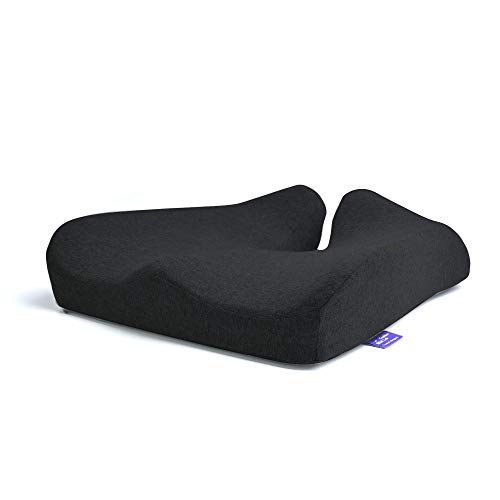 Cushion Lab Patented Pressure Relief Seat Cushion for18 W x 15.5 L x 4 H inches2 PoundsCheck on Amazon
The best seat cushion for office chair for back pain relief is a medium-density memory foam cushion (1.8 to 2.2 lb/ft3) with a contoured U-shape and coccyx cutout, because it distributes weight evenly and keeps your pelvis neutral without bottoming out during an 8-hour workday. If you run hot or sit for short, intense sessions, a gel-infused or pure gel honeycomb cushion cools better but offers less long-term postural correction.
Which Type Solves Your Specific Problem?
Back pain from sitting rarely has one cause. The right cushion depends on where you hurt and how your current chair fails you.
Everlasting Comfort Doctor Recommended Memory Foam Seat Cushion for Office Chairs & Car - Ergonomic Office Desk Accessories - Cushions for Tailbone Pain Relief, Sciatica (Black, Large)
Chosen because it specifies Ergonomic Office Desk Accessories and Cushions for Tailbone Pain Relief.
View on Amazon
ComfiLife Doctor Recommended Seat Cushion - Premium Gel & Memory Foam Office Chair, Car Seat, Lifting Cushion - Chair Cushions for Back & Sciatica Relief - Seat Cushions for Office & Desk (Black)
Chosen because it specifies Premium Gel & Memory Foam Office Chair and Car Seat.
View on Amazon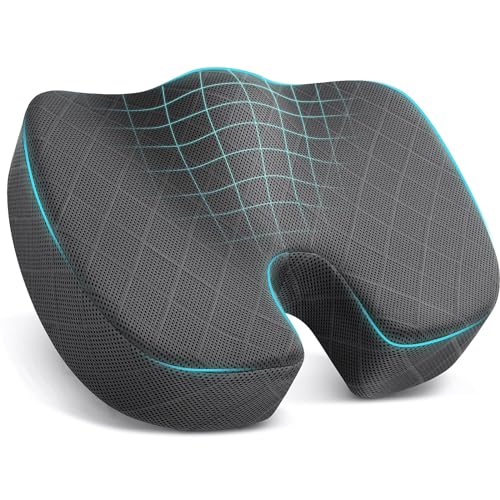
TushGuard Seat Cushion, Memory Foam Office Chair Cushion - Grey, Large | for Car Seat, Airplane, Desk Chair - Sciatica & Hip & Coccyx Pain Relief Cushion for Long Sitting Office Workers, Car Drivers
Chosen because it specifies Memory Foam Office Chair Cushion and Grey.
View on AmazonCushion Lab Patented Pressure Relief Seat Cushion for Long Sitting Hours on Office & Home Chair - Extra-Dense Memory Foam for Soft Support. Car Pad for Hip, Tailbone, Coccyx, Sciatica - Black
Chosen because it specifies Extra-Dense Memory Foam for Soft Support. Car Pad for Hip and Tailbone.
View on Amazon- Tailbone and coccyx pain: Choose a U-shaped memory foam cushion with a rear cutout. The gap removes direct pressure from the coccyx and tilts the pelvis slightly forward to restore the lumbar curve.
- Lower back ache and slouching: Choose a wedge-shaped cushion that is thicker at the back (about 3 inches) and thinner at the front (about 1.5 inches). The slope opens the hip angle to 100-110 degrees, which makes it harder to round your lower back.
- Hip, sciatica, or numb legs: Choose a flat or lightly contoured seat cushion with medium firmness. Excessive contouring can press on the piriformis and restrict circulation if you have wider hips.
- Overheating and sweating: Choose a gel honeycomb cushion or gel-infused memory foam with a ventilated cover. Pure memory foam traps the most heat.
- Chair is too hard with no padding: Any 2 to 2.5-inch thick cushion will help, but avoid soft low-density foam that compresses to under 0.5 inches under weight.
Gel vs. Memory Foam: Real Trade-Offs
Both materials claim pressure relief and ergonomic support, but they work differently and suit different sitters.
| Feature | High-Density Memory Foam | Gel-Infused Memory Foam | Purple-Style Gel Honeycomb (TPE Gel) |
|---|---|---|---|
| How it supports | Molds to seat and body shape, slow rebound | Molds with slightly faster rebound, cooler to touch | Flexes under pressure columns, no molding |
| Foam density / firmness | 1.8 – 2.5 lb/ft3, 25-35 ILD (medium-firm) | 1.8 – 2.2 lb/ft3, 22-30 ILD (medium) | No foam density, measured by gel wall thickness |
| Heat retention | High – retains body heat | Medium – gel beads reduce heat by 15-20% | Low – open honeycomb allows airflow |
| Durability (daily 8-hour use) | 2-3 years before soft spots develop | 2-3 years, similar to standard foam | 3-5 years, does not compress permanently |
| Weight | 1.8 – 2.5 lb | 2.0 – 2.8 lb | 2.5 – 3.8 lb |
| Washability | Cover only, foam cannot be washed | Cover only | Entire cushion can be rinsed |
| Best for | Posture correction, chronic back pain | Balanced support and cooling on a budget | Hot sleepers/sitters, short sessions, easy cleaning |
| Typical price range | Usually $35 – $75 | Usually $45 – $85 | Usually $60 – $120 |
If you need all-day spinal alignment for a desk job, high-density memory foam wins. If you sit for 2-4 hours at a time in a warm office or use the cushion in a car and office interchangeably, gel honeycomb is more practical despite offering less lumbar support.
Foam Density and Thickness: What the Numbers Mean
Product listings rarely explain density, but it determines whether a seat cushion for office chair will actually relieve pressure or just feel soft for a month.
| Density | Firmness (ILD) | What Happens Under 150-200 lb Load | Lifespan |
|---|---|---|---|
| Low: under 1.5 lb/ft3 | 12-18 ILD | Compresses from 2 inches to under 0.75 inches, bottoms out | 3-6 months before sagging |
| Medium: 1.5 – 1.8 lb/ft3 | 18-25 ILD | Compresses to about 1 – 1.25 inches, moderate support | 1-2 years |
| High: 1.8 – 2.5 lb/ft3 | 25-35 ILD | Compresses to 1.4 – 1.7 inches, holds pelvis level | 2-4 years |
| Extra-firm: over 2.5 lb/ft3 | 35+ ILD | Minimal compression, can create pressure points for lighter users under 130 lb | 3-5 years but may feel hard |
For most adults between 130 and 230 lb, aim for the high-density range. Check the specs for actual lb/ft3, not marketing terms like “premium foam” or “high-resilience” without numbers. If the listing only lists weight, a true high-density cushion sized 18 x 14 x 2 inches should weigh at least 1.9 lb for the foam alone.
Sizing and Fit to Your Existing Chair
A poorly sized cushion makes posture worse. Measure before you buy.
- Seat pan width: Standard task chairs are 17 to 20 inches wide. Your cushion should be 1 to 2 inches narrower than the seat pan so it does not push against armrests or hang over the edge. Common cushion sizes are 16 x 16 inches (compact), 18 x 14 inches (standard U-shape), and 19 x 14 inches (large).
- Depth: Leave 1 to 1.5 inches of chair visible in front of the cushion. If the cushion reaches the seat edge, it will press the back of your knees and cut off circulation.
- Thickness and desk clearance: Adding a 2.5-inch cushion raises your seated height by about 1.5 to 2 inches after compression. You need at least 28 to 30 inches of clearance from seat top to desk underside to keep thighs parallel and elbows at 90 degrees. If you add a thick cushion to a chair that is already high, you may need a footrest to keep feet flat.
- Weight limit: Most foam cushions are rated for up to 240-280 lb. Reinforced high-density or gel models usually support up to 300-350 lb. Above that, look for a flat, high-density base layer at least 0.5 inches thick to prevent bottoming out.
- Chair type fit: On mesh chairs, use a cushion with a non-slip bottom and flat base; heavy contouring can sink into the mesh frame. On padded executive chairs, a thinner 1.5 to 2-inch cushion prevents you from sitting too high.
Decision Matrix: Pick by Your Situation
| Situation | Recommended Cushion Type | Why |
|---|---|---|
| Small apartment, one chair for work and dining, 8+ hours sitting | Medium-firm memory foam, U-shape, removable washable cover | Corrects posture on basic chairs without changing furniture height much |
| Renter with cheap task chair you cannot replace | High-density wedge memory foam + separate small lumbar roll | Wedge compensates for lack of tilt and lumbar support without modifying the chair |
| Back pain plus sweating in a warm home office | Gel-infused memory foam with perforated foam and mesh cover | Balances pressure relief with airflow; pure foam will be too hot |
| Kids and pets, frequent spills | Gel honeycomb or foam with waterproof inner liner | Can be fully washed or wiped; foam will absorb odors otherwise |
| Tall user over 6’1″ or heavier build over 230 lb | Large 19-inch wide, 2.5-inch thick high-density foam | Prevents bottoming out and supports wider sit bones |
| Herniated disc or diagnosed sciatica | Flat, high-density foam with moderate softness (22-28 ILD) | Deep coccyx grooves can aggravate nerve pain if too aggressive |
Posture, Pressure Relief, and How to Sit on It Correctly
A cushion only works if your setup allows a neutral spine. After placing it:
- Sit all the way back so your buttocks are against the backrest and the cutout, if present, is under your tailbone, not under your thighs.
- Adjust chair height so your hips are slightly higher than your knees and feet are flat. Your thighs should slope down very slightly.
- Keep the lumbar support of the chair (or add a small lumbar cushion) in contact with your lower back. A seat cushion lifts you up; without lumbar contact you will still slouch.
- Stand and walk for 2-3 minutes every 45-60 minutes. Even the best seat cushion for office chair use cannot replace movement for disc health.
Non-slip bases help, but if your cushion slides, add a thin rug gripper pad underneath rather than using a strap that alters the chair’s recline mechanism.
Durability and Care Realities
Foam cushions are not washable. Remove the outer cover weekly and machine wash cold; air dry to avoid shrinkage. Never machine wash the foam itself – it tears and traps water. Spot clean foam with a damp cloth and mild detergent, then air dry completely for 24 hours before use.
What wears first is the cover zipper and the foam edge where your thighs exit the chair. A double-stitched mesh cover lasts longer than velour or velvet in warm environments. To extend life, rotate the cushion 180 degrees monthly if it is flat, and keep it out of direct sunlight which breaks down foam faster. Gel cushions last longer structurally but the TPE can become sticky if left in a hot car above 120 degrees F.
Avoid cushions stored compressed in a vacuum box for more than a few weeks at a retailer; foam that does not fully expand to its stated thickness within 24-48 hours after unboxing likely has low density and will not recover well.
When a Cushion Is Not Enough
If your office chair has a broken mechanism, a sagging seat pan deeper than 1 inch when unoccupied, or armrests that force your shoulders up, a cushion will only mask the problem. In a 10×12 ft home office, a chair with a 26-inch base needs about 36 inches of clearance behind it to recline without hitting a wall, and a cushion will not fix a chair that is too large for the room and forces you to perch on the edge. In that case, replacing the chair with an ergonomic task chair that offers seat depth adjustment and proper lumbar height is more cost-effective, usually $300-$600 for an entry-level ergonomic model, than stacking accessories.
Frequently Asked Questions
How thick should a seat cushion be for office work? For daily desk work, 2 to 2.75 inches is ideal. Thinner than 1.5 inches bottoms out, thicker than 3 inches raises you too high and can tilt you forward excessively.
Do seat cushions help with lower back pain? They help if the pain comes from pressure on the tailbone, poor pelvic tilt, or a hard seat. They do not correct pain from a chair that is the wrong height or a desk that forces you to hunch. Pair the cushion with proper chair height and a lumbar support.
How long does memory foam for a chair cushion last? High-density memory foam lasts about 2 to 3 years of full-time use before it loses 15-20% of its loft. Flip or replace when you can feel the hard chair through the center.