Our Top Picks
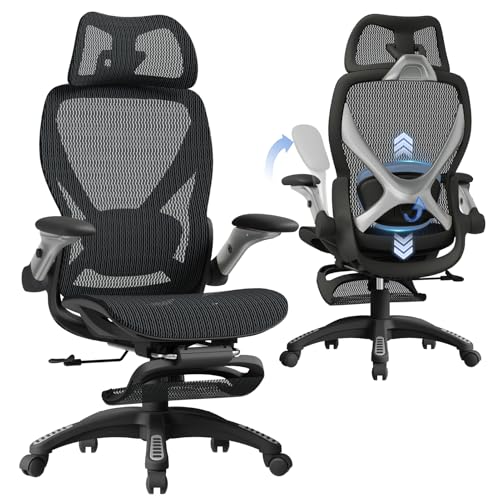 ELABEST X100 Ergonomic Mesh Office Chair with Footrest18.3 in x 20.47 in x 41 in26 x 24 x 41 Inches43 poundsCheck on Amazon
Pros & cons
- 3D lumbar system tracks natural spine curvature
- 18-inch extendable footrest adds a relaxation mode
- Dual-Stripe AirMesh adds extra airflow over standard mesh
- At 43 pounds, it is heavier than typical desk chairs
- Multiple adjustment systems add a learning curve to set up
Pros & cons
- Four support points cover head, back, hips, and hands
- Flip-up armrests let the chair tuck under the desk
- Backed by a 3-year coverage period
- Comfortable fit spans roughly 5 foot 2 to 6 foot 1
- At 41 pounds, it is heavier than basic task chairs
The best desk chairs for home balance seat height with your desk, footprint with your room size, and support with how many hours you sit each day — a compact armless task chair suits a small apartment desk, while a full ergonomic mesh chair is better for 6+ hours of daily use in a dedicated home office.
How to Match Chair Size to Your Room and Desk
Before looking at styles, measure three things: desk height, available floor space, and doorway clearance. Most home desks are 28 to 30 inches high, and your chair needs to let you sit with feet flat, thighs parallel to the floor, and elbows at 90 degrees without raising your shoulders.

Herman Miller Classic Aeron Chair - Size B, Posture Fit
Chosen because it specifies Size B and Posture Fit.
View on AmazonELABEST X100 Ergonomic Mesh Office Chair with Footrest, Big and Tall Hone Desk Chair with 5D Flip-Up Arms, Adjustable 3D Lumbar Support,Gaming & Executive Computer Chairs
Chosen because it specifies Big and Tall Hone Desk Chair with 5D Flip-Up Arms and Adjustable 3D Lumbar Support.
View on Amazon
GABRYLLY Ergonomic Office Chair, High Back Home Desk Chair with Headrest, Flip-Up Arms, 90-120° Tilt Lock and Wide Cushion, Big and Tall Mesh Chairs for Man Woman, Black Task Chair
Chosen because it specifies High Back Home Desk Chair with Headrest and Flip-Up Arms.
View on AmazonSeat Height, Desk Height and Clearance Numbers
| Measurement | Standard Range | What to Check Before Buying |
|---|---|---|
| Desk / table height | 28 – 30 inches (71 – 76 cm) | Fixed-height desks at 29 inches need a seat height of 17 – 19 inches for most adults |
| Ideal seat height | 16 – 21 inches adjustable (41 – 53 cm) | Look for at least 4 inches of pneumatic adjustment; 16 – 17 inch low end is needed if you are under 5’4″ |
| Seat depth | 16 – 19 inches | Leave 2 – 3 inches between seat edge and back of knees; deeper seats suit taller users |
| Clearance behind chair (to roll/recline) | 24 – 30 inches from wall or furniture | Executive and reclining ergonomic chairs need 30 inches; armless task chairs can work with 24 inches |
| Clearance under desk | 25 – 27 inches height, 24 inches width minimum | Check armrest width — fixed arms wider than 26 inches will not tuck under a 24-inch pedestal opening |
| Chair footprint | 24 x 24 inches to 28 x 28 inches | Compact chairs fit a 10×12 ft room with a 48-inch desk; large executive chairs need a 60-inch+ desk and 10×10 ft minimum to avoid crowding |
Room-size fit is where many home buyers misjudge. Use this as a guide:
- Small room or closet office (under 70 sq ft, e.g. 7×9 ft): Choose an armless or narrow-arm task chair with a 24-25 inch base. It can turn 360 degrees without hitting walls and slides fully under a 42 to 48 inch desk.
- Standard bedroom office (10×12 ft): You can fit a mid-back or full ergonomic chair (26-27 inch base) plus a 48 to 60 inch desk with at least 36 inches of walkway behind the chair. Leave 30 inches in front of drawers or closets.
- Dedicated home office (12×12 ft or larger): Any size works, including high-back executive chairs and chairs with separate headrests that need extra recline space.
- Living room / shared space: Prioritize chairs that tuck away visually — low-profile fabric task chairs, folding ergonomic chairs, or chairs with flip-up arms that reduce width by 4-6 inches.
If your desk has a keyboard tray, subtract 1.5 to 2 inches from the desk height when matching seat height. And measure your doorway: most boxed chairs ship in cartons 26 to 34 inches wide, which clears a standard 29-30 inch interior door, but fully assembled executive chairs may not pass without removing arms.
5 Types of Desk Chairs for Home and Where They Work Best
1. Ergonomic Mesh Task Chair
The workhorse for daily computer use. Features include mesh back, adjustable lumbar, seat slider, and synchronized tilt. Brands like Herman Miller Aeron, Steelcase Leap, and Branch Ergonomic Chair popularized this category. Usually $400–$1,200 for long-term ergonomic models, with budget mesh options usually $180–$350. Best for 4-8 hours per day, especially if you run warm — mesh ventilates better than foam and fabric.
2. Mid-Back Fabric Task Chair
A smaller, lighter option with a padded fabric or woven seat and low to mid-height back. Examples include IKEA MILLBERGET and similar upholstered task chairs from Office Depot and Staples house lines. Usually $120–$280. Best for part-time desks, student rooms, and tight spaces where a bulky high back would dominate. Supports 2-4 hours comfortably; lumbar is often fixed.
3. Executive and Faux-Leather High-Back Chair
Tall back, thick foam, bonded leather, faux leather or genuine leather. Often has fixed padded arms and a more formal look. Usually $200–$600. Best for conference-style home offices where appearance matters and sitting time is under 5 hours. Breathability is low, and bonded leather can peel within 2-3 years in sunny or high-heat rooms.
4. Compact and Armless Chairs
Armless task chairs, drafting stools, and small-scale chairs on casters. Usually $90–$250. Best for renters, rolling between a desk and a dining table, or desks under 48 inches wide. Arms can obstruct small desks, so going armless saves 3-5 inches per side and lets you push the chair completely under the desk.
5. Drafting Chair and Sit-Stand Stool
Counter-height chairs with seat heights of 22-30 inches and a foot ring. Best if you use a standing desk at 36-42 inches or a kitchen counter as a desk. Usually $150–$400. Requires a higher desk and a footrest if your feet cannot reach the floor when seated low.
Material and Construction Trade-Offs That Affect Durability
Listing photos do not show what fails first. Use this table to weigh frame, upholstery and cushion choices for home use:
| Component | Options | Pros | Cons / What Wears First |
|---|---|---|---|
| Frame & Base | Solid wood vs. Engineered wood vs. Steel / Aluminum | Solid wood is stable and repairable; Steel/aluminum is strongest and lightest for casters | Engineered wood (MDF/particleboard) swells with moisture and strips at screws; Plastic bases can crack at 250+ lbs load |
| Upholstery | Mesh vs. Woven fabric vs. Faux/bonded leather vs. Genuine leather | Mesh stays cool and resists sagging; Woven fabric hides wear and pet hair better; Genuine leather lasts 7-10 years | Faux/bonded leather peels and cracks with sun and heat; Light fabric stains; Mesh can be abrasive on bare skin |
| Cushion Foam | Density 1.5 lb vs. 1.8 lb+ high-density vs. Molded foam | 1.8 lb density or higher retains shape 5+ years; Molded foam holds contours | Low-density foam (under 1.5 lb) compresses and bottoms out in 12-18 months of daily use; Thin seat pans cause pressure points |
| Casters & Cylinder | Class 3 vs. Class 4 gas lift; Hard floor vs. carpet casters | Class 4 cylinder is rated for higher weight and cycle life; Rollerblade-style casters protect hardwood | Standard hard casters scratch wood floors; Class 3 lifts can sink under heavier users over time |
| Weight Capacity | 200 lb vs. 275 lb vs. 300 lb+ rated | Higher rating indicates stronger base, cylinder and foam | Continuous loading near the limit shortens cylinder and foam life — choose at least 50 lbs above user weight |
For homes with kids and pets, prioritize steel base, Class 4 cylinder, stain-resistant woven fabric (polyester blend) or mesh, and high-density foam. For a formal look on a budget, faux leather is acceptable if the room is climate-controlled and not in direct sun; otherwise choose fabric to avoid peeling.
Decision Matrix: Pick by Your Situation, Not Just Style
| Your Situation | Best Chair Type | Key Spec to Prioritize |
|---|---|---|
| Small apartment, desk under 48 inches, need to tuck chair away | Armless mesh task or mid-back with flip-up arms | Base width under 25 inches, armless or flip arms, seat height 17 – 19 inches |
| Working 6-8 hours daily, back pain or need lumbar support | Full ergonomic mesh with adjustable lumbar and seat depth | Adjustable lumbar depth/height, seat slider, tilt lock, 1.8+ lb foam or mesh tension |
| Renter who moves often | Lightweight task chair under 35 lbs | Simple assembly (under 15 minutes, 8-10 bolts), removable arms, weight 25 – 35 lbs |
| Kids and pets at home | Fabric or mesh mid-back, no bonded leather | Stain-resistant fabric, steel base, replaceable seat cover, dark color weave |
| Standing desk or counter-height desk | Drafting chair with foot ring | Seat height 22 – 30 inches, foot ring height adjustable, 300 lb cylinder |
| Shared living room where looks matter | Upholstered fabric task or low-profile executive | Neutral fabric (grey, beige, boucle), wooden accents, height that matches sofa scale |
| Budget under $200 | Basic mesh task without headrest | Focus on Class 4 cylinder and at least 3-year warranty rather than extra padding |
Assembly, Moving and Durability Realities
Product listings rarely mention what happens after delivery. Expect this:
- Box weight and assembly time: Most desk chairs ship in one box weighing 30 to 55 lbs. Budget and mid-range chairs usually require 20-40 minutes with an included Allen key — attach base, cylinder, mechanism, arms and back (6-12 bolts). Fully assembled or white-glove delivery is usually $100–$200 extra and worth it for executive chairs over 50 lbs.
- Tools and help: You will need clear floor space of at least 5×5 ft to lay out parts. A second person helps to hold the back while aligning bolts. Check that arm screws anchor into metal plates, not just wood inserts — wood-screw arms loosen fastest.
- Doorways and stairs: Cartons 32-34 inches long may not turn easily in narrow apartment hallways or stairwells. Measure elevator depth if applicable.
- What wears first: In order: 1) seat foam compression along the front edge, 2) arm pad cracking or peeling, 3) cylinder sinking, 4) caster clogging with hair and dust. Chairs with replaceable arm pads and seat cushions extend life by 2-3 years.
- Floor protection: Hard casters on hardwood or luxury vinyl can dent or scratch. Swap to soft polyurethane or rollerblade-style wheels (usually $20–$40 for a set) or use a low-pile chair mat.
- Warranty clues: A 5- to 12-year warranty on the cylinder and frame signals higher-grade components. A 90-day to 1-year warranty often indicates bonded leather and low-density foam intended for lighter use.
Comfort for Daily Use: How to Set Up the Chair You Choose
Even the right chair feels wrong if set up poorly. Once assembled, adjust in this order: seat height so feet are flat and knees at 90 degrees, seat depth so two fingers fit behind the knee, lumbar height so the curve supports your belt line, then arm height so elbows rest without shrugging. Your eye line should hit the top third of your monitor; if the chair is at the right height but the monitor is too low, add a monitor riser or arm rather than raising the chair and dangling your feet.
For long sessions, a footrest (4-6 inches high) helps if you are shorter and the lowest seat height still leaves feet hovering. Add a breathable seat cover if your chair is faux leather and you sit over 4 hours — it reduces heat buildup without replacing the chair.
FAQ
What size desk chair do I need for a standard 29-inch high desk?
Most adults need an adjustable seat height that covers 17 to 19 inches. If you are under 5’4″, look for a low minimum of 16 to 16.5 inches; if you are over 6’1″, ensure the max is at least 21 inches and the seat depth is 18-19 inches.
Can I use a desk chair on hardwood floors without a mat?
Yes, if you replace the stock hard casters with soft polyurethane or rollerblade wheels designed for hard floors. Without them, grit under casters can scratch finish over time. A mat is still recommended for heavy executive chairs over 40 lbs.
How long should a home desk chair last?
A mesh ergonomic chair with a steel base and high-density foam typically lasts 7-10 years with daily use. Budget fabric task chairs usually last 3-5 years before foam sag or cylinder sink, and bonded-leather chairs often show peeling in 2-3 years in warm or sunny rooms.