Key takeaways
- Guessing the stem size. Eyeballing 10 mm versus 11 mm is a coin toss. Measure.
- Replacing only the broken wheel. One new caster rolls differently than four worn ones and makes the chair rock.
- Ignoring floor type. Hard nylon scratches hardwood within weeks; soft treads sink into thick carpet.
- Forgetting the height change. Taller wheels raise your seat; re-check that your feet rest flat afterward.
- Mixing threaded and grip-ring stems. They look similar from the wheel side but do not interchange.
- Hammering with metal. A steel hammer cracks bases and mushrooms the stem end.
What's inside
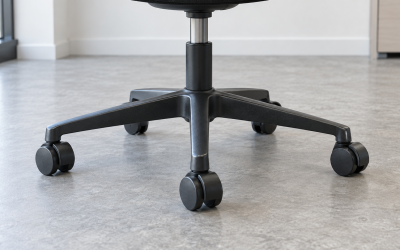
Swapping the casters on a mesh office chair takes less time than the coffee break you spend thinking about it. The catch is that a rushed job fails in predictable ways: a stem 0.5 mm too fat gets hammered in and cracks the nylon socket, a wheel an inch taller than the old set changes your seat height and knee angle, and a mismatched grip ring leaves one caster wobbling until it pops out under load. Done properly, new wheels fix a chair that scrapes, drags, or leaves skid marks, and the whole job costs about the same as a takeout lunch.
What You Need
| Item | Why | Optional? |
|---|---|---|
| Replacement caster set (5 wheels) | Buy all five so heights and rolling resistance match | No |
| Caliper or ruler with mm markings | Confirms stem diameter (11 mm is common; 10 mm and 12 mm exist) | No |
| Flat-head screwdriver or pry bar | Levers out stubborn old stems | No |
| Rubber mallet | Seats new stems without marring the base | Yes |
| Old towel or blanket | Protects the mesh back when the chair is flipped | Yes |
| Silicone spray or bar soap | Lubricates a tight socket | Yes |
| Pliers | Grips a broken stem left in the socket | Yes |
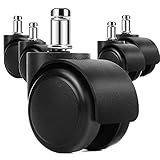
A basic set of five 2-inch casters such as the MaxGear 2″ Office Chair Replacement Caster Wheels with 11 mm stems runs about $8.99. Rubber rollerblade-style wheels like the RidRed 3 Inch Casters cost about $23.99 for five. Most buyers land in the $9 to $30 range for a full set.
As an Amazon Associate we earn from qualifying purchases at no extra cost to you. Product prices and availability are accurate as of the date shown and are subject to change.

Step-by-Step
1. Measure the old stem (5 minutes)
Pull one caster and measure the metal stem, not the wheel. The large majority of mesh chairs sold in the United States use an 11 mm (7/16 inch) diameter stem about 22 mm long, but budget chairs sometimes use 10 mm and a few European frames use 12 mm. An undersized stem spins and falls out; an oversized one will not seat. If the stem is threaded rather than a smooth shaft with a grip ring, you need threaded casters, and the two are not interchangeable.
2. Choose wheel size and tread (5 minutes)
Standard casters are 2 inches (50 mm) in diameter; upgrade rubber wheels are usually 3 inches (75 mm). Moving from 2 to 3 inches raises the seat about half an inch, which matters if your chair is already at the top of its range or desk clearance is tight. Hard nylon rolls well on carpet but scratches hardwood and laminate; polyurethane or rubber treads suit bare floors and are far quieter. For a chair rated 250 to 300 lb, look for casters rated at least 110 lb per wheel.
3. Flip the chair and protect the mesh (2 minutes)
Lay a towel down and tip the chair onto its side. Mesh backs are tensioned fabric, and a heavy base corner landing on them can leave a permanent dent in the weave. Engage the tilt lock so the seat does not swing while you work.
4. Remove the old casters (5 to 10 minutes)
Grip each wheel and pull straight out with a slight twist. Many come free by hand. For stuck ones, slide a flat-head screwdriver between the caster housing and the base and lever gently; a wide pry bar spreads the force better. If a stem snaps off inside, grab it with pliers and rock it out. Never drill or heat the nylon base.
5. Clean the sockets (3 minutes)
Wipe each socket with a dry cloth. Hair, carpet fibers, and old grease can stop a new grip ring from seating. If a socket is cracked or elongated, stop: new casters will not stay in a damaged base.
6. Install the new casters (5 minutes)
Align the stem and push straight in until you feel a click as the grip ring passes the lip inside the socket. If it resists, mist the stem with silicone spray or rub it with bar soap. Use a rubber mallet or your palm, never a steel hammer. Confirm all five casters sit flush with no gap.
7. Test on the floor (2 minutes)
Flip the chair upright, sit, and roll in every direction. Clicking usually means one caster is not fully seated. Spin in a circle to confirm no wheel binds on the base arms.
Mistakes to Avoid
- Guessing the stem size. Eyeballing 10 mm versus 11 mm is a coin toss. Measure.
- Replacing only the broken wheel. One new caster rolls differently than four worn ones and makes the chair rock.
- Ignoring floor type. Hard nylon scratches hardwood within weeks; soft treads sink into thick carpet.
- Forgetting the height change. Taller wheels raise your seat; re-check that your feet rest flat afterward.
- Mixing threaded and grip-ring stems. They look similar from the wheel side but do not interchange.
- Hammering with metal. A steel hammer cracks bases and mushrooms the stem end.
How Often
Casters wear faster than any other part of a chair. Under daily eight-hour use on carpet, nylon wheels typically need replacing every 2 to 4 years; on hard floors, the tread develops flat spots or embedded grit in 12 to 18 months. Rubber and polyurethane upgrades last longer because the softer tread does not chip. Signs it is time: the chair drags instead of rolling, one wheel squeals or sticks, the tread is visibly flattened, or you notice scuff lines on the floor. Flip the chair every six months to vacuum the base and pull hair out of the axles; that alone buys another year or two of smooth rolling.
When to Call a Pro or Replace
Caster replacement is a genuine do-it-yourself job, and paying a technician for it is hard to justify. The exceptions are structural. If a socket is cracked or egg-shaped, or a base arm shows a hairline fracture, new wheels will not fix the wobble; you need a new base, typically $25 to $60 for nylon or $60 to $120 for aluminum. If the chair is under warranty, contact the manufacturer first, since many ship bases and casters free. For a chair seven or eight years old with sagging foam, a failing gas cylinder, and worn casters all at once, the parts often add up to within $50 of a new entry-level mesh chair. A 2026 mesh task chair in the $120 to $250 range will usually outlast a triple-repaired old one.
FAQ
Will new casters fit my mesh chair if it is a different brand?
Almost always, as long as the stem diameter and type match. Casters are standardized parts, and the 11 mm grip-ring stem covers most mesh task chairs sold in the United States.
Should I get 2-inch or 3-inch wheels?
Choose 2-inch wheels to keep your seat height unchanged on carpet. Choose 3-inch rubber wheels for hardwood, tile, or laminate if you can absorb about half an inch of added seat height.
Do I need a chair mat if I switch to rubber casters?
On hard floors, soft casters usually eliminate the need for a mat, which is a main reason people upgrade. On medium or high-pile carpet, a mat still helps because small wheels sink into the fibers.
Can I install locking casters on a mesh office chair?
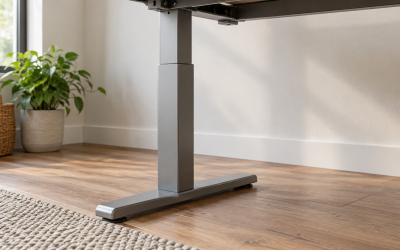
Yes, if the stem matches. Locking casters help if the chair drifts on a sloped floor or you want it parked beside a standing desk. Expect to pay a few dollars more per set.