Key takeaways
- Weight: Check the operating weight, not only the shipping weight. A cleaner that feels manageable empty may become tiring when its tanks are full.
- Handle design: A comfortable grip, easy trigger, and controls that do not require constant finger pressure reduce hand and wrist fatigue.
- Movement: Large wheels, a stable base, and a useful turning radius matter when navigating table legs and narrow corridors.
- Tank access: Separate clean- and dirty-water tanks simplify refilling and reduce the chance of putting contaminated water back into the machine.
- Cleanup: Removable brushes, nozzles, and lint screens are valuable because trapped hair and residue can create odors and reduce performance.
What's inside
The best carpet cleaner is not necessarily the one with the highest wattage or the longest list of attachments. For most homes, the right choice balances cleaning performance with weight, handle comfort, maneuverability, drying time, and the effort required to empty and rinse it. A machine that is awkward to lift or leaves carpets saturated may spend more time in the closet than on the floor.
This guide compares the main types of carpet cleaners and explains how to choose one for whole-room cleaning, pet accidents, stairs, upholstery, or occasional spot treatment. It also highlights practical features to look for in recommended models, so you can match the machine to your home rather than overbuying.
As an Amazon Associate we earn from qualifying purchases.


🛒 Best Price Today on Amazon
Prime members get fast, free shipping on everything above, plus member-only deals. New members get a 30-day free trial — cancel anytime.
Choose the Cleaner Type Before the Brand
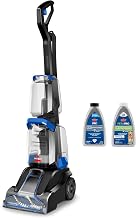
Upright carpet cleaners are the sensible starting point for wall-to-wall carpeting. Their wider cleaning paths and larger tanks make them efficient for bedrooms, hallways, and living rooms. The BISSELL TurboClean Upright Carpet Cleaner, for example, is aimed at powerful upright cleaning while remaining more approachable than many full-size machines. Look for a handle that keeps your wrist in a neutral position and controls that can be reached without bending.
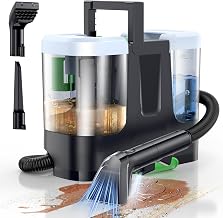
Portable extractors are better for stairs, vehicle interiors, furniture, and isolated messes. The BISSELL Little Green Multi-Purpose Portable Carpet Cleaner is a familiar example of this format, while the Starrybot Upholstery Cleaner Machine emphasizes portable stain extraction and strong suction. These machines are easier to carry but usually require more passes across a large floor and more frequent tank refills.
Match Cleaning Power to the Problem
Carpet cleaning depends on three coordinated actions: applying solution, agitating fibers, and extracting dirty water. A brush system helps loosen soil, but suction and technique determine how much moisture remains behind. For homes with children or pets, a model with dedicated pet or upholstery tools can be more useful than a machine designed only for broad floor coverage.
The Hoover PowerScrub Deluxe Carpet Cleaner Machine combines rotating brush action with a HeatForce drying feature and includes pet and upholstery tools. The BISSELL ProHeat 2X Revolution Pet Pro Plus adds dual brush action, a hose, and a pet upholstery tool for larger cleaning jobs. Neither replaces careful pretreatment: scrape or blot solids first, then use a compatible solution and avoid flooding the fabric.
Prioritize Ergonomics and Maintenance
- Weight: Check the operating weight, not only the shipping weight. A cleaner that feels manageable empty may become tiring when its tanks are full.
- Handle design: A comfortable grip, easy trigger, and controls that do not require constant finger pressure reduce hand and wrist fatigue.
- Movement: Large wheels, a stable base, and a useful turning radius matter when navigating table legs and narrow corridors.
- Tank access: Separate clean- and dirty-water tanks simplify refilling and reduce the chance of putting contaminated water back into the machine.
- Cleanup: Removable brushes, nozzles, and lint screens are valuable because trapped hair and residue can create odors and reduce performance.
Use the Right Formula and Drying Method
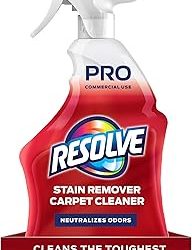
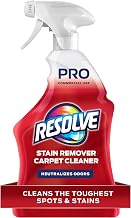
Cleaning solution should be approved for the machine and suitable for the carpet fiber. More detergent is not better: excess residue can attract new soil and leave a stiff, tacky feel. The BISSELL TurboClean includes Oxy Urine Eliminator, and the Resolve Professional Strength Spot and Stain Carpet Cleaner is designed for targeted treatment rather than replacing a complete extraction wash. Always follow the product label, test an inconspicuous area, and never mix different chemicals.
After spraying and brushing, make slow extraction passes. Then make additional passes without dispensing solution to collect moisture. Open windows or run fans where appropriate, keep foot traffic off the carpet, and allow it to dry fully before replacing furniture. If the carpet remains wet for many hours, reduce the amount of solution on the next section and increase dry passes.
Think About Storage and Long-Term Value
A carpet cleaner is a durable purchase only when it is stored clean and used within its design limits. Before buying, measure the space where it will live and check whether the hose, cord, and tools have dedicated storage. Compact units are often easier to keep ready for quick spills, while full-size uprights make more sense when seasonal whole-room cleaning is part of your routine.
For occasional accidents, portability may matter more than maximum coverage. For repeated pet stains or heavily trafficked rooms, prioritize brush access, replacement-part availability, and a hose long enough to reach upholstery without dragging the machine. A slightly less powerful cleaner that is simple to maintain can deliver better results over several years than a complicated model that is difficult to rinse and dry.
Tips
- Vacuum slowly before wet cleaning; embedded grit can interfere with brushing and extraction.
- Pretest both the cleaning solution and the machine on a hidden section of carpet.
- Work in small overlapping sections instead of repeatedly soaking a large area.
- Rinse the dirty-water tank and clean the nozzle, brush area, and hose after every use; leave parts open to air-dry.
Frequently Asked Questions
Is an upright or portable carpet cleaner better?
An upright is generally better for multiple rooms because it covers more carpet per pass and holds more water. A portable cleaner is easier for stairs, sofas, cars, and small spills. If your main need is spot treatment, the smaller machine is usually the more convenient choice.
How often should carpets be deep cleaned?
There is no universal schedule. Lightly used rooms may need extraction once or twice a year, while homes with pets, children, or allergies may benefit from more frequent cleaning. Clean sooner when traffic lanes look dull or ordinary vacuuming no longer restores the pile.
Can carpet cleaners be used on upholstery?
Only when the upholstery care label permits water-based cleaning and the machine has a suitable tool. Use limited moisture, avoid saturating cushions, and test a hidden area first. Delicate, vintage, or solvent-only fabrics are better handled by a professional.
Why is my carpet still wet after cleaning?
Common causes include dispensing too much solution, moving too quickly, a blocked nozzle, or insufficient dry passes. Check the tank and recovery path, slow down, and make several passes without spraying. Improve ventilation and keep furniture off the area until it is completely dry.
Conclusion
Choose a carpet cleaner by the work it will actually perform: a maneuverable upright for whole-room maintenance, a portable extractor for furniture and spills, or a pet-focused model when accidents are routine. Favor comfortable handling, effective extraction, straightforward cleanup, and compatible formulas over impressive specifications alone. That combination is more likely to produce cleaner carpets and a machine you will willingly use and maintain.