Our Top Picks
 85'' Modular Sectional Sofa with Pull Out Bed85 inch23.3 x 82 x 18.3 inches231.5 poundsCheck on Amazon
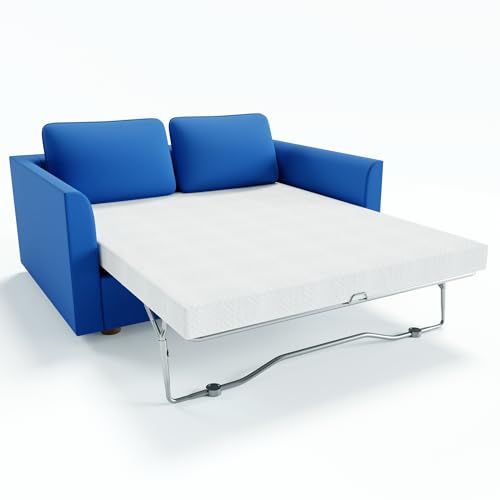

What actually goes on sale
Sofa beds are one of the few furniture categories where Black Friday pricing is mostly real. Retailers clear discontinued fabrics and last year’s frames to make warehouse room, and sleeper sofas are a reliable door-buster category. That said, roughly a third of the “deals” you’ll see are inflated list prices slapped on mediocre frames. Knowing which categories discount honestly helps you skip the noise.
The deepest cuts land on click-clack futons (often 30–50% off, putting decent ones at $150–$250), followed by pull-out sleeper sofas at 20–35% off, and chair or twin sleepers at 20–30%. If you’re starting broad, browsing pull-out sleeper sofas alongside futons gives you a fast sense of what sale pricing actually looks like this year versus the claimed “was” price.
The types, compared
| Type | Realistic BF price | Sleep quality | Best for | Common failure |
|---|---|---|---|---|
| Click-clack futon | $150–$300 | Firm, uneven center seam | Guests a few nights a year, dorms, offices | Hinge loosens; foam compresses into a valley within a year |
| Pull-out sleeper (queen) | $600–$1,100 | Best of the bunch, if mattress is 4″+ thick | Regular guests, main living room | Support bar felt through thin mattresses; mechanism jams |
| Chair / twin sleeper | $350–$600 | Decent for one adult | Small apartments, home offices | Tri-fold mattress develops permanent creases |
| Daybed with trundle | $250–$600 | Real mattress = real sleep | Kids’ rooms, dedicated guest rooms | Takes up more floor space than people expect |
| Folding floor mattress | $80–$150 | Surprisingly good; dense foam on floor | Occasional overflow guests, tiny spaces | Cheap versions go flat within months |
A daybed with a real twin mattress will always out-sleep any mechanism — the trade-off is that it looks like a bed, not a sofa. If the room doubles as a living space, that matters. If it’s a guest room first, it’s the smartest buy on the list.
How to spot a real deal
Furniture list prices are soft. A sofa bed “marked down from $1,800” may have never sold at that price. Three quick checks:
Check the review history, not just the rating. Reviews older than six months tell you the listing existed before the sale and roughly what it cost. A product with 12 reviews that all appeared in October was likely listed recently, and the “was” price is fiction.
Cross-shop the same frame. Many sofa beds are sold under different brand names across retailers. Search the photos and specs — seat depth, mechanism type, fabric name — and you’ll often find the identical unit priced $150 apart. The lower price is the real one.
Read for the failure words. Search reviews for “bar,” “sagging,” “squeak,” and “gap.” One person mentioning the support bar is an outlier; fifteen is the design.
When cheap is fine — and when it isn’t
For guests who visit a few weekends a year, a $200 futon is genuinely fine. Put a $40 foam topper on it, keep the bedding in a bin under it, and you’re done. Spending $900 to improve four nights of sleep a year is bad math.
Where cheap fails is nightly use. Futon hinges loosen with daily folding, thin foam seats bottom out into the frame, and pull-out mechanisms under $500 tend to flex and jam. If someone will sleep on this thing most nights — a studio apartment, a kid home from college — spend toward $700+ on a sleeper sofa with a memory foam mattress, or skip the convertible entirely and buy a real bed plus a cheap sofa. Two pieces at $600 total will outlast one compromised one.
The middle tier — $400–$700 — is where Black Friday earns its keep. That’s the range where sale pricing pulls a genuinely good pull-out down into futon money. It’s also the range with the most fake markdowns, so apply the checks above.
Delivery, timing, and the return trap
This is the part deal roundups skip. Furniture return shipping often runs $100–$250, and some sellers charge restocking fees on top. A “deal” you hate costs real money to send back. Before checkout:
- Measure the path, not just the room. Doorways, hallways, elevator depth, stair turns. A queen pull-out mechanism is heavy and rigid; many won’t pivot around a tight landing.
- Check the open dimensions. A queen sleeper needs roughly 90 inches of clearance in front when extended — more than most people picture.
- Confirm the return window in writing. Some holiday purchases have shorter return periods, and freight pickups take days to schedule.
- Expect delivery delays. December freight is slow. If guests arrive Christmas week, order in November or buy something in stock locally.
One more honest note: if space is the real problem, a futon sofa bed or even a folding floor mattress solves it for a tenth of the cost of a pull-out. Not glamorous, but the money you don’t spend buys the mattress topper, the bedding, and still leaves change.
FAQ
Is Black Friday actually the best time to buy a sofa bed?
Usually, yes — futons and pull-outs see their lowest prices of the year between Black Friday and Cyber Monday. Presidents’ Day and Memorial Day sales come close. Avoid buying in January, when clearance stock is picked over but prices haven’t dropped.
How much should I spend?
$200–$400 covers occasional guest use comfortably. Plan on $700+ if someone sleeps on it weekly. Below $150, expect a frame and foam that feel like a temporary fix, because they are.
Are sofa beds comfortable enough for everyday sleeping?
Most pull-outs aren’t, long-term — the mechanism limits mattress thickness. A firm futon with dense foam holds up better for nightly use. If it’s someone’s primary bed, test sleeping on it for a week before committing.
What’s the single most important spec to check?
For pull-outs: mattress thickness — four inches minimum, and memory foam beats innerspring because it bends without coils digging in. For futons: frame material — steel hinges outlast the cheap alloy ones that wobble loose.