Key takeaways
- Tread depth over step count: A pedal narrower than about three inches concentrates pressure on your arch and forces micro-adjustments in your stance. Wide, flat treads let you stand square and work with both hands for longer stretches without fatigue.
- Duty rating with headroom: Add your body weight plus tools, paint, and whatever you’re carrying up, then buy at least 50 pounds above that figure. A 300-pound Type IA or 330-pound rating gives you margin, and margin is what keeps frames from taking a permanent set over years of use.
- Material matched to the job: Fiberglass is non-conductive and the only sensible choice near live circuits. Aluminum wins on weight for repeated carrying and telescoping designs. Powder-coated steel offers the best rigidity per dollar for indoor stools that stay put.
- Locking hardware you can feel: Telescoping ladders live or die by their rung locks. Look for audible, positive engagement and thumb tabs large enough to release with gloves on. Vague or sticky locks are the first failure point and the clearest sign of thin manufacturing tolerances.
- Footprint and stability aids: Stabilizer bars, splayed feet, and rubberized shoes widen the base and reduce the side-to-side sway that causes most household ladder incidents. On step stools, a handrail changes the ergonomics of getting up and down more than any other single feature.
What's inside
Ladder shopping tends to go one of two ways. Either you overspend on a contractor-grade unit that lives in the garage collecting dust, or you grab the cheapest folding stool on the shelf and discover within a month that the treads flex underfoot, the hinges develop a wobble, and your knees ache after ten minutes of overhead work. Neither outcome is a bargain. Price and longevity are linked, but not linearly, and the sweet spot sits lower than most people assume once you know which specs actually carry load and which are marketing.
This guide approaches value from two angles that matter more than sticker price: how a ladder distributes your weight and posture across its contact points, and how its joints, rivets, and locking mechanisms hold up after a few hundred cycles. Below you’ll find picks spanning telescoping extension models for roofline and attic access, a fiberglass step ladder built for electrical work, and steel folding stools sized for kitchen cabinets and closet shelves. Each was assessed on tread geometry, standing comfort, hardware quality, and whether the rated capacity reflects real-world use rather than a lab minimum.
As an Amazon Associate we earn from qualifying purchases.



🛒 Best Price Today on Amazon
Prime members get fast, free shipping on everything above, plus member-only deals. New members get a 30-day free trial — cancel anytime.
How to Choose a Ladder Best Price (2026)
- Tread depth over step count: A pedal narrower than about three inches concentrates pressure on your arch and forces micro-adjustments in your stance. Wide, flat treads let you stand square and work with both hands for longer stretches without fatigue.
- Duty rating with headroom: Add your body weight plus tools, paint, and whatever you’re carrying up, then buy at least 50 pounds above that figure. A 300-pound Type IA or 330-pound rating gives you margin, and margin is what keeps frames from taking a permanent set over years of use.
- Material matched to the job: Fiberglass is non-conductive and the only sensible choice near live circuits. Aluminum wins on weight for repeated carrying and telescoping designs. Powder-coated steel offers the best rigidity per dollar for indoor stools that stay put.
- Locking hardware you can feel: Telescoping ladders live or die by their rung locks. Look for audible, positive engagement and thumb tabs large enough to release with gloves on. Vague or sticky locks are the first failure point and the clearest sign of thin manufacturing tolerances.
- Footprint and stability aids: Stabilizer bars, splayed feet, and rubberized shoes widen the base and reduce the side-to-side sway that causes most household ladder incidents. On step stools, a handrail changes the ergonomics of getting up and down more than any other single feature.
The Best Ladder Best Price (2026)s Reviewed
SocTone 12.5FT Telescoping Ladder with Stabilizers
The stabilizer bar is the reason this one earns its spot: it widens the stance meaningfully and takes the nervous flex out of working at full extension. Rung locks engage with a clean click, and collapsing to a storage height that fits a closet or RV bay makes it genuinely practical for people without garage wall space.
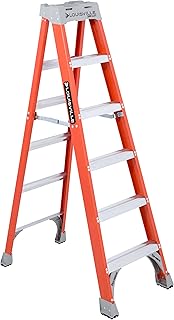
Louisville Ladder 6-Foot Fiberglass Step Ladder (FS1506)
Type IA fiberglass at 300 pounds is the professional baseline, and Louisville’s rail construction resists the twisting that cheaper step ladders develop around the spreader hinges. Non-conductive rails make it the correct tool for fixture swaps and panel work, and it will outlast several rounds of budget alternatives.
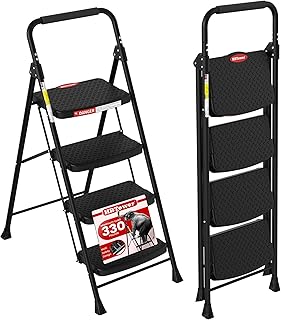
HBTower 4 Step Ladder with Wide Anti-Slip Pedals
Generous pedal depth is what separates this from the flimsy steel stools it resembles, letting you stand comfortably rather than perching on a bar. It folds flat enough to slide beside a refrigerator, which is where most household ladders actually need to live.
5-Step Folding Ladder, 330 lbs Capacity
Five wide anti-slip steps and a 330-pound rating give you real reach for ceiling fixtures and upper cabinetry without moving into extension-ladder territory. The folding action is simple and the frame stays rigid at the top step, where flex is most unnerving.
12.5FT Telescoping Aluminum Extension Ladder
A straightforward, well-priced route to attic hatches, gutters, and roof edges, with textured rungs that hold grip under damp shoes. The aluminum build keeps carry weight manageable, so you’re less likely to overreach rather than reposition.
Frequently Asked Questions
How high a ladder do I actually need?
Your safe reach is roughly your ladder height plus four feet, minus the top two rungs you shouldn’t stand on. For eight-foot ceilings a four or five-step stool is plenty; for single-story exteriors and roof access, a 12.5-foot telescoping model covers most homes.
Are telescoping ladders as safe as traditional extension ladders?
When properly locked and set at the correct angle, yes. The critical habits are confirming every rung lock has engaged before climbing and adding a stabilizer bar or spotter when leaning against a wall.
Is fiberglass worth the extra cost?
If you ever work near wiring, absolutely, since non-conductive rails are a safety requirement rather than an upgrade. For purely mechanical tasks like painting or shelving, aluminum or steel is fine and lighter on the budget.
How should I store a ladder to make it last?
Keep it dry, off concrete floors, and horizontal or hung rather than resting on its feet. Wipe grit out of telescoping rails periodically, since abrasive dust in the tubes is the leading cause of stiff or failing locks.
Final Thoughts
For reach work with the best stability-per-dollar, the SocTone 12.5FT telescoping ladder with stabilizers is the pick most households will get years out of. If your projects involve electrical fixtures, spend up for the Louisville FS1506 fiberglass step ladder and treat it as a decade-long purchase. And for everyday kitchen and closet duty, the HBTower 4 Step Ladder delivers the wide, comfortable treads that make short climbs painless.